Author Archive

Feature: The Levin, Metro Restaurant & Bar (May 2016)

Posted on: May 29th, 2016 by Simon Carter

Knightsbridge…think shopping…think museums…think Royal Albert Hall…think Hyde park…think crowds…think exhaustion…think retreat.

Metro Title

But where, without spending a small fortune on overpriced food and drink? The obvious answer for those canny visitors and locals alike is the Metro Restaurant and Bar, conveniently located in Basil Street, a stone’s throw from the east entrance to Harrods, by Knightsbridge tube. Fine Dining Guide recently discovered this little gem, part of the Levin Hotel, the proprietors of which also own the Capital Hotel next door.

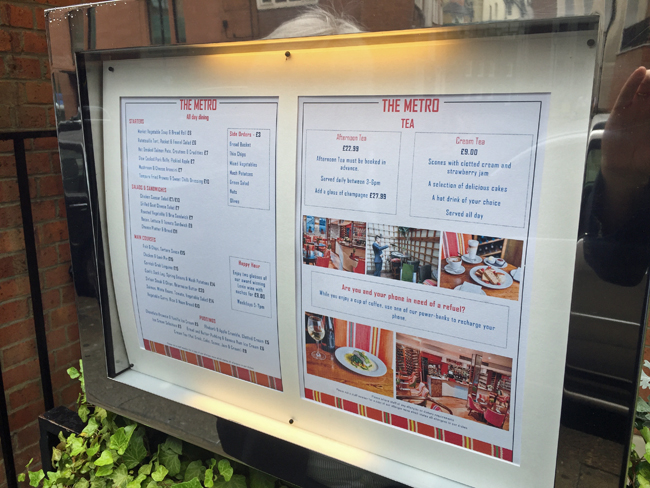
Metro_Menu

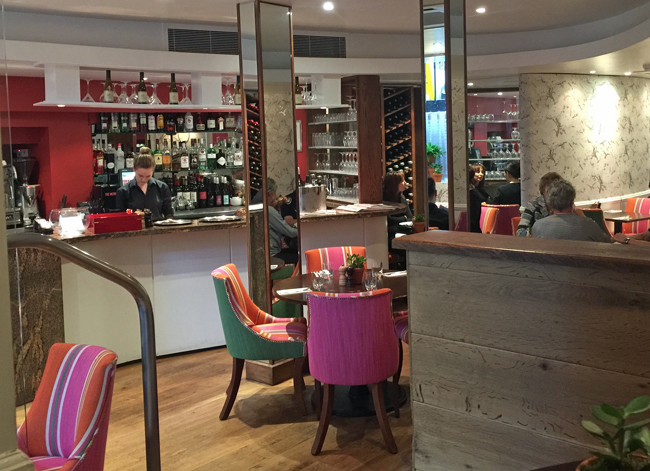
Accessed via an exterior staircase – slow down or you might miss it – The Metro occupies the basement of the Levin.  Air conditioning, spot lighting, mirrored pillars and an attractive bar enhance the medium sized room. Well spaced tables with comfortable bucket chairs provide space for 42 diners, with a small outdoor seating areas for drinkers and smokers.

Metro Interior

Whilst its food does not aim for Michelin stars, it is honest, well executed and generously portioned. There is no compromise on the quality of the ingredients. For instance, fish comes from the same suppliers as the celebrated Outlaw’s at the Capital next door. Menus change seasonally and give ample choice. From the main menu starters range from £6 to £10, salads and sandwiches £7 to £11 and mains £13 to £20. Desserts are all £5. Sides are all £3. The two and three course set lunch menus – with two options in each course – are priced at £14 and £18 respectively and a glass of Le Vin du Levin (red, white, rosé) from the Levin Estate is just £5. Prices like these in this notoriously expensive part of the West End confirm Metro’s main attraction – it’s excellent value for money.

For those who need to eat early is the wide ranging breakfast menu – Buffet, Sweet, Bagel, Full English and Vegetarian. A further incentive to visit is Happy Hour, weekdays between 5 and 7 pm, when two glasses of house wine and a bowl of nachos are a mere £8.

As the Metro is already well known for its fish and chips and cheese soufflé, we decided to try other dishes from the carte.

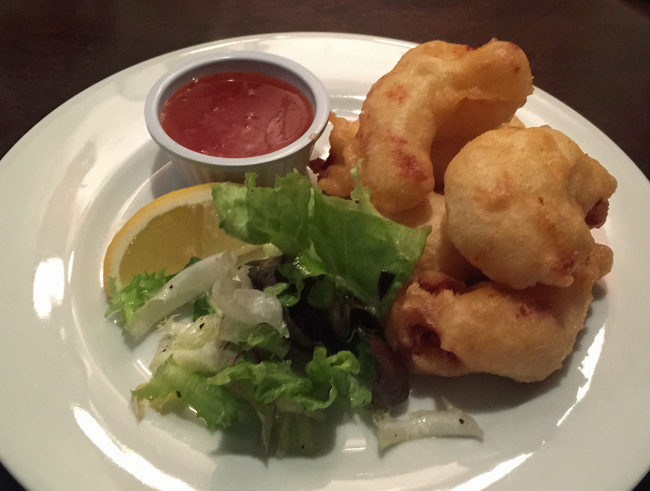
Tempura fried prawns had properly light, crisp batter which encased the succulent, delicately flavoured seafood. The chilli dressing was well balanced in its heat and sweetness.

Metro Prawn

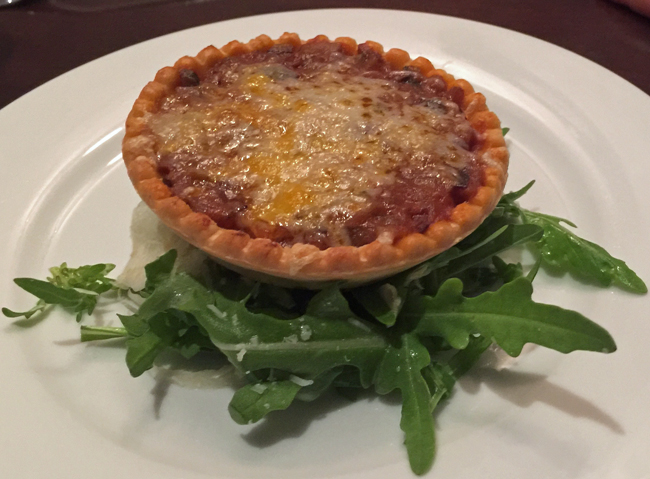
Ratatouille tart had crisp pastry and a finely diced filling which seemed to accentuate the robust Mediterranean flavours of the vegetables. Rocket and fennel salad added freshness with a slight aniseed touch.

Levin Tarte

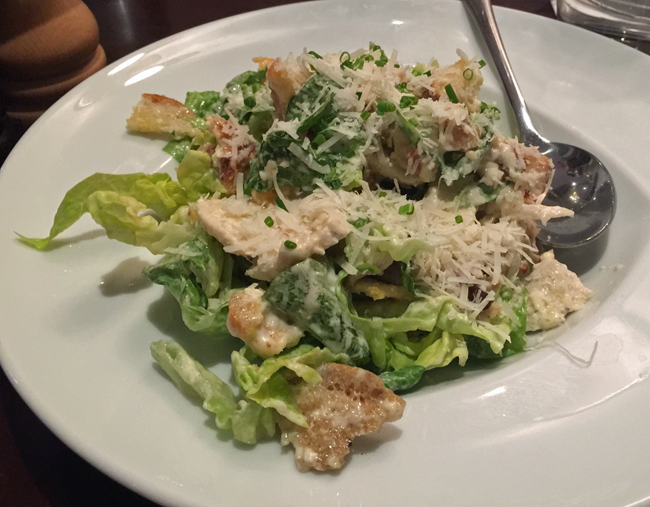
Chicken Caesar salad (£7/£14) had plenty of soft breast meat and was faithful to its classical roots with crisp Romaine lettuce and an outstanding dressing of anchovy and Parmesan.

Levin Salad

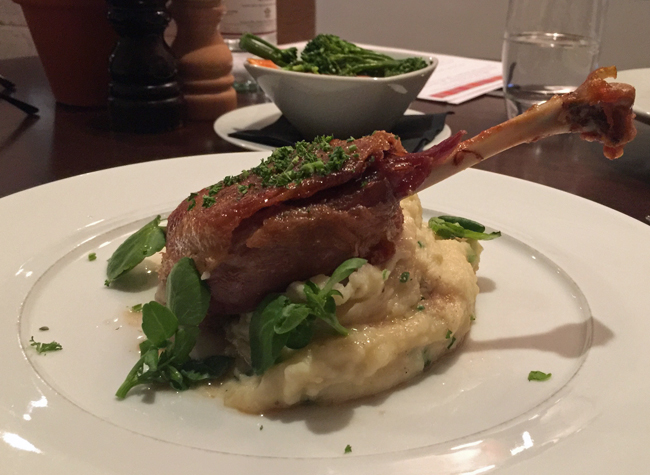
A classic bistro main course of confit duck leg (£14) was accurately rendered, with crisp skin and meltingly tender flesh. Spring onion and mash potatoes – like an Irish champ – was the perfect foil for the rich meat.

Levin Duck Leg

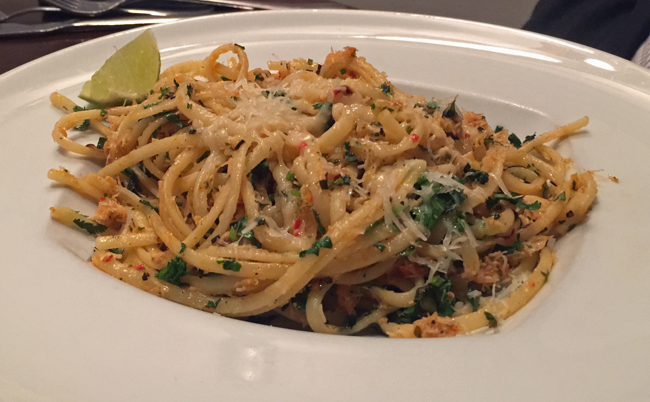
Cornish crab linguine (£15) had a generous amount of white and brown meat and precisely timed pasta. The lively, fresh flavour of the crustacean sang in this simple yet luxurious dish.

Levin_Crab

We also enjoyed the opportunity to sample some Loire Valley wines produced by The Levin’s own Domaine.   Spanning Sauvignon Blanc and Gamay grapes (for whites and reds respectively), Levin has 19 vineyards on two different types of terroirs. The sites being planted in the villages of Bourré, Choussy and Oisly, up to around 20 km apart, over about 18 hectares. See http://www.levinwines.com/

Desserts did not disappoint either. A rhubarb and apple crumble with clotted cream (£5) had the right degree of sweetness and acidity with a well textured, buttery topping. A lighter alternative was the ice cream selection at the same price.

Service was welcoming, well informed and unobtrusive. Given how busy the lunch service was, it was also surprisingly efficient.

The Metro deserves a wider audience, not just those who already appreciate its benefits. It is well worth a visit, not just for the food and drink but also for the relative peace and quiet it offers from the hustle and bustle of Knightsbridge. For those with more time to enjoy a special musical event. and a budget that won’t break the bank, advantage should be taken of the special Summer Concert packages for Promenaders and Rockers priced from £295 per room per night based on 2 sharing B&B, including VAT.

Hotel Review: Forest Side, Grasmere (April 2016)

Posted on: April 27th, 2016 by Simon Carter

Forest Side Logo

Forest Side opened in February 2016. Within two months, this renovated hotel set back from the A591 Windermere to Keswick road and overlooking Grasmere was awarded: Best Newcomer in Cumbria Life Food and Drink Awards, 2016

forestRuth Davies for Fine Dining Guide gives her impressions of Andrew Wildsmith ‘s third and most stylish hotel.

Forest Side is a triumph. Set back from the road and built on the first rise of a hill below Alcock Tarn, it detaches itself from the bustle of Grasmere, and offers a truly luxurious haven for the traveller. Initially, the grey slate roofed exterior gives a rather reserved impression and reflects its history as a hunting retreat built in the mid-19th Century for the Earl of Lonsdale. In more recent times it has seen service as a walkers’ hostel, but this year extensive refurbishment driven by the vision of its new owner, Andrew Wildsmith, has completely elevated its status to new and exciting heights.

Passing through the front door, the atmosphere changes seamlessly from bordering on the austere to understated contemporary elegance. With polished wooden flooring and willow baskets in reception, and the green Pendle Tweed livery of the staff, the hotel’s Lake District country house-party origins are cleverly referenced, creating a warm, welcoming atmosphere.

Forest Side Bar

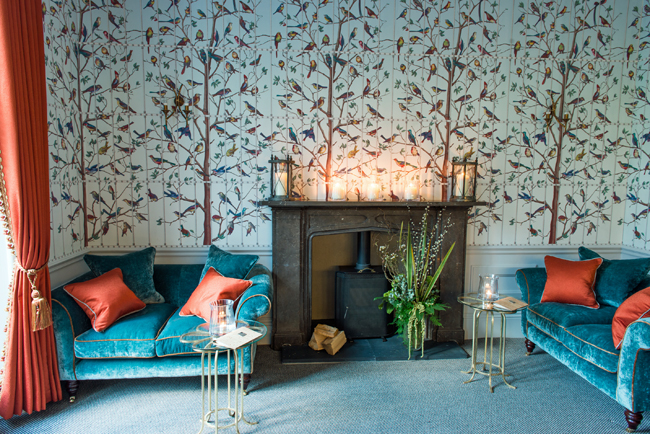
On the ground floor and leading off from the entrance hall is the bar. Comfortable plush sofas surround an open fire whilst the stunning wall paper featuring all manner of humming birds, parakeets and birds of paradise creates an exotic atmosphere in which to enjoy a pre dinner cocktail.

FOrest Side Lounge

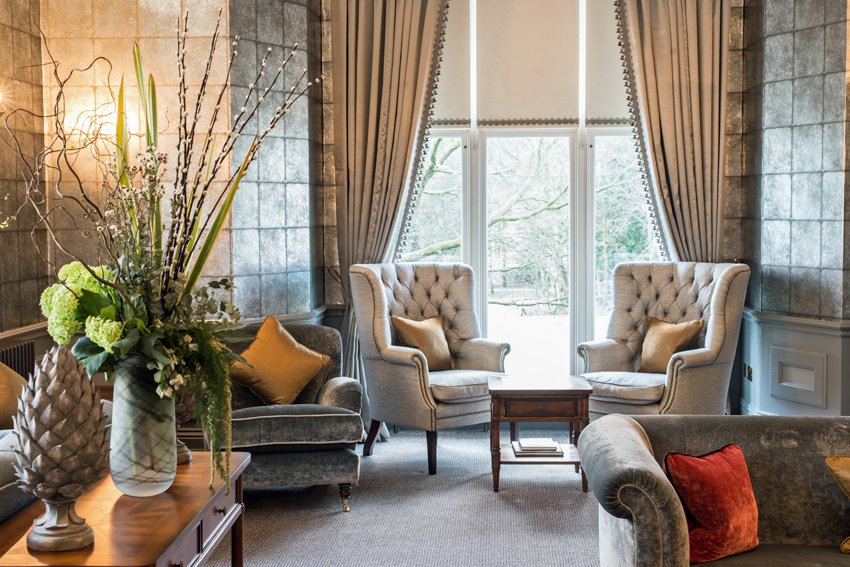
Next to the bar is the sitting room, a public space of inspired modern stylishness. Wall paper simulating pewter tiles, a variety of sofas and wing backed armchairs upholstered in grey fabric, together with refined dark wood occasional tables all cleverly support the two foci of the room. These are the extraordinarily beautiful mirror over the fireplace which I instantly coveted, and of course, the magnificent Lake District views from the two huge floor to ceiling windows, one of which opens onto a newly refurbished sheltered terraced area. Champagne here in the summer is a must! It is not until one is leaving the sitting room that one notices the unobtrusive partition doors which on special occasions open to reveal the dining room.

Forest Side Restaurant2

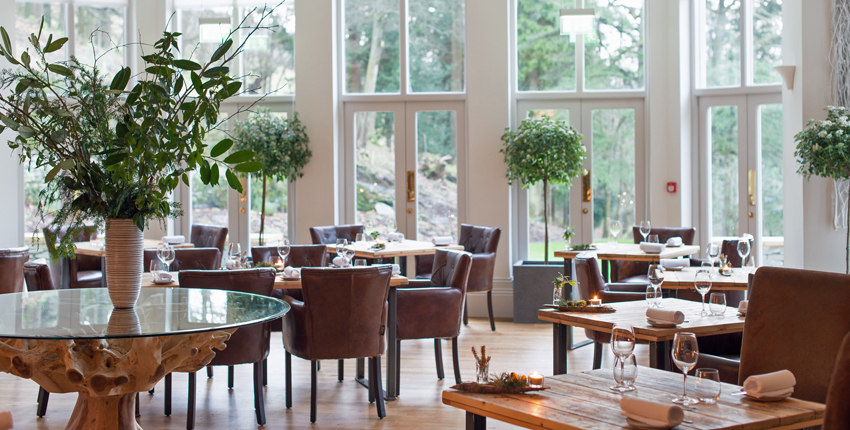
The dining room in contrast provides a cleverly pared down backdrop to showcase Kevin Tickle’s wonderful food. It is full of light, informal yet chic, decorated as it is in natural shades. Reflecting the countryside which can be seen from the large bay window, there are arboreal references throughout. The ivory wall covering has a subtle design depicting slender stems, accentuated by the white woven willow wall panels and on the central table stands an impressive arrangement of horse chestnut branches. The dining tables themselves are a particularly interesting feature of this room, crafted from polished recycled floor boards and left bare, perfectly complementing the informal variety of stoneware tableware. Open to view, the service area completes this very appealing contemporary interpretation of a traditional dining room.
Forest Side Bed

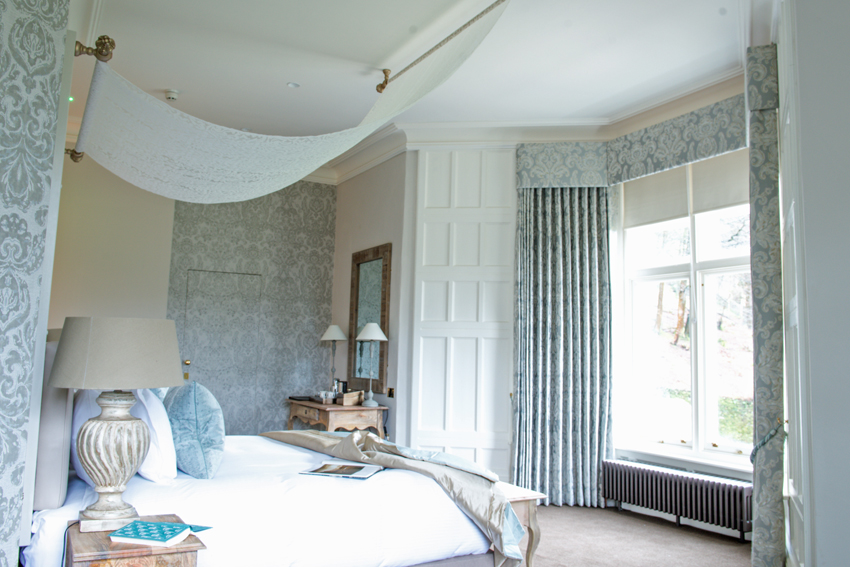
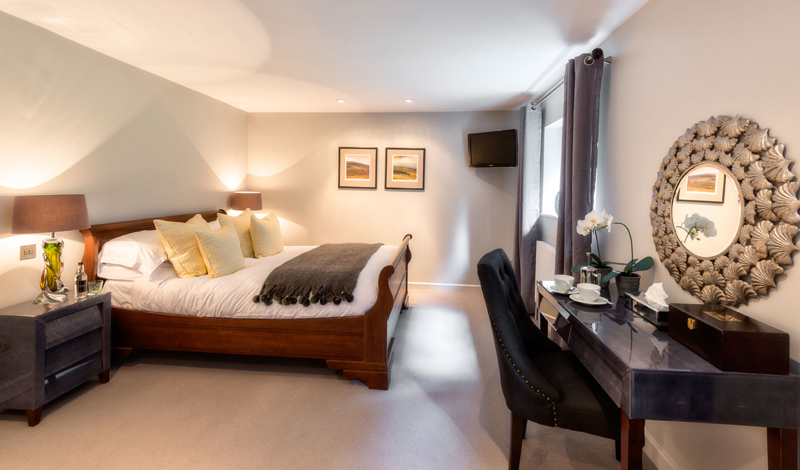
Commitment to the Lake District is also evident in the use of wool from local Herdwick sheep in the carpets of the main staircase. The bedrooms, not numbered but named after trees, are individually styled in delicate muted shades and offer restful luxury for the tired traveller. The windows are dressed with both blinds and heavy sumptuous curtains whose fabric design is echoed in both the wall coverings and the signature canopies over the very comfortable, locally made beds. The bathrooms are superb. Push button showers, large deep baths and high quantity luxurious toiletries are guaranteed to revive weary spirits.  The attention to detail, from the stag motif on the draw liners to the tray of refreshments on theside table, is remarkable, and indicative of the ethos of the whole establishment.

kitchengarden

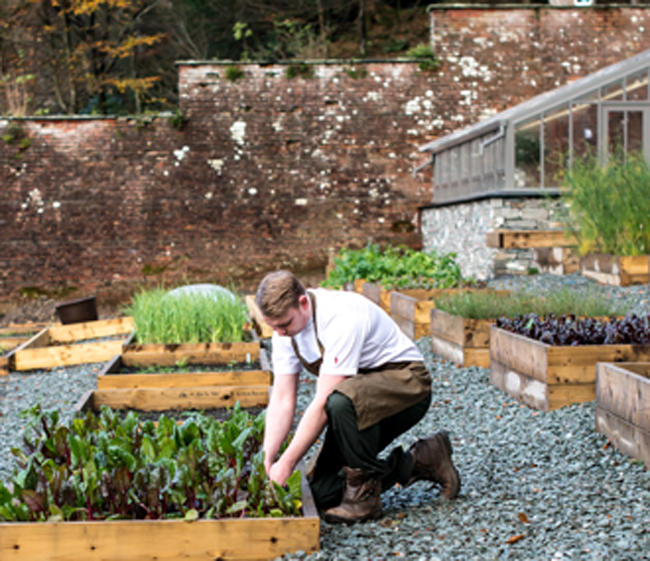
An amble round the kitchen gardens is a must for anyone with even a passing interest in ‘growing your own’. The greenhouse provides the micro leaves and herbs for the kitchen. Its benches are laden with trays of a large variety of seedlings at various at ages of development, whilst to one side a line of large tomato plants soaks up the warmth of the sun. Baskets of oxalis hang from the roof and in the floor trays of more mature seedlings await planting out. Outside raised beds offer everything from soft fruits to herbs, and deep grow-bags of potatoes are lined up against the retaining walls. The care and enthusiasm of head gardener Catherine, ably assisted by Adam, is unmistakable, and are of critical support to the kitchen. However, no garden is exhaustive, and there are also opportunities aplenty for additional foraging in the surrounding 40 plus acres of forested hotel grounds.

Forest Side is a venture of which Andrew Wildsmith and his team can be justly proud. The commitment of the staff is evident everywhere and this, together with such elegant surroundings and the wonderful food of Kevin Tickle, make a visit a must.

Restaurant Review: Forest Side, Grasmere (April 2016)

Posted on: April 27th, 2016 by Simon Carter

This article comprises three elements: An interview with owner Andrew Wildsmith (Below at Forest Side), an interview with head chef Kevin Tickle and an extensive restaurant review of a signature tasting menu.  Interviews took place in April 2016 and were conducted by Daniel Darwood, the food review is also by Daniel Darwood.

Andrew Wildsmith

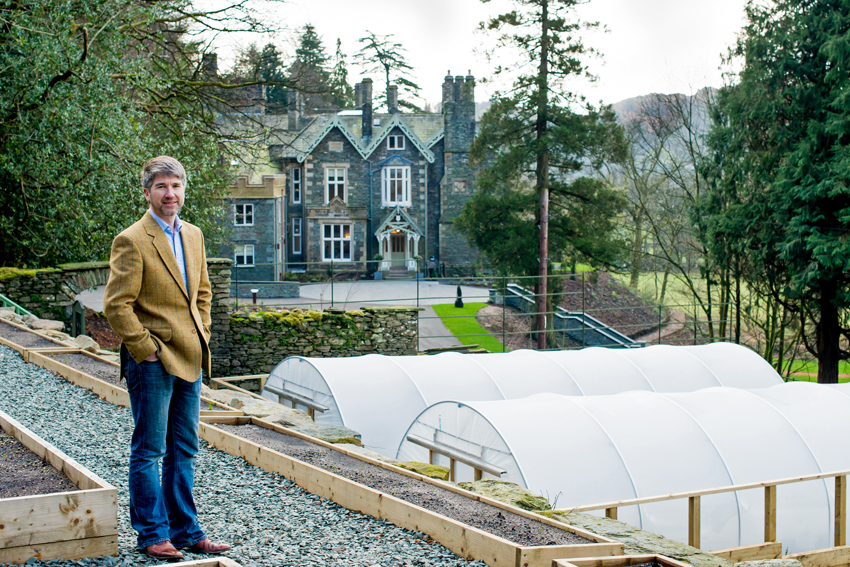
Andrew Wildsmith at Forest Side photo courtesy of Jenny Heyworth


Fine Dining Guide had the pleasure of  interviewing Andrew Wildsmith at the award winning Forest Side in April, 2016.  This hotelier extraordinaire embarked on his journey into hospitality almost by chance. After finishing his PhD in Chemistry at Cambridge, uncertainty regarding a long term career and the on line search for a house near his native Lancaster – he is an alumnus of Lancaster Royal Grammar School – resulted in the purchase of Hipping Hall. In his own words, “the joy of procrastination and the internet” combined like serendipity to launch him on a highly successful, if unanticipated, career.

Not that his interest in food was anything new; indeed the chemistry of food as well as the pleasures of the table were key interests amongst his student fraternity. Luckily, his deep love of food, wine and service was further nurtured by his two key advisers at Hipping. Running a hotel without any professional training, including acting as a barman and waiter, proved a steep yet valuable learning curve.

The logical thinking and organisation needed to see a scientific research project through has now been applied in his pursuit of excellence in the hospitality industry. Andrew’s personal qualities have also proved invaluable as he enjoys talking to staff and guests and is able to read people quickly, appreciating their individual needs. At the heart of his philosophy of hospitality is “discovering, exceeding and managing” the  expectations of his guests. Seeing things from the customer’s point of view, especially in levels of pricing, is more important than mere accounting formulae.

Unlike many proprietors who remain anonymous and at arms-length, Andrew is fully immersed in all aspects of the hotel’s life, from the overall design concept to recruiting key staff. His priority in taking over Forest Side was to restore the bedrooms to their original size, as many had been split in two with false ceilings. Much of the design of the spectacular dining room was his own input. Indeed, Forest Side has seen considerable investment in its re-modelling as a high end country house hotel, with a hallmark of understated luxury and comfort.

Ideally, Andrew views each hotel as an “island” utilising the bounties of nature to be as self-sufficient as possible. The sourcing of local food and materials is fundamental. The development of a kitchen garden is also a high priority, hence the employment of two full time gardeners. The 46 acre forest in the hotel’s grounds gives ample opportunity for foraging. All the carpets are made from the wool of local Herdwick sheep, whilst the rustic wooden tables in the restaurant are made from the floorboards of the original dining room.

Forest Side Restaurant2

In relations with chefs, there has to be mutual respect even if there is an occasional healthy difference of opinion . It is important also that proprietors know how to cook, so they can liaise more effectively with chefs.  A recent visit to Albert Adria’s Tickets restaurant in Barcelona revealed how food could also be fun and playful, which is evidenced in some of his own chefs’ dishes.  Andrew loves being in the restaurant and kitchen, relishing the adrenalin rush of service. He not only dines in his hotels – he was hosting a lunch at Forest Side on the day of our visit – but may also help serve the guests, as witnessed during our meal at Hipping Hall.

With typical understatement Andrew says his proudest achievement at Forest Side is the “nice level of pleasure” it provides. Nevertheless, there was no denying his delight at achieving two awards after just two months of opening: Cumbria Life Food and Drink Awards: Best Newcomer and Hotel Restaurant of the Year. Positive reviews in the nationals and recent feedback from the AA have also been encouraging which bode well for the hotel’s prospects in the highly competitive market of luxury Lakeland hotels.

ForestSideKevinTickleHeadChef

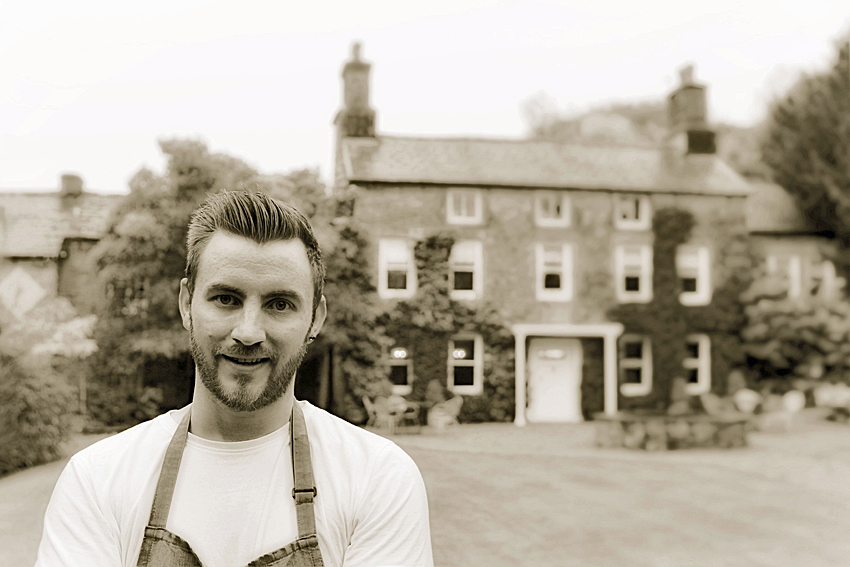
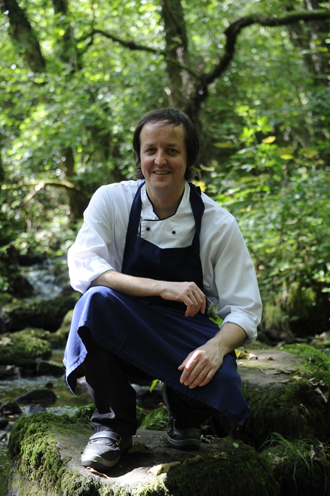
Head Chef Kevin Tickle was born and bred in Cumbria and has spent all his professional life in some of its most celebrated kitchens: Sharrow Bay, Gilpin Lodge and L’Enclume where he spent nine years, rising to sous chef for Simon Rogan. Lured from his positon as Head Chef at Rogan and Co. in Cartmel, he took up his current post.

A forager of the Cumbrian coast and forests since childhood, often with his friend now sous chef Martin Frickel, Kevin took up preserving, pickling, fermenting, curing and distilling to maximise the potential of his kitchen larder. The development of a kitchen garden has been essential to his style of cooking which demands the freshest of ingredients

Undoubtedly, Simon Rogan has been the biggest influence in terms of ethos and style of cookery. The focus on seasonality, regionality, sustainability, organic husbandry and self-sufficiency in the sourcing of materials and produce, with the added benefits of foraging, has produced in Kevin’s cooking’s a natural food style. The French might call it a Cumbrian cuisine terroir that captures the culinary essence of the Lake District.
With dishes having relatively few ingredients, the treatment of each has to be finely judged. Precision in timing, harmony of flavours, textural interest and clean presentation are key features of Kevin’s cooking. Foraged items appear as integral parts in most dishes, not mere decorative flourishes. He shuns fancy techniques in favour of classical skills. Presenting his food on regional stoneware, slate and wood also helps to encapsulate the Lakeland feel.

Options at dinner include a three course a la carte menu, ‘The reet l’al yan’; a six course tasting, ‘the l’al yan;  and a ten course tasting menu, ‘The grand ‘un’.  At lunch the ten course tasting is available alongside a four course set menu, “The bait” These give ample scope for Kevin’s creativity in which he is assisted by his brigade of 12, especially sous chef Martin Frickel.

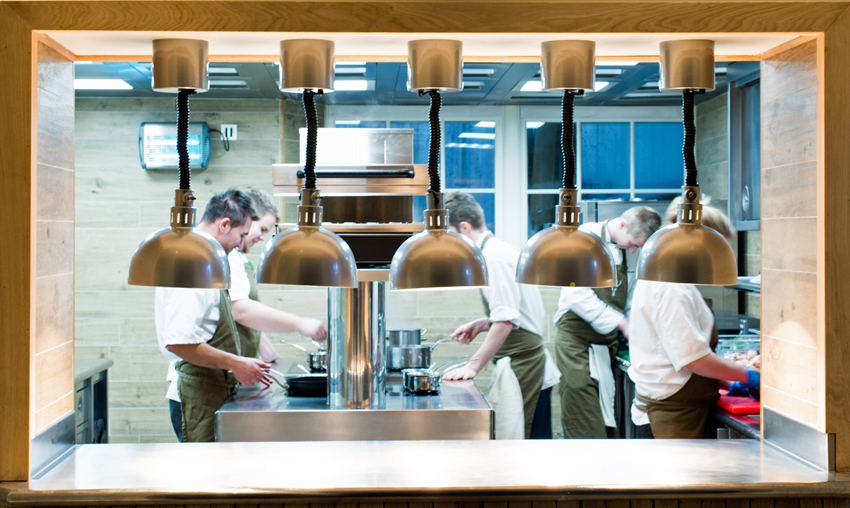
Forest Side Kitchen Pass

Fine Dining Guide sampled the “The grand ‘un'” on a Friday evening in April.

Seductive cocktails were prepared by Bruno Vilas whilst Dion, the sommelier was on hand to advise on the all organic and biodynamic wine list. In the end were opted for the matching wine flight.

Two amuse bouches demonstrated the precision and invention evident throughout the menu.  Celeriac cracker with apple puree and black pudding and  Ruscombe cheese cracker with “snow” playfully teased the palate and eye.

A warm country loaf had crisp crust and exceptionally light crumb. We avoided  with difficulty the temptation of eating too much which would reduce out capacity to tackle the ten courses to come

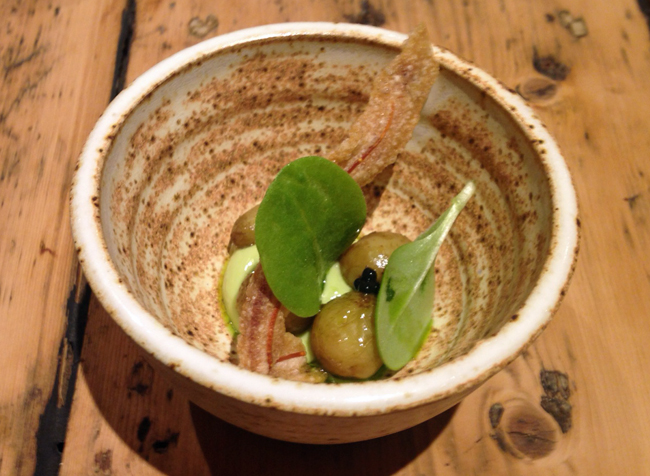
The first course featured tiny confit Jersey Royals that burst with creamy flavour. These were served with an oyster emulsion, tarragon oil, borage leaf, crispy pig’s ear and caviar. A small serving, this was a tantalising composition of contrasting textures, earthy and herbal flavours and humble and extravagant ingredients.  Wine: Sottoriva, Malibran, Veneto, Italy.

FOrestSideJersey

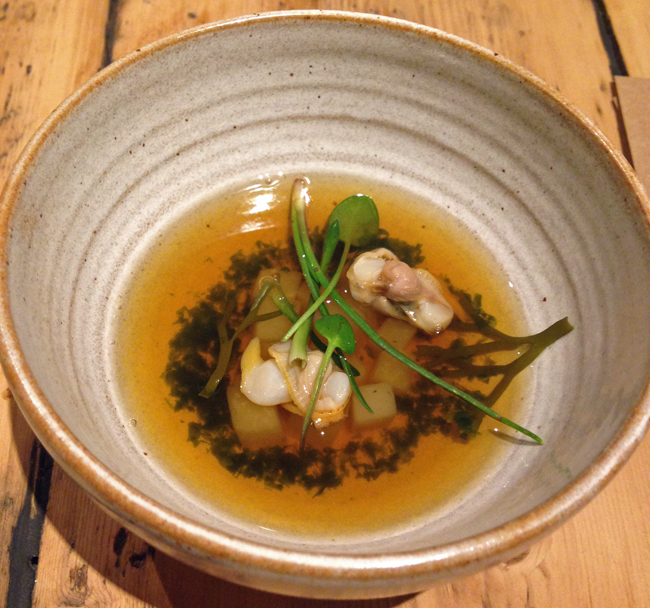
Mild, sweet salt baked kohlrabi and soft, chewy surf clams worked well with the gentle saltiness of the seaweed broth poured at the table. Foraged scurvy grass and sea lettuce added a peppery dimension to this delicate, nourishing dish. Wine: Roditis, Jason Ligas, Pella, Greece, 2014  dry, fruity, delicate.

Forest Seaweed

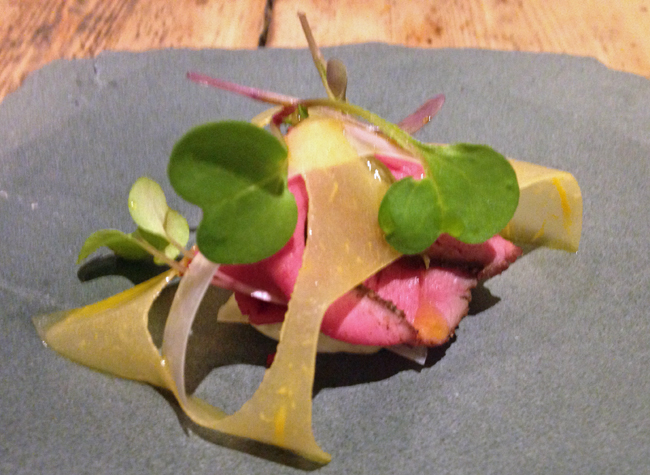
The next course played tricks with the eyes and taste buds. Venison Pastrami – the best I’ve ever tasted of any meat – had an enhanced gamey flavour. Enveloped by thinly sliced swede which looked like gruyere cheese,  the nutty cheese flavour was in fact provided by shavings of cora linn made from ewe’s milk. Smoked juniper yoghurt which had a strong affinity with the venison acted as a creamy base and pickled allium flowers gave a zesty lift this intriguing dish needed.

ForestSideVenison

Additional theatre was provided by service at the table of homemade Forest Gin and Artemisia Tonic spiked with sea buckthorn jelly
Matching beverage: Forest Gin and Artemisia Tonic

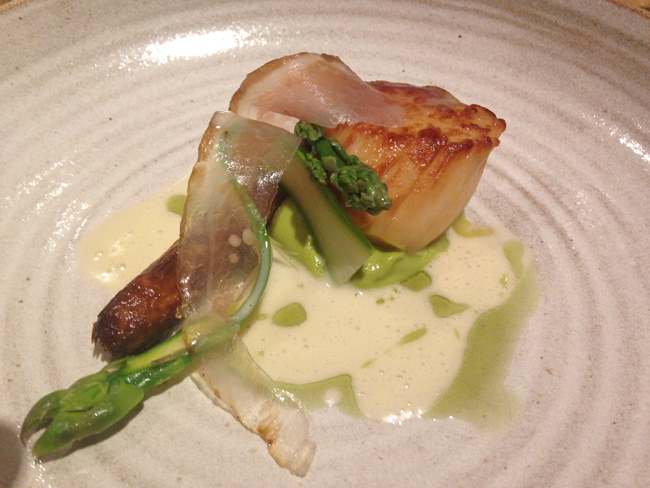
Next, a fat hand dived West Coast scallop had a properly seared crust and soft, succulent flesh. Served with a transparent slice of “our Guanciale”, a home cured pig’s jowl, this could be seen as a playful take on the British classic scallops with bacon.  New season’s green, and scorched white asparagus, gave bold and smoky notes, whilst the dish was bought together by a conifer Douglas fir consommé.  Wine: Limney Estate, Horsemenden, Davenport, East Sussex, 2014  Dry white, aromatic.

Forest Side Scallop

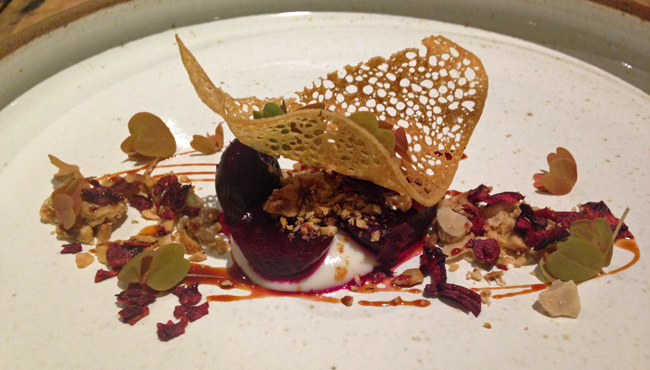
The sweet and sour taste of pickled Pablo beetroot and its syrup worked well with the lactic notes of a creamy Ragstone cheese puree. Lemony fragrance was added by Sunset Velvet and hazelnuts gave crunch. Perhaps the most accomplished element on the plate was a delicate, curled sourdough crumpet, looking like paper thin melba toast with holes! The piney character of spruce pale ale, created by Catherine the head gardener in Forest Side’s own brewery, was an inspired matching beverage.

Forest Beetroot

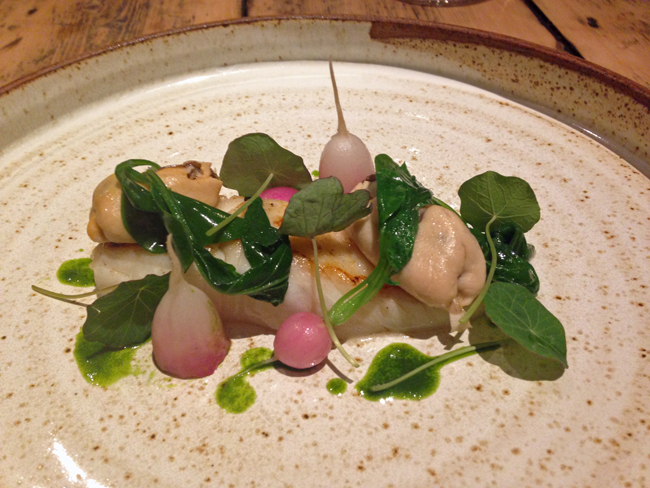
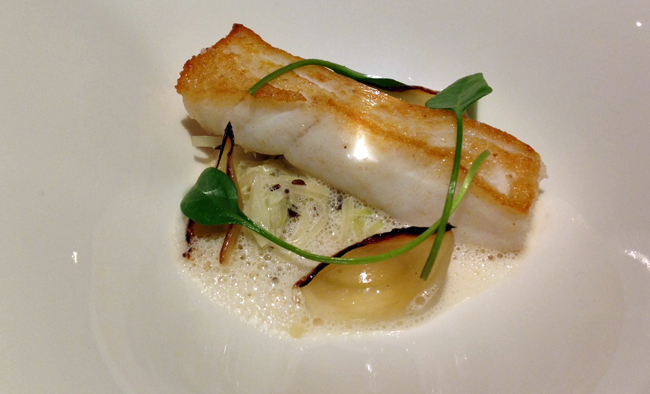
An accurately timed fillet of beautifully fresh line caught halibut had a caramelised crust and firm flakes of opaque flesh. Steamed mussels added a deeper flavour of the sea and soft dawn radishes, nasturtium leaves all  and an oil from cuckoo flowers gave delicate peppery notes which complemented  the mild flavour of this luxurious fish.  Wine: Chablis, Cahteau de Beru, Burgundy, France  dry white, mineral finish.

Halibut

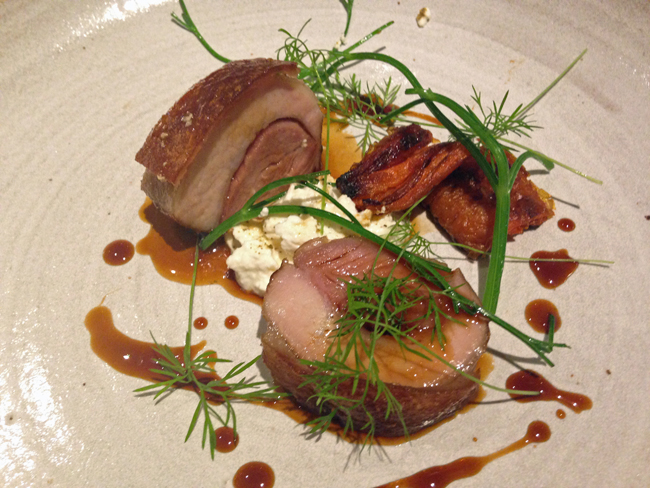
Next came a carnivorous show stopper. A piglet’s jowl (and cheek), cooked sous vide then finished on the plancha had a meltingly soft texture and unctuous porcine flavour. The super-thin crisp skin was the ultimate in delicate cracklings. Fennel pollen curd gave freshness to balance the richness of the meat.  Celery and fennel stems added a slight aniseed note and birch sap – from the hotel’s own trees – save a muted sweetness. This was another innovative dish in which all the elements worked well together in an effusion of tastes, textures and temperatures. For pork lovers it was an orgasmic delight! Wine: Barolo, Sandri, Piemonte, Italia, 2008

Forest Jowl

Saving ourselves for dessert, we declined the offer of cheese but were impressed by the variety offered. Sourced from Courtyard Dairy in Settle, the all British and Irish selection were described in impressive detail by the young lady who served us.

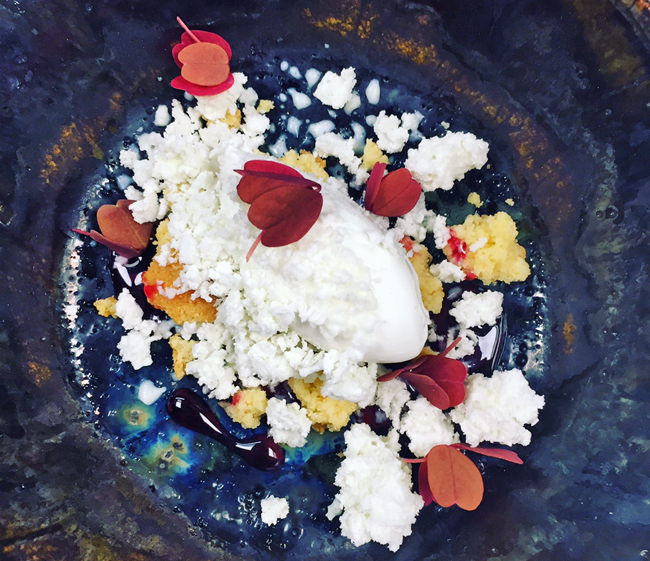
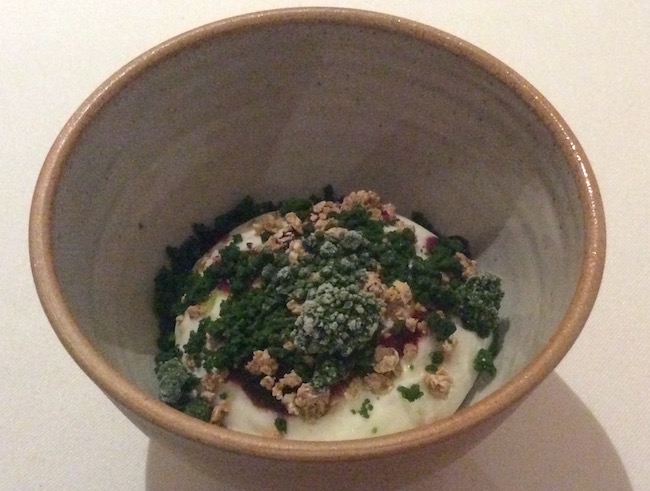
A playful pre-dessert featured sheep’s milk ice cream, dehydrated frangipane, frozen rowan shoot, Sunset Velvet flower, and slow gin syrup, all combining to give the taste of  Bakewell tart . The plum sake liqueur was another inspired if quirky pairing which seemed to emphasise the almond flavour. Matching beverage: Plum Sake liqueur, Umeshu, Amami-Oshima.

Forest Sheeps

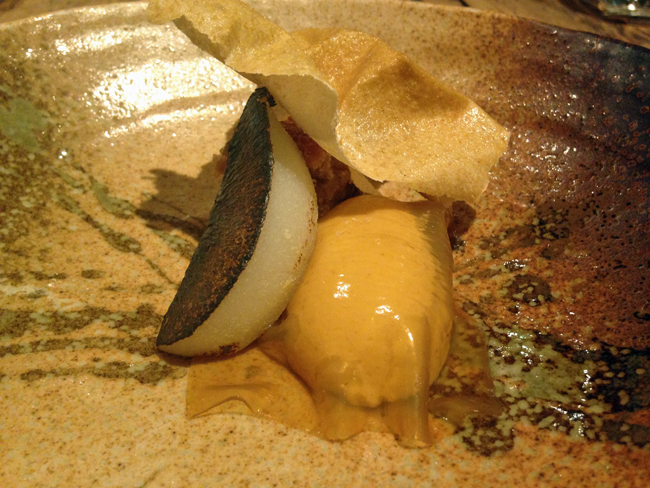
A dessert of scorched pear with spiced walnut cake, ginger beer jelly, beurre noisette cream, and malted tuile was a textural and taste delight, appealing to the eye as well as the palate. A technically demanding dessert, the combination of flavours worked well together, in particular the pear and ginger. Matching beverage: Homemade ginger beer

FOrest Pear

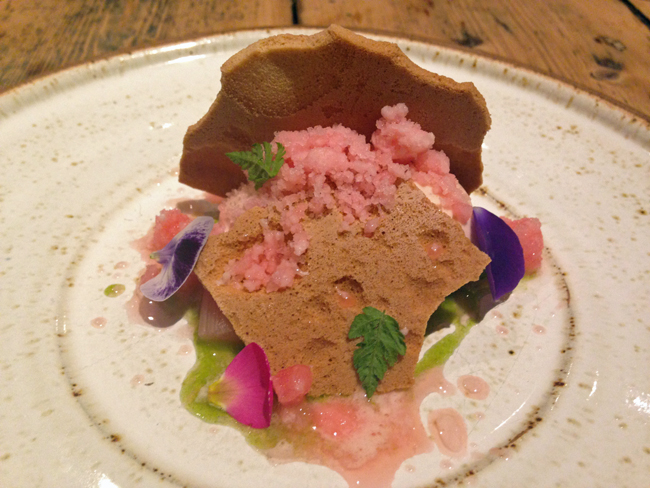
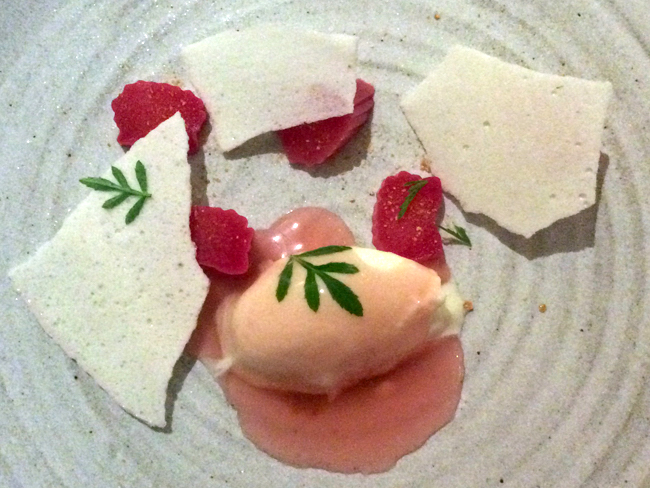
Textures of rhubarb featured the stems softly cooked sous vide, a silky smooth ice cream and an icy granita. A burnt butter tuile added a rich crispness and Sweet Cicely leaves gave a gentle aniseed flavour which enlivened the composition. A cocktail of rhubarb puree and Cremant de Loire was another harmonious match. Matching beverage: Rhubynni cocktail.

Forest Rhubarb

Delicious petit fours  which ended the meal included fudge set in small pieces like bark on a forest floor, and Douglas fir Turkish delight on a litchen base.

In just two months the kitchen and restaurant at Forest Side are operating like a well-oiled machine, but one with personality and humour. The cheerful, informative and accommodating service is overseen by the engaging Joe Thomasin and his deputy Gareth Newton.

Overall, it is clear that Kevin and his team are firing on all cylinders, with strengths in all sections of the kitchen. The invention, precision and attention to detail sustain the diner’s interest and appetite throughout the tour de force of ten courses. Given this abundance of talent, perhaps it is not so surprising that Cumbria Life awarded Forest Side the Best Hotel Restaurant of the Year so quickly. But regional awards are the first step to national recognition which will inevitably come given the progress so far. Kevin Tickle cuisine is as accomplished as that of other Michelin starred chefs in the area and beyond, so it will only be a matter of time before he achieves equal recognition. The elite corps of Lakeland chefs now has a new member!

Restaurant Review: Hipping Hall, Lune Valley (April 2016)

Posted on: April 23rd, 2016 by Simon Carter

Oli Chef b&w

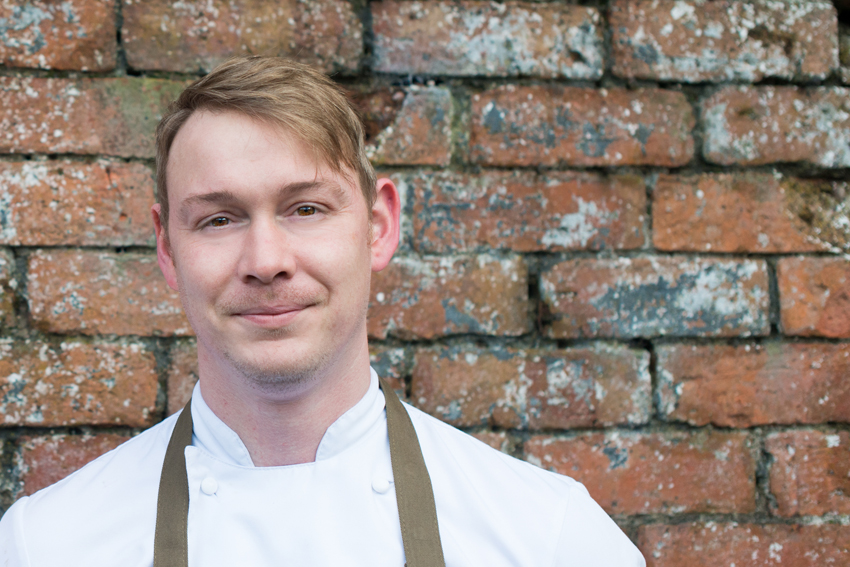
At the age of 28, Head Chef Oli Martin has developed a distinctive style of cuisine that reflects his unusually wide experience. After his first position at a one rosette restaurant (four years), cooking in a French village restaurant taught him the importance of shopping in local markets for the freshest produce. Returning to England, his skills were sharpened in the kitchens of Northcote Manor and Gilpin Lodge where he spent three years.

Time out in Asia and working in Sydney for a year expanded his culinary horizons, and a period in outside catering also helped  prepare him for his current role. Amazingly, in just three months after taking up the post in January 2015, his cooking was awarded three rosettes by the AA guide, confirming Hipping Hall’s position as a destination restaurant with rooms.

Oli particularly enjoys cooking with fish and vegetables, especially roots, which offer greater outlet for his creativity and which feature heavily in his menus.  He is in the early stages of developing his own kitchen garden, already achieving self-sufficiency in herbs and berries. Not an expert forager, he uses what is easily available and forages himself on Sunday afternoons.

Having built up good relations with established suppliers of core ingredients, and benefitting from specialist produce such as locally shot venison, Oli has developed seasonally changing tasting and a la carte menus, catering for a maximum of 32 covers.

There is healthy take up on the tasting menus, with the shorter one at lunch being more adaptable, allowing greater scope to experiment with dishes. Saturday and Sunday lunches are extremely popular with locals – the term includes those from a wide radius, this being a rural area – whilst those from further afield often return to enjoy the tasting menus.

Oli is refreshingly hesitant in giving his cuisine a distinct label other than “flexible.”  With its roots firmly in the classics, his cooking shows innovation and a degree of playfulness. Menu descriptions are terse, listing the few ingredients but giving no idea of cooking methods. This results in a less cluttered, cleaner approach, with the main ingredient taking centre stage.  Contrasting textures and strong flavours to are fully evident. Not that the dishes are easy to execute, as their essential simplicity offers no room to hide, requiring accurate timing, harmonious combinations and attractive, often rustic, presentation.

Fine Dining Guide sampled Oli’s eight course tasting menu on a weekday evening in April

Pre-prandial cocktails with canapes and a dainty amuse bouche served their purpose in stimulating the taste buds
Spent bread which accompanied the tasting menu was exemplary in texture and had a pleasant slightly sweet and malty flavour.

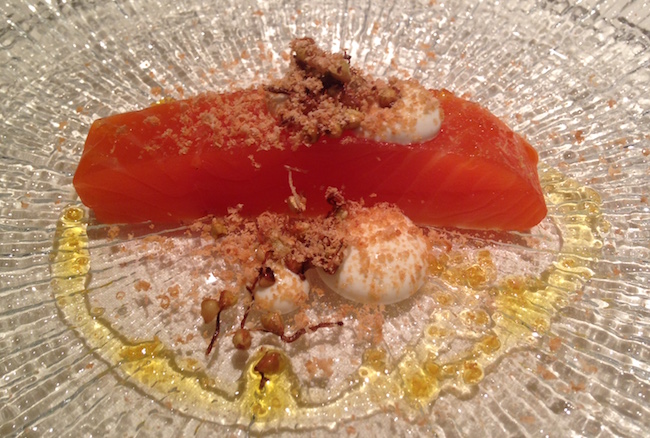
The first course of marinated trout was lively and vibrant, the rich flavour and firm texture balanced by the acidity and softness of a yogurt dressing. Wine: Chablis, Chateau Beru, France, 2013.

Hipping Hall Trout

An innovative dish of aged duck partnered thin strips of salted and air dried Lancashire duck breast  – a process over thirty days long  – with beetroot which added sweetness and grapefruit which gave a gentle bitterness to cut the richness of the duck. Again, textural complexity came first, then the taste combinations which worked well together. Wine: Dry-Furmint, DOBOGO, Tokhai, Hungary, 2013

Hipping Hall Duck

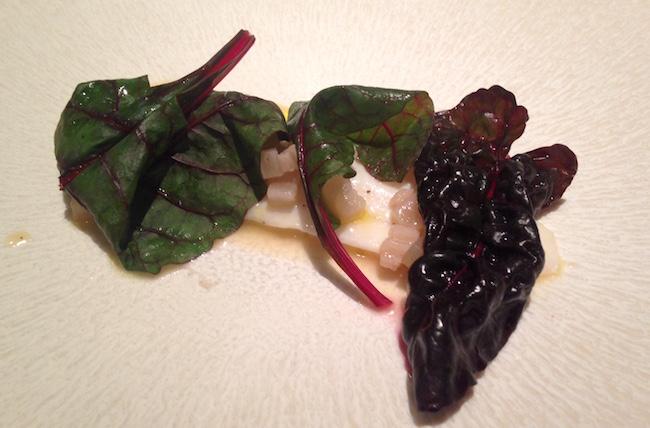
A Dover Sole fillet was precisely timed to capture its delicate taste and the firm texture of the flesh. Diced rhubarb and homemade lardo added harmonious sweet and savoury notes that did not overpower the fish. Wilted chard completed this simple yet elegant dish.
Wine: Lugana Ca L’Orjero, Veneto, Italy, 2014.

Hipping Hall Sole

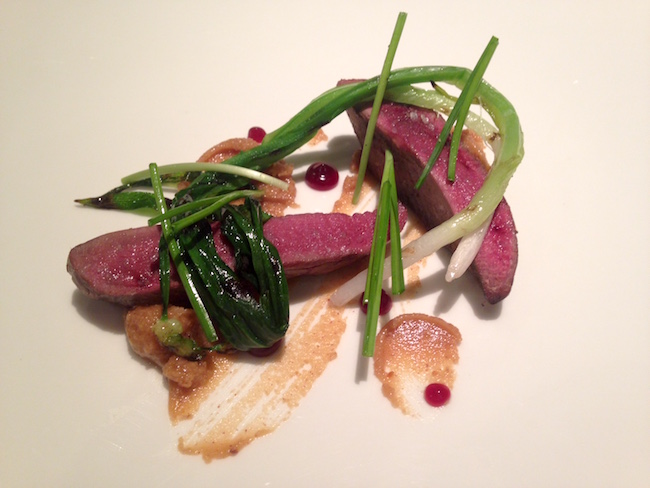
A medium rare pigeon breast benefitted from being cooked sous vide then finished in the pan. Succulent and gamey, avoiding the livery texture inferior cooking brings, it showed skill in timing and seasoning. Hazelnut butter provided a complementary earthy note, wild leeks gave texture and elderflower gel added the sweetness the dish needed. Overall this was another well balanced, precisely executed and beautifully presented dish. Wine: Barbera D’Alba, Ciabot Contessa, Umberto Fracassi, Piemonte, Italy 2011

Hipping Hall Pigeon

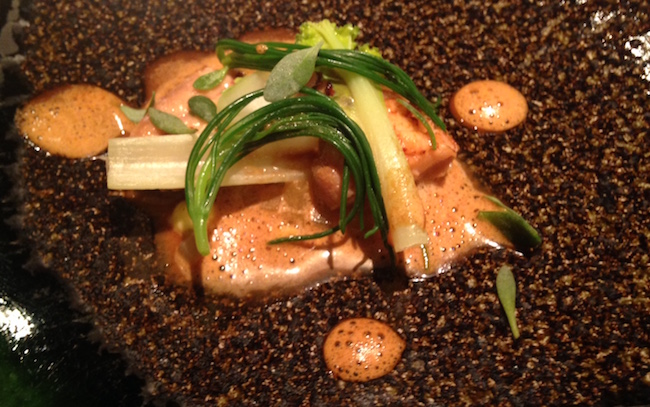
A moist, sweet tranche of monkfish had been lightly seared then marinated in lemon juice. Its robust qualities, both in texture and flavour, were complemented by an intense aerated fish bisque. Strands of monk’s beard added a spinach like taste to dress the fish.
Wine: Nebbiolo, Costa Bassa, Marco Fay, Lombardia, Italy, 2014

Hipping Hall Monk Fish

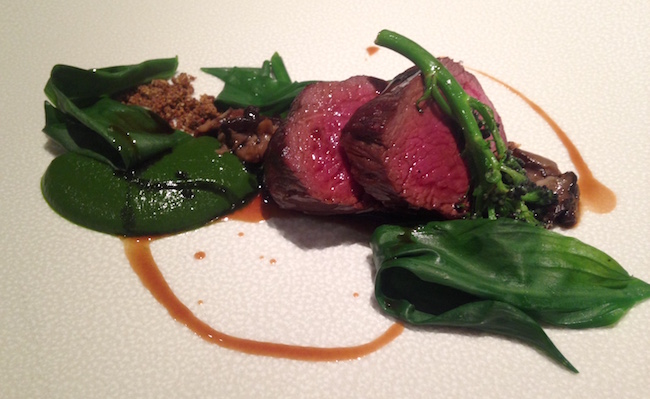
Loin of venison was another masterclass in game cookery. Seared and properly rested, it was a triumph of gentle gamey flavour and buttery texture. A pepper crumb added a contrasting crunch, shitake mushrooms an earthy richness, whilst wild garlic puree gave a herbal lift.
Wine: Cru-Elles, Ludovik Engelvin, Languedoc, France, 2014

Hipping Hall Venison

A refreshing pre dessert provided a veritable explosion of tastes, textures and temperatures. Salted yoghurt, puffed wild rice and mint and cucumber granite worked well together in cleansing and enlivening the palate.

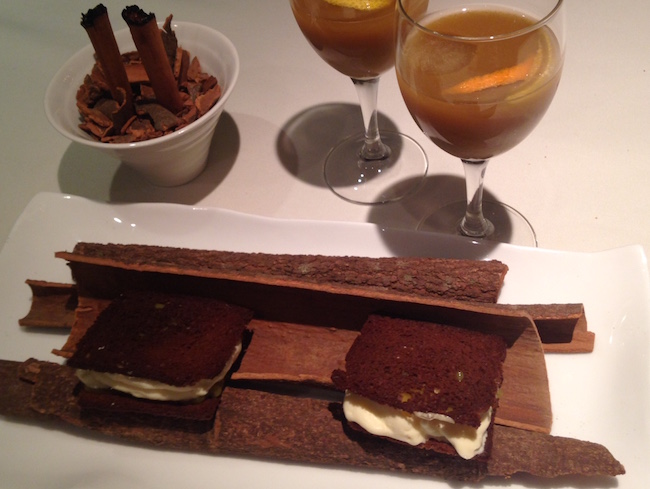
The menu description for the next course, Lancashire Cheese, Spiced bread  totally understated  the playful invention of this unique dessert. The slightly salted, silky ice cream was sandwiched between biscuits made with the spices used in Eccles cakes and given sweetness with the addition of golden sultanas. A smoking cinnamon stick dipped into iced tea proved a novel twist to this delicious, witty version of afternoon tea.

Hipping Cheese

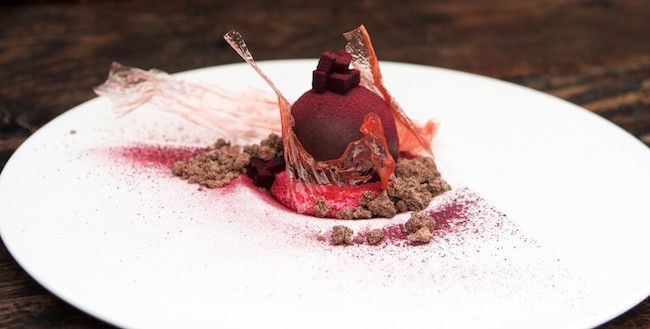
A signature dessert of Chocolate sphere, mandarin, truffle  has become so popular is stays on the menu from September to March. Vanilla and chocolate  custard encased in the delicate tempered sphere was dressed with  hazelnut  praline; caramel and feuillantine pastry. Truffle shavings running through the dish gave a heady fungal earthiness to balance the sweetness of the dish.  Mandarin sorbet of velvety smoothness and deep intensity gave contrasting taste, texture and temperature. This original, beautifully presented composite dessert, demanding a high degree of technical skill, confirmed the strengths of the pastry section.
Wine: Voudomato, Hazidakis, Santorini, Greece, 2007

Oli Chocolate Sphere

Coffee and petit fours completed a memorable meal. This was enhanced by a judiciously chosen flight of wines to complement the savoury and sweet courses In particular, the Umberto Fracassi with the pigeon and Santorini with the chocolate sphere were inspired choices.

The welcoming, engaging and knowledgeable service, especially that of Clare Duthie who presented the dishes and wines, showed the front of house, ably  organised by restaurant manager Rob Scott, was on top form.

Overall, the meal we enjoyed at Hipping Hall was an unpretentious virtuoso performance showing consummate skill and mastery of a variety of techniques which do full justice to high quality ingredients. Yet, at just 28, Oli Martin has clearly has not reached the peak of his powers and has so much more to give. Having elevated the cuisine of Hipping Hall to lofty heights in so short a time, further accolades are well within his grasp. Fine Dining Guide will follow his career with interest and awaits the publication of the food guides, especially Michelin, in eager anticipation.

Hotel Review: Hipping Hall, Lune Valley (April 2016)

Posted on: April 23rd, 2016 by Simon Carter

Hipping Hall Exterior2

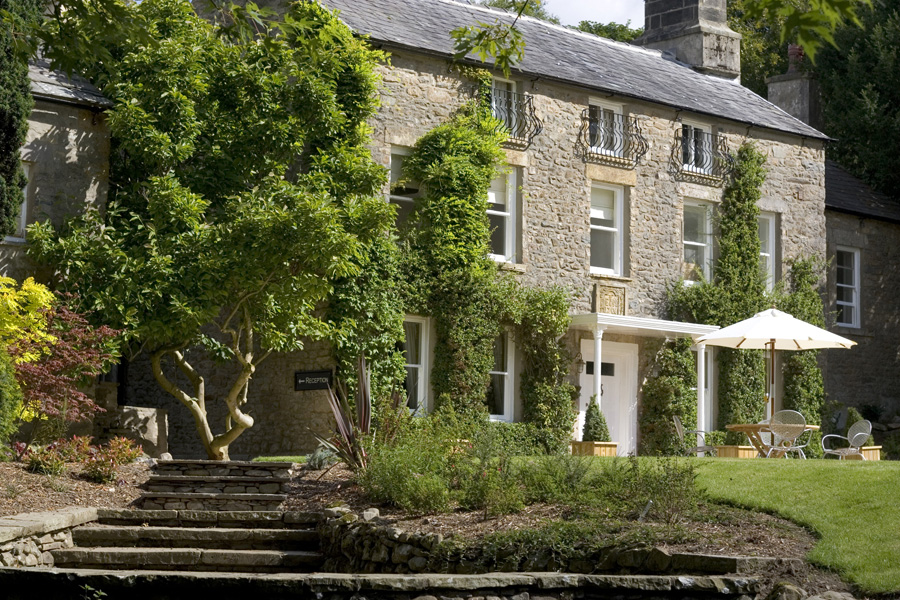
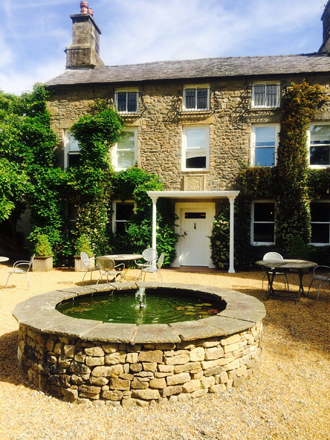
Hipping Hall is three miles from Kirkby Lonsdale, Lancashire, a short drive from Junction 36 of the M6. As its owner Andrew Wildsmith is keen to emphasise, its location in the Lune Valley, with easy access to the Yorkshire Dales to the east, the Lake District to the west and the Eden Valley to the north makes it an ideal one stop venue for those with limited time to explore the region.  Many repeat guests also use it as an restful half way stop en route to Scotland.

Hipping Hall ExteriorOpened in 2005, Hipping was the first of three Wildsmith hotels, the others being The Ryebeck, which Andrew took over from his father, and the more recently acquired Forest Side, both in the Lake District. He opened Hipping without any experience of the hospitality industry and is largely self-taught. Learning on the job with the aid of trusted advisers has proved to be the most effective way of offering high quality accommodation, food and service. By 2010, so distinguished was Hipping’s reputation that the BBC chose it as one of five locations for the series The Trip, in which Steve Coogan and Rob Brydon reviewed restaurants in the north of England. Each course was turned four times in a six hour service for filming. Andrew remembers vividly how “intoxicating” two days’ of filming were, despite it being edited down to ten minutes for television.

Ruth Davies for Fine Dining Guide gives her impressions of this AA five star / three rosette restaurant with rooms.

Hipping Hall is a delight. Tucked away behind trees and at the end of a winding drive, the first-time-guest discovers this treasure gradually. Winding its way from the cleverly disguised parking areas, the path crosses Broken Beck whose original stepping or ‘hipping’ stones gave this beautiful sandstone and slate roofed building its name. From the bridge a tiny 19th century Grade 2 listed wash house, now the wood store, can be seen perched on the bank of the stream, and behind this can be glimpsed the newly refurbished stable blocks which are an altogether different lap of luxury.

Continuing across a small paved courtyard, guests enter the spacious reception area where another reference to Hipping Hall’s historic past presents itself: a well in the centre of the floor! Fortunately for the unwary it is now stylishly planted with ferns and covered by glass.

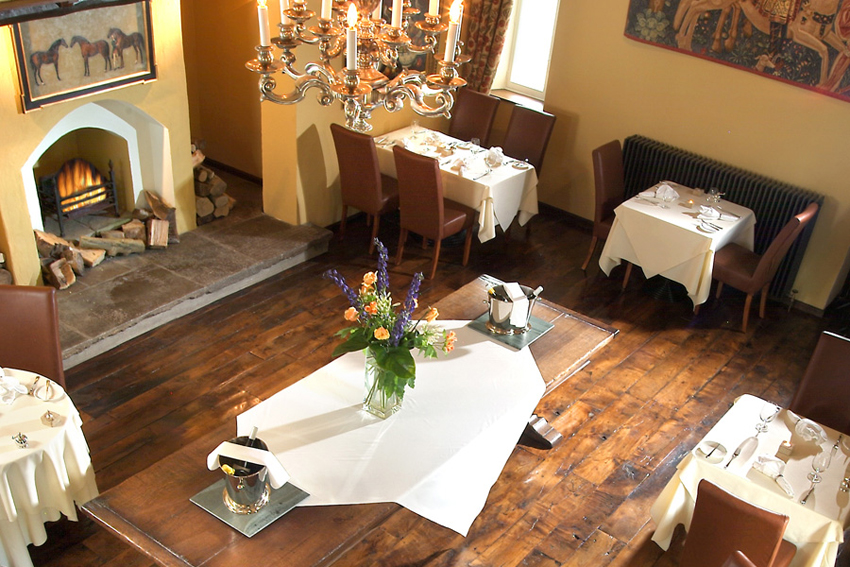
An unassuming door to one side of the reception area hides Hipping Hall’s spectacular secret, the dining room. Having seen life over the centuries variously as a blacksmiths forge and a village meeting place, this room has been lovingly stripped back to its bare walls and rafters, and is nothing short of a 21st century interpretation of a medieval ‘Great Hall’. Referencing the one remaining 13th Century wall, it is a triumph which provides a magnificent backdrop for Oli Martin’s delicious food.

Hipping Hall Restaurant3

A large heavy wooden refectory table, featuring a splendid floral display resides in the centre of the room underneath an impressive stained oak chandelier. This is balanced perfectly by the elegant, white table-clothed individual dining tables which are arranged towards the edges of the room. One side wall features large mullioned windows which flood the room with light and are dressed with sumptuous heavy curtains hanging from wrought iron curtain poles. The equally sumptuous woven fruit design of the material echoes the fabric of an impressive tapestry on the end wall. Featuring medieval nobility on horseback and engrossed in pursuit of falconry, it would thrill the heart of any Gothic revivalist. If this were not sufficient, the opposing minstrels gallery seals the dining room’s warm historic atmosphere. The old and the new are perfectly balanced in this room and reflect the attention to detail manifest throughout Hipping Hall.

Hipping_Hall_INterior1

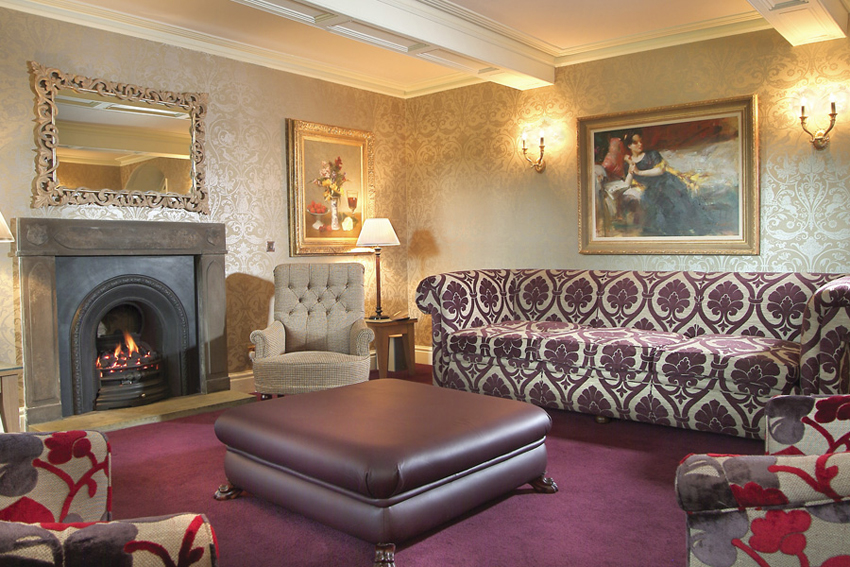
Leaving the reception area on the opposite side to the dining hall, the guest enters the sitting room and bar. As the living rooms of the original house, and with lower ceilings, they provide a cosy contrast to the grander dining room. The bar leads on from the larger sitting room and features at its centre a low upholstered coffee table surrounded by four comfortable red leather winged back chairs. The sitting room itself is calm and relaxing, and on chilly days, has a very welcoming open log fire. Subdued lighting, and comfortable arm chairs and sofas upholstered in a variety of fabrics and designs, but all in shades of aubergine, caramel and cream are arranged in small groups and  encourage the visitor to linger a while. It is now that one notices the low window seats and the garden beyond. Drinks on the lawn in the summer are a must.

HippingHallRoom4
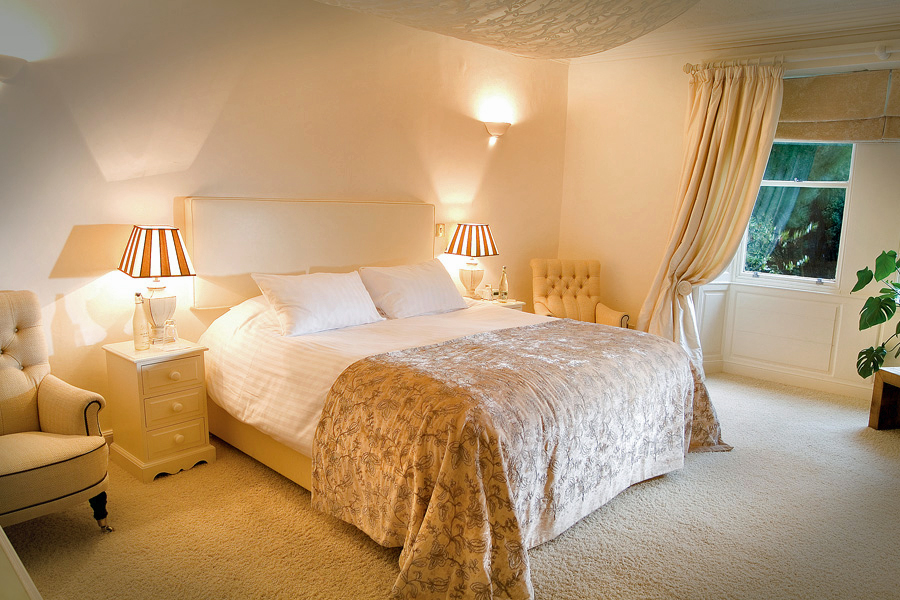
Opposite the sitting room an unusual staircase with the leather handrail detailed in Hipping Hall’s Listed Building documentation, leads to a spacious landing and the bedrooms. Luxuriously comfortable, each room has its own distinctive character save for the signature patterned voile canopy over the bed. Restful shades of cream and taupe dominate with differing accent colours for each room featured variously in the plush throws or floor coverings. Large sash windows are dressed with both soft velvet blinds and floor length, heavily lined slubbed silk curtains, which most definitely keep any adverse weather away. Andrew Wildsmith’s attention to detail is evident everywhere. Bottled water beside the bed and fruit in a bowl refresh the traveller as a prelude to an indulgent wallow in a large, deep bath with a plentiful supply of decadent toiletries. And afterwards, hurrah, the oft neglected full length mirror to make sure all is in place before dinner.

Hipping Hall Exterior4

The refurbishment of the adjoining Stables is adding a very exciting new dimension to the accommodation offered by Hipping Hall. Ideal for a celebration weekend or a house party, this self-contained facility is beautiful, and with the signature attention to detail one has come to expect from Andrew Wildsmith and his team. The large central communal area of the Stable building itself is on the first floor and divided into two, a very comfortable sitting room with sofas and arm chairs upholstered in locally sourced fabrics together with oak coffee and side tables, and next to it, a dining room. This room is nothing short of inspired. A beautiful table, which extends to seat up to 14 people, is its centrepiece, and is indeed a work of art. Crafted in wood, a herringbone inlaid pattern covers the surface and immediately demands ones attention. It is beautiful. If I had to stand up to eat at this table, I would not complain. Fortunately the diner is provided with a comfortable leather chair on which to sit! Overlooking is a mezzanine which can easily be pressed into service as an area for children, as behind is an additional bedroom which I presume was once a hayloft. The Stables has its own fully equipped kitchen, staffed by a private chef, and leaves the guest to enjoy the lawns both back and front where there are ample opportunities for dining alfresco, or just the enjoyment of a preprandial drink. The bedrooms also display great attention to detail. Decorated in restful shades of cream, grey and grey-blue, and referencing the colours of the hand woven Herdwick wool throw at the foot of the bed, comfort and style are hand in hand. The baths are large and deep, and the walk-in showers offer ease of access for those of more limited mobility, with opulent toiletries aplenty.

Hipping Hall makes me smile. It is old yet modern, stylish yet relaxed, and with Oli Martin’s food, a perfect place to rest, unwind and indulge.

Restaurant Review: Bistro Provence, Leith (April 2016)

Posted on: April 2nd, 2016 by Simon Carter

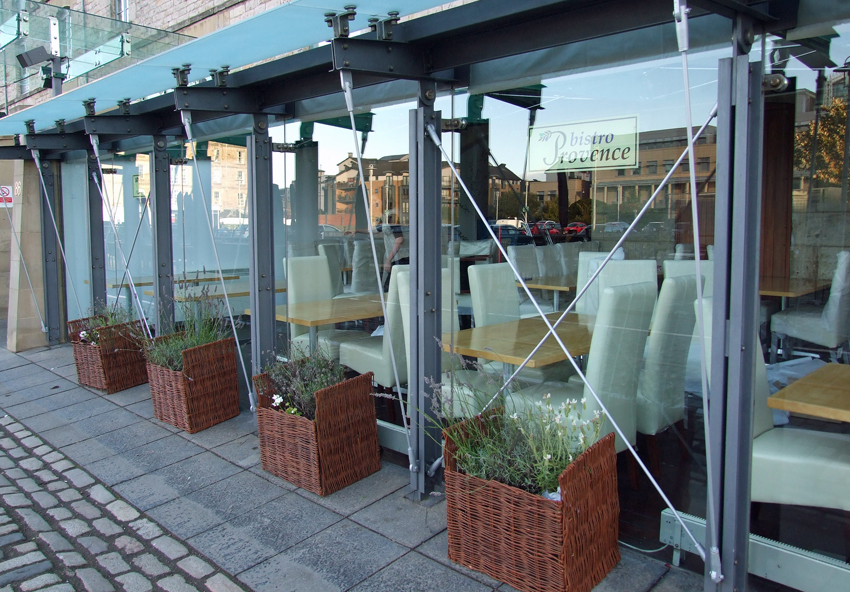
bistroprovenceexterior

The once declining area of Leith, Edinburgh’s port, is now bustling and thriving, with an embarrassment of choice for the well-heeled diners of  Scotland’s capital. Discerning foodies need not just seek tables at the Michelin starred restaurants in the area to satisfy their gastronomic cravings. A variety of British, European and Asian cuisine is now available with highly competent cooking and prices to suit all pockets. Perhaps none gives better value for money than Bistro Provence.

Open six days a week – closed Mondays –  it offers all day dining either from the “Nibbles and light bites” menu (available from 12pm to 5pm), the “Menu du Midi” (two courses £12.95, three courses £17), or the dinner menu (£22.50 for two courses, £27.50 for three). Prices like these are rare in any part of the capital and are more surprising given the quality of the ingredients and the confidence shown in the cooking. Little wonder that Bistro Provence attracts a mixed clientele of tourists, locals and civil servants from the Scottish government buildings opposite. On the night we visited, there was a strong French contingent of diners, not just, one suspects, because of the France v Scotland rugby match the next day!

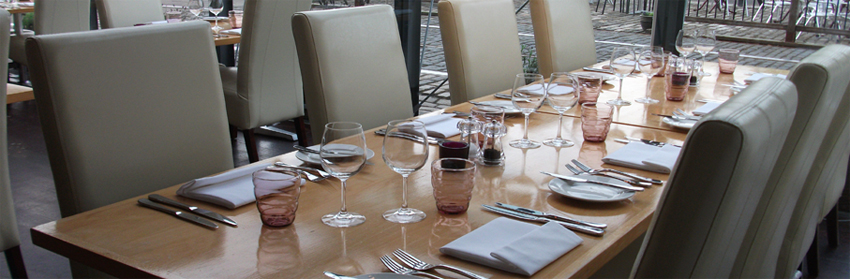
Located in a converted whisky warehouse in Commercial Street, on the site of previous French restaurants, the small wine bar by the entrance leads to a steel and glass conservatory like-dining room which is bright, airy and spacious. Echoes of industrial chic are seen in the tubular air conditioning vents and bare bricked walls of the original building.  Lighting is not too dimmed and tables are well spaced with high backed leather seating for a maximum of 30 covers. A lively buzz of contented diners adds to the relaxed, informal feel.

BistroProvenceTable

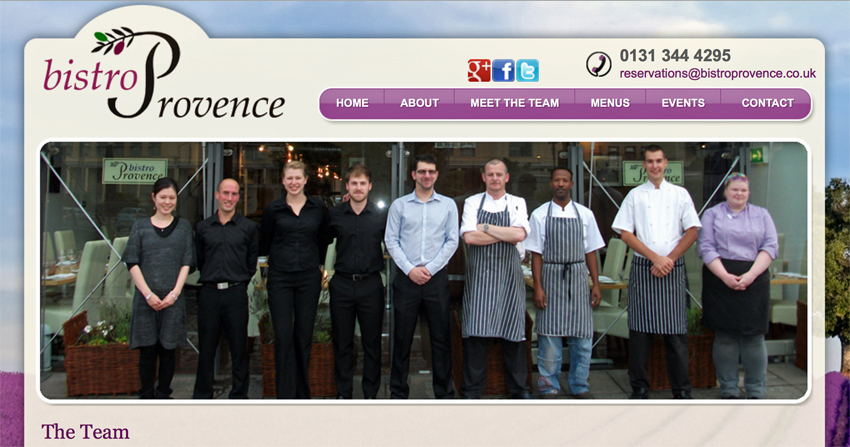
Multi-faceted chef patron Michel Fons leads both the kitchen and front of house teams. His extensive experience in noted Edinburgh establishments such as La Garrigue, The Plumped Horse and Kitchin, and most recently as Restaurant Manager at Gidleigh Park, has stood him in good stead for the exacting demands of restaurant life. After opening in 2013, success came early with the award of an AA rosette, recommendation in the Michelin Guide and a finalist in  the prestigious CIS excellence awards in the Newcomer of the Year category.

BistrotProvenceWebsiteTeam

The Team at Bistro Provence, Sampled from http://www.bistroprovence.co.uk/the-team.shtml on 02/04/2016


Michael has designed a menu reminiscent of his native Provence, from where he sources most of his olive oil, herbs and spices. The March dinner menu comprises a choice of five in each of the starters, mains and dessert sections – wide enough to give a real choice, but not too broad to ensure consistency of cooking by a brigade of up to four. Accuracy in timing, clarity of taste, robust flavours, harmony of textures and temperatures, and attractive but not contrived presentation are key features. Seasoning and saucing are also strengths, allowing the main ingredient to shine. Portions are large, reflecting the generosity of spirit often found in regional French bistros.

A select wine list, many available by the glass, is suitably French, and again very good value for money by avoiding excessive mark ups. We chose appropriately for this Provencal menu a  rose wine – Cuvée des Lices, Provence 2013.

Our evening meal began with crutons of sausage and red onion and cheese with walnut dressing. These served their purpose in teasing the palate but not stealing the thunder from the main event.

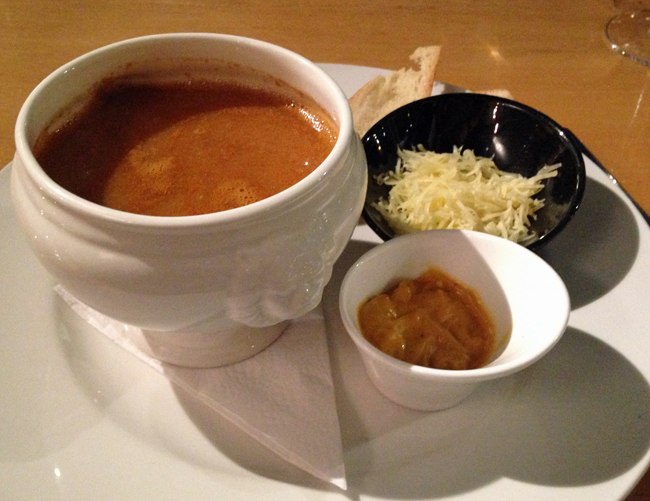
Sampling the Traditional fish soup was essential in this southern French restaurant, and it did not disappoint in its degree of colour and depth of flavour. Classic garnishes of rouille, crutons and Comté added texture and helped to balance the piscine intensity of the soup.

Provence fish soup

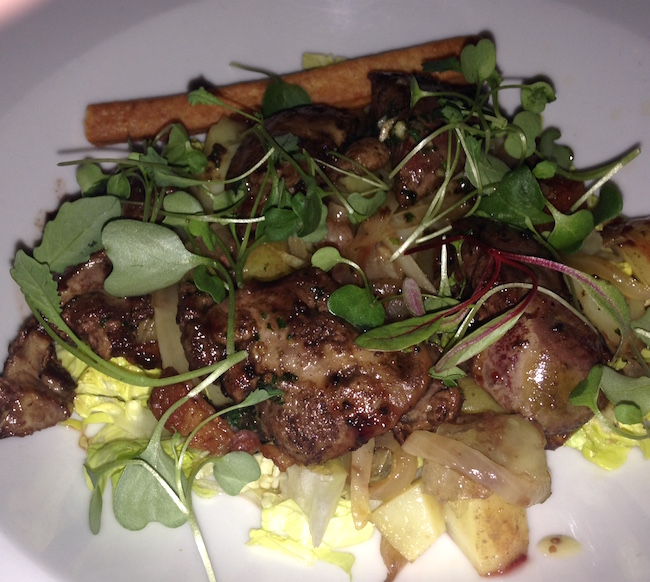
A hearty Salade Paysanne of duck and chicken livers, accurately cooked pink, came with a parmesan tuile, sauteed onions, lardons, peas shoots and a port syrup. The contrasting soft and crunchy textures, warm and cool temperatures, and sweet and savoury flavours, so typical of French salades composées, made the dish a delight to eat.

BistrotProvenceSalad

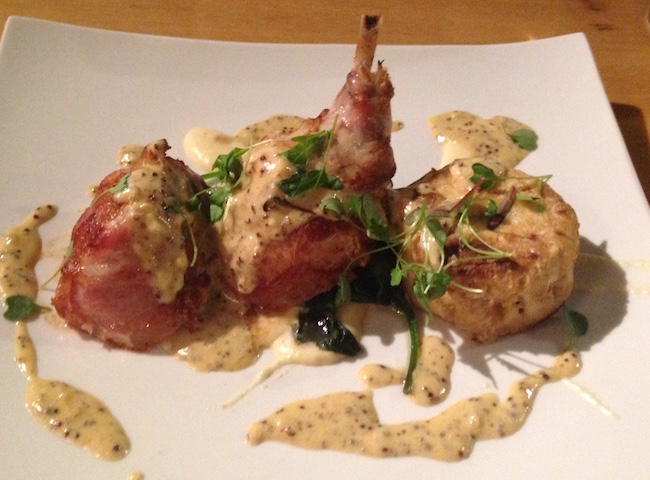
A stuffed French rabbit main course saw the bacon wrapped leg and saddle precisely timed to retain their moistness and mildly gamey flavour. Celeriac fondant & purée gave a nutty, gentle aniseed sweetness that worked well with the rabbit.  A classic finish was provided by a flavoursome but not overpowering creamy Old Grain mustard sauce.

BistrotProvenceRabbit

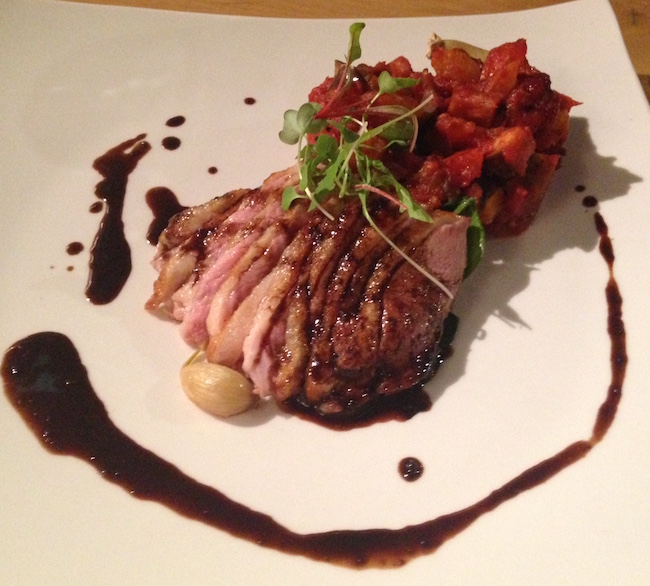
A duck main course burst with flavours of the Mediterranean. The thinly sliced breast, cooked to a blushing pink, was enlivened by the perfume of soft and sweet roast garlic and paprika infused ratatouille. A deeply reduced tapenade sauce worked well in this gusty, strongly flavoured dish.
Desserts at Bistro Provence were equally accomplished.

BistrotProvenceDuck

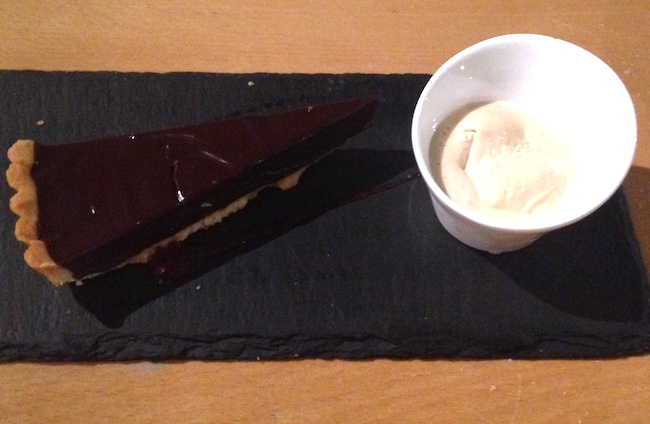
Bitter chocolate tart was suitably indulgent with it dense ganache and crisp pastry. Salted caramel ice cream complemented the tart well in terms of temperature and taste.

BistrotProvenceChoc

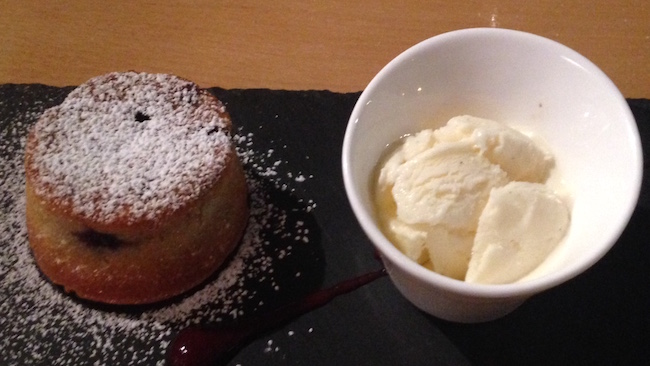
A special of individual blueberry clafoutis was well baked to produce a crisp crust and soft, bouncy interior. My only quibble about this delicious dessert – accompanied by a velvety smooth vanilla ice cream – was the portion being rather small.

BistrotProvenceClafoutis

Overall, this was a most pleasing dinner, enhanced by welcoming, knowledgeable service. Perhaps the most impressive feature about the food is its essential integrity. There are no gimmicks, no excesses and no faddish techniques. It is classic bistro cooking at its best. Fine Dining Guide will follow the progress of Bistro Provence with interest, and will no doubt return to sample other dishes from its carefully constructed seasonal menu.

Restaurant Review: The Honours, Edinburgh (March 2016)

Posted on: March 29th, 2016 by Simon Carter

Honours Edinburgh

Martin Wishart is Scotland’s most prolific restaurateur. His flagship eponymous restaurant in Leith has retained its Michelin star since 2001. A sister restaurant at Cameron House Hotel in Loch Lomond http://www.mwlochlomond.co.uk/ was similarly garlanded in 2011. The same year saw the opening of The Honours in Edinburgh’s Newtown, in partnership with his longtime friend Paul Tamburrini. Most recently, in 2014, he opened another brasserie of the same name in the Malmaison Hotel, Glasgow. In addition, Martin runs a Cook School and Wishart’s Dining for private functions, and writes articles for the Glasgow Herald.

Martin Wishart

The Honours takes its name from the Scottish crown jewels, the Honours of Scotland http://www.visitscotland.com/about/arts-culture/uniquely-scottish/honours-scotland. The modest glass fronted exterior is in perfect harmony with the grey stoned stepped Georgian terrace of North Castle Street. Inside, contemporary chic décor and furnishings are preferred to the glitzy mirrors and brass of Parisian brasseries.  A stylish bar leads to the long, high ceilinged dining room which benefits from giant black pendant light shades, brass wall lights and large mirrors which accentuate the sense of space. Gold painted wall spots contrast with the black and white tiling and the honey toned wood veneer. Low backed leather banquettes and undressed tables add to the elegant, relaxed yet sophisticated feel.

On a busy evening, 140 covers in two sittings can be served by a kitchen brigade between nine and 12, headed by Paul Tamberrini. Sourcing of produce is ethical and seasonal but not totally Scottish. For instance, as the menu proudly states, Atlantic oysters come from the Fal Estuary oyster fishery in Cornwall, “the most sustainable in the world and the last to use rowing boats to harvest the catch.” Classical cooking skills ensure a consistently good end product that is accurately timed, well-seasoned, and attractively presented. This is especially true of the Grill section of the menu featuring prime cuts of Donald Russell grass-fed beef, dry-aged between 28 & 36 days and cooked on a Josper Grill, an indoor barbecue

Roughly 60% of the extensive carte is fixed, the remainder comprising seasonal variations. The choice is suitably wide: 11 starters including “Wishart’s Blend” smoked salmon; seven mains of meat and fish; the Grill with 11 options including Chateaubriand for two; and seven desserts, ice cream and sorbets. Specials might include cote de veau or rack of lamb. A competitively priced set menu – two courses for £18.50, three for  £22.50 – is available at lunch  and early dinner Tuesday to Friday, the latter being ideal for pre theatre meals.
A classic cocktail selection supplements a select wine list, strong on France but also representative of the New World.  Greedy mark ups are avoided, with many wines also being available by the glass and carafe.

Service, overseen by the engaging Steven Spear, is friendly, accommodating and knowledgeable. Faced with an embarrassment of riches on the menu, well briefed front of house staff, dressed in long black aprons, give helpful advice.

Fine Dining Guide visited on a busy Friday evening in March and found much to admire in the high levels of food and service.

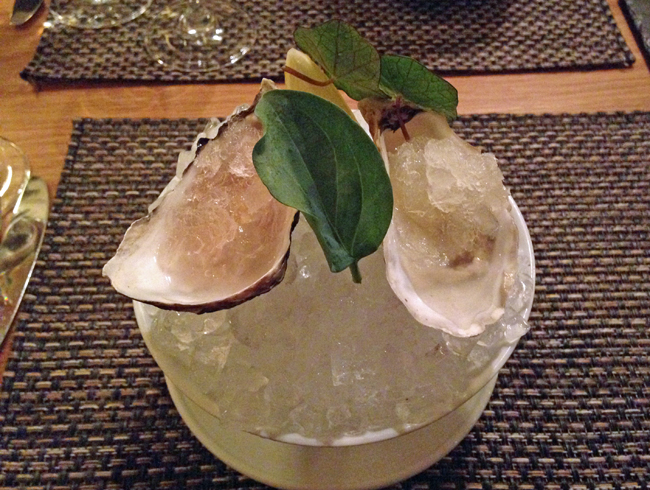
Cornish oysters, spectacularly presented on an ice bowl, were paired with granitas of gin fizz and pink champagne, both of which complemented rather than overwhelmed the briny flavour and creamy texture of the bivalve.

Honours Oysters

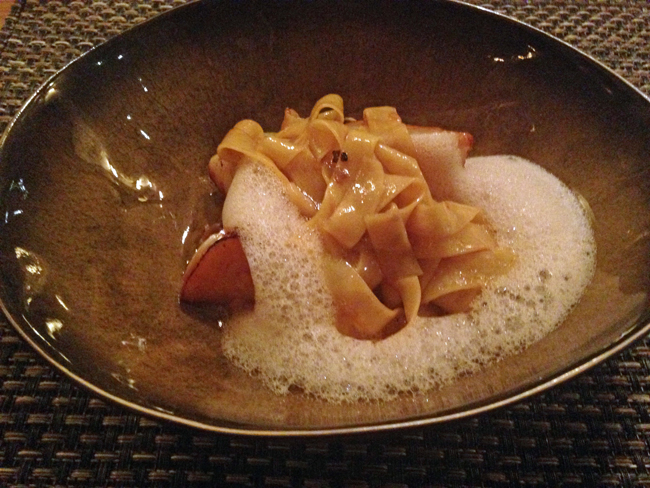
Paul’s Tamburrini’s speciality with pasta dishes was demonstrated in an exquisite starter. Hand rolled, fresh silky smooth tagliatelle was enhanced with fragrant, earthy truffle puree and truffle and potato foam. This was paired with a trio of scallops, perfectly timed to produce a caramelised crust and soft, succulent flesh. This combination of savoury and gently sweet flavours, where pasta and seafood shared equal billing, was an indulgent, memorable dish.

HOnours Scallops Pasta

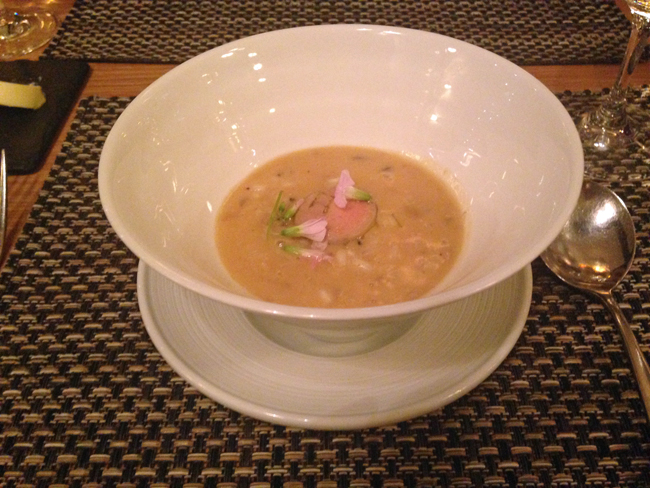
Equally accomplished was a special risotto. Cooked al dente to creamy richness, it benefitted from a flavoursome stock enriched with of nuggets of foie gras and finished with shavings of winter truffle. This was a triumph of gently smoky flavours and nutty textures.

Honours Risotto

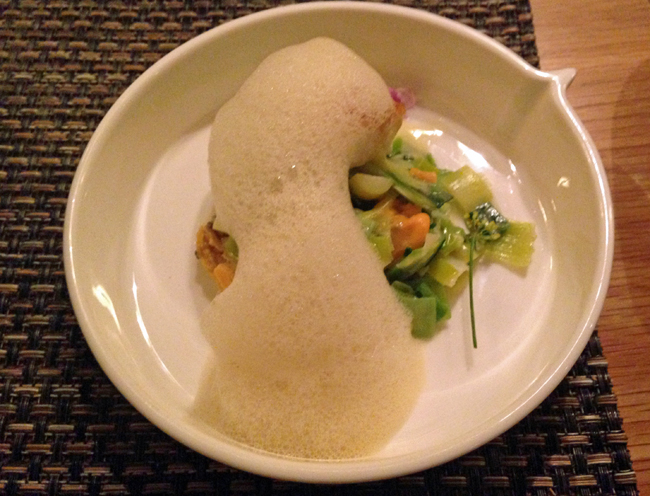
An intermediate course of sautéed John Dory fillet with braised leeks and mussels showed a judicious harmony of flavours and textures. An innovative sauce of curry and Sauternes was mild enough not to overwhelm the clean, fresh  taste of the fish.

Honours John Dory

For mains, we decided to share the house speciality: Chateaubriand. It’s a long time since we have chosen this from a menu and it will be an equally long time before we will enjoy it to the exacting standards produced here. Given the essential simplicity of the dish, there is nowhere to hide if this delectable cut in not properly rendered. No such failing with the well-seasoned Honours Chateaubriand, coated with Madeira glaze and chicken stock, cooked over charcoal and briefly finished under the salamander.  Almost velvety in texture, with a melting mouth feel and bursting with bovine flavour, the cooking to medium rare did full justice to the meat. Sauce Bearnaise, duck fat chips, crisply battered onion rings, and a lightly dressed green salad which added freshness and cut the richness of the other components, completed this extravagant, composite dish.

Honours Chateaubriand

Desserts can often prove an anti-climax on brasserie menus, but not at the Honours. Both of those sampled reflected the strengths of the pastry section.

A layered dark chocolate mousse, topped with a rich ganache, partly resembled a slice of Opera gateau. It was light but deeply flavoured, contrasting in texture with a decorative sugar crisp. Served with a chocolate coated lemon chiboust on a stick in a shot glass with gin and tonic granita, this was a playful, inventive dessert.

Honours CHoc

A well risen soufflé of passion fruit and lychee soufflé topped with pineapple sections captured the intense tropical flavours of the fruit. Crisp at the edges and soft in the centre, and served with a smooth, intense lychee sorbet, this was an exemplary dessert, at once light, warm and refreshing.

Honours Souffle

Overall, this was a memorable meal, demonstrating strengths on all fronts. Honours is clearly several notches above the average chain brasserie, bridging the gap between fine dining and less formal cuisine, with the balance tilting towards the former in terms of the cooking and service, although the atmosphere is more relaxed.  Prices reflect the superb quality of the ingredients and the undoubted skill in cooking. Fine Dining Guide will definitely return, sampling dishes from the “Main Plates” which include some of the brasserie classics such as blanquette de veau, rabbit a la moutarde and ox cheek a la Bordelaise. We can’t wait!

Chef Interview: Tom Sellers, Restaurant Story (March 2016)

Posted on: March 16th, 2016 by Simon Carter

Tom Sellers

Tom Sellers has worked in the kitchens of Tom Aikens, Thomas Keller, Adam Byatt and René Redzepi.  At each stage he learned rapidly about cooking, managing and most importantly about himself.  Now with a restaurant company responsible for 87 staff, a figure which may double over the next 24 months, Tom tells about his natural drive while sharing his vision on how he plans to progressively move forwards with Restaurant Story.  Simon Carter conducted the interview at Restaurant Story in February 2016.

1) Tell us some personal background associated with becoming a chef?

School was never for me and I initially fell into cooking via washing pots in a pub. I very quickly found my focus, indeed discovered that my passion and imagination lay with food. In hindsight I learned something about myself very early as it just seemed like a natural next step to try and work for the very best in the industry to learn as much as possible as quickly as possible.

2) Tell us some professional background which led to Restaurant Story.

The chef at the pub where I had been working had once worked at Pied a Terre and he told me to go and work for Tom Aikens: Eleven years ago at 43 Elystan Street, Tom (Aikens) was probably the most progressive chef in Britain. I did a day at his restaurant and subsequently started working in what was a very tough kitchen with a fair turnover of chefs. I had nothing to compare it with in terms of how severe the culture may have been but I absolutely loved it!

I became known as ‘Little Tom’ as Tom Aikens kind of took me under his wing. For sixteen hours a day in the kitchen, I spent two and a half years there learning my craft: Tom Aikens was a really intense creative force and drilled into me discipline, focus, consistency and dedication. On top of his classical skills his imagination with food had little to no boundaries and this proved inspiring.

Tom Aikens helped me secure my next position, which was at Thomas Keller’s Per Se. The culture quickly taught chefs how to carry themselves, how to be the utmost professional at all times and to see the bigger picture – perhaps I went from being a boy to a cook with Tom Aikens and then from a cook to a man with Thomas Keller. As part of this journey I learned that even the small things, the details, were crucially important. Moreover the people working on those details were made to feel important. Yes there always has to be a hierarchy in a kitchen, a sous chef will tell a commis what to do but under Chef Keller, the way in which the chain of command was executed made the commis feel like the most important commis in the world! That feeling was empowering. The way you were told to do things was part of the almost beautiful culture working under Chef Keller.

I would say I had enjoyed perfect timing in working in these two kitchens at a time when these two chefs were present and sharing their knowledge. With Tom Aikens there were probably twice as many ingredients on a plate than at Per Se but those dishes were produced with half as many chefs. Both chefs’ food was highly labour intensive but the division of labour was different, in fact they contrasted in so many ways but were inspiring in equal measures.

At 21 years of age, after five years working under Tom and Thomas, I came back to the UK ready for a three month break while I considered my next move. I went on a few trials, spoke to a few people and so on. It turned out that I met Adam Byatt at Trinity Restaurant in Clapham. I felt we had similar values, motivations and focus so it proved a pleasure and a further learning experience to work in Adam’s kitchen for two and a half years. I got first hand experience of how a slightly smaller scale, privately owned restaurant worked. I learned about the practical operational management, finance and business aspects of running your own restaurant. I had always dreamed of being a chef patron one day but there was one more step to take on the journey before opening my own place. I worked at Noma.

I was actually approached by Matt Orlando who I had previously worked under at Per Se. It transpired he had moved on to work as Rene Redzepi’s head chef. I flew over and had a meal at Noma with Tom Aikens and on the way back to the hotel just said “I must work there!”

This was the period just before Noma reached number 1 in World’s 50 Best Restaurants – very much a powerhouse on the rise, driven by a man (René Redzepi) who was head to toe about identity for his restaurant business. I was blown away by his drive and approach and towards the tail end of my time (two years) I knew I would never work for someone else again. It was an inspirational time.

3) Tell us about Restaurant Story.

I came back to London and felt confident in my ability and mixed with pure, young, ballsy naivety I met my future business partner. He had this former toilet block building east of the city, south of the river – he said to me if I build a restaurant from this building block what will you do with it? I said “Make it one of the best restaurants in the country!” £2m later – he had a half share, I had a half share – Restaurant Story was born!

There was a real buzz at the beginning. The print media came and consistently gave great marks; in addition over 18 months there were the guides awarding three and then four AA Rosettes plus a Michelin star in the September after opening in the April. We were full full full with a long booking sheet. I look back on it now with some maturity and hindsight but it all honesty it was mainly a blur – working 16 to 18 hours a day for 18 months and never leaving the kitchen. Now the restaurant has evolved, developed and matured in tune with my growth as a chef patron – all things are being done better and better with the sole aim of giving our customers an ever improving top level experience at Restaurant Story.

I am also a firm believer in value for money: Should you charge £10 or £100 then so long as it represents value then customers are happy. I can only judge this from my own standards and they are from experiences I trust. At my own company I try to take, learn and develop from both the good and bad experiences from the past, from which I evolve my own ethos, signature and way of doing things in my kitchen, restaurant and business. This is not a stationary concept, the goal posts keep moving as more information comes on board and improvements can be made. This openness to adapting is vital in every aspect of the business.

RestaurantStoryInterior

Also with ‘identity’ comes consistency, by identity I mean key signature dishes that remain on the menu but are gradually evolved, while at the same time encouraging motivation and satisfaction in the team by creating sets of dishes in the food offering that represent Restaurant Story (with particular focus on seasonality.)

5) What can you tell us about The Lickfold Inn?

Originally the site was owned by my business partner who was considering turning it into a house. It had been a pub owned by Chris Evans that had become derelict for three years. After some discussion we decided to keep it as a food led pub where I would consult on the menu and be responsible for placing the right chefs in the kitchen, work with the suppliers and so on. The pub building is beautiful and characterful, the surroundings are stunning and Graham Squire is the perfect chef for the venue. Graham spent seven years at Claridge’s and the menu we devise there really works for the customers.

We like to think we do things properly at The Lickfold, it’s a £300,000 kitchen, a top classically trained chef, strong team and I believe if you work hard and do things properly you’ll get the right rewards.

6) Tell us about the exciting new venture Restaurant Ours?

This is launching on the old site of The Collection at 264 Brompton Road – an amazing site, with what was an amazing premium and a short lease. I was fortunate to negotiate with the Reuben Brothers directly on the site and a deal was done.

My role in summary is ‘Culinary Director’ – I came up with the name (we’ll go to ‘Ours’ – as in ‘Our place’ – so why not Restaurant Ours?), the kitchen design, consultations on chefs and menus and so on. Hopefully I can sprinkle a little magic on top of the product, which will be served in one of the most exciting venues in London.

7) Tell us about your new book?

Three years in the making! I originally said I don’t do recipes and I’m too early down the path of my journey to write about it! My agent was quite persevering and she said write a one page summary of anything you would write a book about so I did, the idea went to auction and various publishers bid which gave me real confidence. It’s called ‘A Kind of Love Story’ and is about snapshot moments in time that reveal details about my influences, aspirations, high, lows, achievements and so on. It is partly foodie, partly about business, partly about life experiences – a reflection of the journey I have been making for the last number of years. It will be published on September 8th 2016, which will be a proud and humbling moment.

8) What are your ambitions for the future?

To be considered one of the most progressive chefs in the world! To be always evolving and adapting while nurturing and communicating the company vision. I employ 87 people at present and we share the drive and creativity that comes with the vision. Those staff levels may double over the next 24 months.

I am aware that chefs are packaged, labelled and perceived by the public’s idea of their restaurants. My ambition is for my frame of reference to have a wider scope, a contribution to the industry that will impact people’s lives positively in a broader sense – whether that’s training and development, talent discovery, food innovation and so on.

However I must stress that this long term philosophy is tempered by the fact that every business decision I take has the caveat ’how does this preserve and enhance Restaurant Story?’ When you run a flagship restaurant with twelve tables and large staff numbers you need to bring in financial balance to run at the level you want to run at, it is as simple as that! Were I to do a pop-up in Hong Kong, a pub or a restaurant project in west London would all those projects protect and enhance Restaurant Story? It begins and ends there for me. To give you examples, moving to a two team chef system (like Per Se) is a massive financial decision, to go from 13 tables to 12 tables both of which are to improve the experience and ensure consistency of product at Restaurant Story is another massive financial decision. I think it can be hard in the media world to understand that when a Michelin chef is doing “other things” he is not diluting his core product, most likely the opposite! He is protecting, enhancing and investing in it for the future!!

Restaurant Review: Oakley Court Hotel, Windsor (Mar 2016)

Posted on: March 12th, 2016 by Simon Carter

OakleyCourtExterior

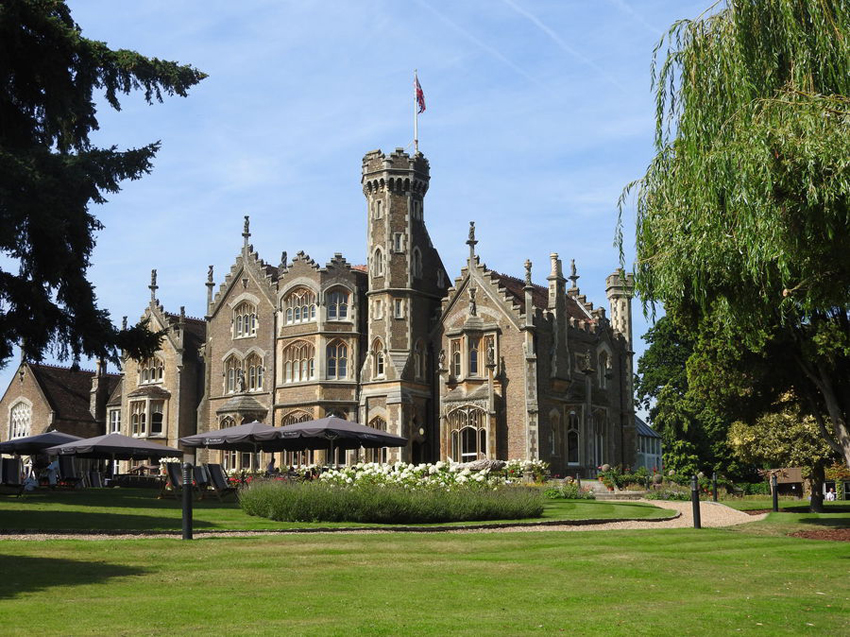
On the banks of the Thames, and set in over 30 acres of grounds, Oakley Court Hotel’s 19th century Gothic Revival architecture certainly creates a distinctive impression. This splendid Grade 2 listed building was originally built as a family home by Sir Richard Hall-Say, High Sheriff of Berkshire, but in more recent times it has been pressed into service as the alleged home of the World War 2 French resistance and then later as a film set for Bray Studios. New owners, however, have recently invested heavily in the fabric of the building and grounds, and the interior is reliving former glories. The reinstatement of the kitchen gardens, the rejuvenation of the orchards and the introduction of bee hives are all contributing to the running of the restaurant and kitchens, whilst the possibility of keeping livestock is being investigated for the future.

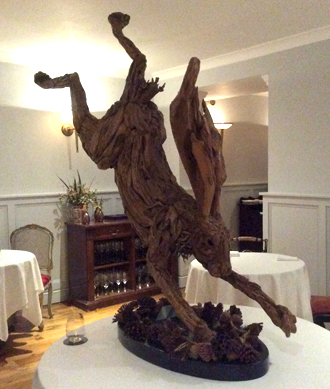
Oakley_woodenSculptureThe recent refurbishment of the Dining Room in natural shades and with bare polished floorboards has created a calm, almost pared-down atmosphere. The clean lines of the wooden paneling and dado rail, the classically restrained sideboards and indeed, the initial absence of cutlery on the table contribute further to a feeling of understated elegance. Ornamentation is confined to the cane backed and Empire inspired designs of the chairs. In contrast a spectacular driftwood sculpture by James Doran-Webb of a leaping hare occupies the centre of the dining room, adding a focus of contemporary extravagance.

The restaurant, however, is still a work in progress and plans are afoot to redesign the remaining dining areas along similar lines and to link them with the new, delightfully presented New England style breakfast room.

Central to the revival of Oakley Court as a destination restaurant has been the appointment two years ago of a new Executive Chef.

Damian Broom is energetic, confident and highly talented. He is also modest and self-effacing. You will not his photo on the hotel’s website and will have to search hard on Google Images. Yet, after sampling his creative cuisine and chatting with him at interview, you will understand why he wants his “food to do the talking.” His cooking reflects the passion, inspiration and dedication that are integral parts of his character.

Damian’s two years at Oakley Court, with the second year developing the 2 AA rosette Dining Room, have been rewarded with two distinctions: Berkshire and Buckinghamshire Life Restaurant of the Year and Chef of the Year for 2015. Given the intense competition in these two affluent counties, replete with high end restaurants, this is no mean achievement. Typically, Damian almost didn’t attend the ceremony as it meant closing the kitchen for the evening. There is also no mention of the awards on the hotel’s website.

Realistically, Damian views his role not as a job, but a whole way of life. He oversees The Dining Room, The Scullery (brasserie), the Bar and the soon to open Terrace, all of which cater for a variety of business and leisure clients of all age ranges. In the busy summer season there may well be 200 guests during the day with a further 100 at night

His major project, the kitchen garden, is well under way, whilst foraging and bee keeping add to his wild larder. In all these activities he has been aided by a small loyal team, including sous chef Scott Meaden, most of whom followed him from Danesfield House, and by his wife who is also a chef and fully appreciates the pressures of the industry. Future plans include extending the three acre kitchen garden, developing poly tunnels located at his father’s allotment, and ultimately – a very long term project – rearing his own livestock. Provence of ingredients is fundamental to his food philosophy, and, although he accepts he cannot be 100% self-sufficient, he aims to maximise the potential.

The latest innovation is the Supper Club on the last Friday of each month featuring a surprise multi course dinner of experimental dishes with interaction between chefs and guests around a communal table

Largely self-taught on the basic skills – which he laments many young aspiring chefs lack – Damian refined them at the Old Vicarage Hotel in Shropshire and at Danesfield House in Marlow, where he retained the Michelin Star and won other awards. His distinctive style, blending rusticity with sophistication has developed without the need to ape the trends of past and current chefs.

The use of the highest quality, sustainable, ultra-seasonal, local organic produce is axiomatic. The sourcing of ingredients is proudly displayed in detail alongside the menu. Line caught fish from his supplier in Cornwall can arrive at the hotel four hours after a phone call made at 5.30 am. Closer at hand is Jerry Rock butchers whose exceptional quality meat is well known in the area. For Damian, the breed and age of livestock are also important, with cows of seven to eight years being preferred. Beef aged for 130 days is a prized item in his larder. Herbs, flowers and honey are provided in house.

Not a slave to fashion, Damian scoffs at foodie trends such as foraging becoming an industry in itself, with professional foragers, and the ubiquitous use of micro herbs which add nothing except a decorative flourish to a dish.

Cooking techniques are classical with minimum use of faddish techniques: indoor wood and charcoal barbeques are preferred to sous vide. The timing of dishes is well judged, with accurate seasoning and harmonious combinations of ingredients. Balance of flavours and textures, with the use of less popular meats or parts of the animal, feature in savoury dishes. Vegetables are given the same care and attention as meat and poultry and may star as a course in their own right. Desserts may showcase varying tastes and temperatures, being refreshing and not overly sweet. Damian modestly describes his food as “simple” but this only applies to the relatively few ingredients in each course and the plating of dishes which has a natural feel without being contrived and over thought. Clearly, from conception to execution, each dish, from the dainty amuse bouches to the more robust and hearty main courses and refined desserts, is labour intensive, involving precise timing and meticulous attention to detail. Menu descriptions are sparse, giving no idea of the cooking method or cuts of meat, allowing an element of surprise when the dish is served.

Accompaniments are made from scratch: The culture for the sourdough bread is also home grown, starting life with apples in the orchard left to acquire naturally the essential wild yeast needed for the fermentation. Butter from 54% fat Jersey cream is made once a week and aged for a week. Milk curd is made a few hours before service.

Imagination and creativity are abundant in the constantly changing tasting menus offered from Wednesday to Saturday dinner. Hardly any dish figures twice (it has only happened with a duck and chicken dish), hence there is no signature dish. Ideas for menus are developed in the previous week, constrained only by what can be grown, bought and stored. Key ingredients can be cooked and presented in a totally different way from the previous evening. Thus, meals are prepared from zero each day, the tasting menu at £65 for seven courses being taken by 80% of the guests. A three course Market Menu at £38 includes dishes from the tasting menu. Prices are realistic, given the quality of the produce and the skill in cooking.

Oakleysign

Fine Dining Guide visited on a weekday evening in February and found much to admire in the cooking and service of the tasting menu. A unique feature on the table is a magnificent box from which diners take their own cutlery.

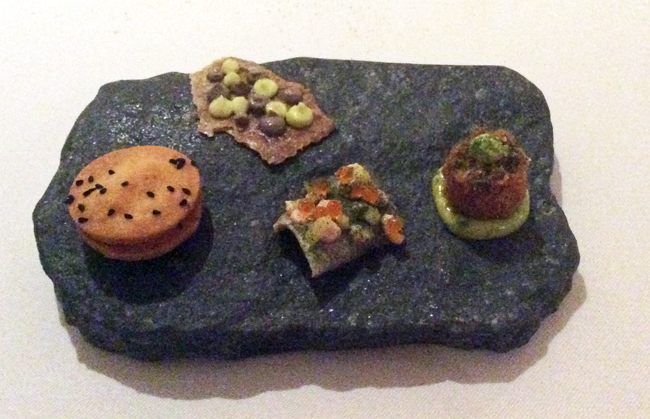
Amongst the delicate, finely crafted canapes were garnished crisp fish and chicken skins, a warm, flavoursome duck confit croquette and a rich Parmesan cream centred “Oreo” which simply melted in the mouth.

Oakley_Canapes

Home baked sourdough made with London Pride bitter was exemplary in its firm crust and gently tangy crumb. Served with a deeply flavoured but light savoury broth of mushrooms, leeks and seaweed, it was inspired by Damian’s childhood suppers in the north of England

The first starter comprised very young Jersey royals, with their waxy texture and uniquely sweet flavour, partnered with various caramelised baby onions, and garnished with leek ash and leek oil. Fresh milk curd gave a lactic note to balance the earthiness of the vegetables, a scattering of Naggalo Nero herbs added freshness and colour, whilst a light jus brought the elements together. (Wine: Guardsman , Windsor and Eaton Brewery)

OakleyJersey

A second starter featured another happy marriage of free range chicken and leek heart. The sweetness of the thigh meat, poached in a lemon thyme to maximise its succulence, contrasted with the crispness of its skin and the richness of its heart. Burnt onion puree had a smoky sweetness and sorrel leaves added a hint of acidity the dish needed. (Wine: Fleury la Roilette Vignes Bernard Metrat, Beaujolais, 2014)

Oakley_Chicken


The first main course combined the bounties of earth and sea. An accurately timed Turbot fillet, with translucent flakes of firm sweet flesh, worked well with sweet nuttiness of roasted chervil root and crisp artichoke skin. An inspired touch of luxury saw Russian caviar, which acted as a seasoning, mixed with an artichoke puree of velvety smoothness. (Wine: Louis Latour Montagny 1er Cru, Burgundy, 2012)

Oakley_Fish

This was followed by a less utilised but nonetheless delicious meat. A tranche of mutton was cooked medium rare, its distinctly strong but not overpowering flavour enhanced with the addition of Ortiz anchovies – another classically inspired pairing. Braised Little gem lettuce benefited from caramelised Parmesan topping, helping to add texture and richness to the dish. A lamb fat jus successfully rounded off the plate (Wine: Cote du Rhone Famille Perrin, Rhone, 2012)

Oakley_meat


It’s a confident chef who offers only a single cheese as a course, even in a tasting menu. However, Mrs Bell’s Blue with its creamy texture and strong, salty piquancy offered a taste sensation when matched with honeycomb from the hotel’s hives. (Wine: DR Rieseling 2012)

A pre dessert of yogurt espuma – one of the few concessions to contemporary techniques – came with “last year’s blackcurrants” and a granita of dill. This perfectly balanced combination of sweet, acidic and herbal elements served its purpose in being light and palate cleansing. (Wine: Tattinger Nocturne, Demi Sec, France)

OakleyStarterAmuse

The main dessert featured sliced poached rhubarb, shards of milk crisp, apple marigold and a crème fraiche sorbet topped with a rhubarb syrup. It delighted in its simplicity and combination of sweet and gently acidic elements (Vergelegen Straw Wine, Somerset West, South Africa)

OakleyDessert2

Homemade petit fours, which embraced the diverse flavours of Sea Buckthorne, olives, white chocolate, lemon and honeycomb confirmed the strength of the pastry section and completed an excellent meal.

The whole experience was enhanced by the engaging and knowledgeable service of Shaun and Head Waiter Angelo who served the wines and coped admirably describing their provenance.

Overall, Damian Broom and his team have created a dining experience of which they can be justifiably proud. Given the hotel’s proximity to London, the Dining Room can expect to see increased custom as news travels of its strengths. Surely a third rosette is overdue whilst a Michelin star would justifiably crown the achievement. Fine Dining Guide will certainly return to Oakley Court and will follow its progress with interest.

‘Four-Hands’, Four Michelin Stars (Jan 2016)

Posted on: January 12th, 2016 by Simon Carter

Greenhouse_Event_Jan2016_edited-1

AN EVENT PRESENTING ‘FOUR-HANDS’, FOUR MICHELIN STARS AND FINE WINES

(Content Courtesy of TallPR & MARC Restaurants.)

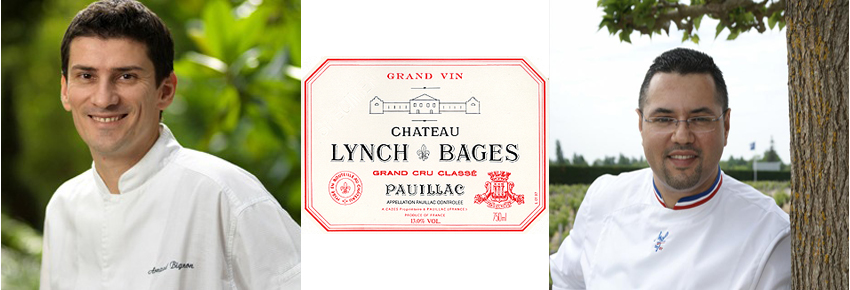
London – Chef Arnaud Bignon of London’s Two-Michelin-Starred restaurant, The Greenhouse, and guest chef Jean-Luc Rocha of Bordeaux’s Two-Michelin-Starred Château Cordeillan-Bages (Pauillac, France) will partner for one day, on Tuesday 26 January 2016, to host an exclusive lunch plus dinner paired with Château Lynch-Bages 2004 and other fine wines.

Tucked away in a green-leafed Mayfair mews, The Greenhouse is one of London’s most highly acclaimed two-Michelin-starred restaurants. At the helm is Arnaud Bignon whose classic-meets avant- garde food philosophy brings a new dimension to French cuisine and earned him a second Michelin star in 2013.

Visiting from the Medoc wine country is perhaps Bordeaux’s most exciting chef, Jean-Luc Rocha, Meilleur Ouvrier de France 2007. Contemporary and well balanced, his cuisine enhances the regional produce from the land and sea, and adds a splash of fantasy to enlighten the senses. Château Cordeillan-Bages, a 28-room boutique hotel, is situated in the heart of the vineyard of Château Lynch-Bages, owned by the Cazes family.

Both The Greenhouse and Château Cordeillan-Bages are members of Relais & Châteaux and through this gourmet association and their passion for French cuisine and wine, a ‘four-hands’, four-star dining experience awaits.

Date: 26 January 2016, Lunch or Dinner

Venue: The Greenhouse, 27A Hay’s Mews, London W1J 5NY

Lunch: £150 including wine flight, £110 excluding wine flight

Dinner: £210 including wine flight, £130 excluding wine flight

Notes:-

The Greenhouse – The Greenhouse has been part of the MARC portfolio of establishments since 2003. The restaurant boasts the UK’s biggest wine list with over 3,400 bins for which it has been awarded the Grand Award by Wine Spectator magazine every year since 2005, the only restaurant in the UK to hold this distinction. www.greenhouserestaurant.co.uk

MARC Ltd. – Established in 2001, MARC Ltd operates some of the most coveted names in the industry which are united by a common set of standards, dedicated to delivering food, wine and service excellence. The portfolio includes Morton’s Private Members’ Club in London, O. W. Loeb Wine Merchants, MARC Fine Wines, Marc Patisserie in Selfridges, MARC Patisserie & Bakery, A Voce restaurants in New York, Morello Bistro in Connecticut, Bistro du Midi in Boston and the celebrated François Payard bakeries. www.marcrestaurants.com

Château Cordeillan Bages – Situated in Pauillac, France, approx. one hour from Bordeaux city centre and a mere 30 min from the Atlantic seashore, Château Cordeillan-Bages is a boutique hotel and part of Lynch-Bages & Cie. It has been a member of Relais & Châteaux since 1992. The restaurant boasts one of the largest wine lists in the region (1 500 references), two Michelin stars, 4 Gault & Millau hats and is Grandes Tables du Monde. www.cordeillanbages.com

Château Lynch-Bages – A stone’s throw from Pauillac and overlooking the Gironde estuary, the Lynch-Bages winery (1855 Grand Cru Classé) lies on the Bages plateau – one of the commune’s finest gravel croupes. Formerly the property of the illustrious Lynch family from Ireland, the estate was repurchased in 1934 by Jean-Charles Cazes. Housed in a building that dates back to the late 16th century, the old Lynch-Bages vat room that was installed in the 1850s is one of the few old wine-making facilities that has remained intact. A visit here is a veritable voyage in time. Jean-Michel Cazes handed over to his son Jean-Charles back in 2006, and the Lynch-Bages wines continue to bear witness to the same generosity and excellence, benefitting as they do from the same high standards. www.jmcazes.com

Lynch-Bages & Cie – Since the late 1980s, at Lynch-Bages, Jean-Michel Cazes has been considered pioneer in wine tourism. Over the years, the Cazes family has developed a number of experiences dedicated to wine, history, culture, gastronomy and “art de vivre”. Established in 2010, Lynch-Bages & Cie manages: Château Cordeillan-Bages, Café Lavinal, Château Ormes de Pez B&B, and the curated shops in the village of Bages. It also offers bespoke visits of Lynch-Bages and its historic vat-room and art exhibits, and organises personal encounters with the artisans on the estate during tasting courses or cookery demonstrations. And VINIV which offers wine lovers the opportunity to live a complete Bordeaux winemaking experience under the guidance of awarded oenologists by blending their own Bordeaux wine from grapes picked among the best appellations of the region. Helicopter landing, hors & carriage rides, classic car tours, picnics in the vineyard, bike rentals, private hiring for events complete a unique experience in the Bordeaux region. Lynch-Bages & Cie is the proud recipient of the Global Best of Wine Tourism 2016 award for France. www.lynchbagescie.com

New 3/4 (Three/Four) AA Rosette Awards Jan 2016

Posted on: January 12th, 2016 by Simon Carter

12 January 2016

AA ANNOUNCES NEW MULTI ROSETTE AWARDS

The AA has today announced the latest restaurants to be awarded the coveted three and four rosettes.   These higher rosette awards are only made twice a year, January and September, and recognise those restaurants that have shown great improvement in the culinary standards and service they are providing.

Fourteen restaurants will be celebrating the new awards from Glasgow to the Channel Isles.  While London sees five restaurants awarded multi rosettes, the North of England is well represented with four restaurants gaining a higher level of rosettes.

Simon Numphud, Head of AA Hotel Services, said, ‘The restaurants receiving the multi rosette awards should be duly proud of their achievements.   The four rosettes restaurants can now classify themselves as among the top restaurants in the country where cooking demands national recognition. Those with three rosettes are outstanding restaurants that demand recognition well beyond their local area offering sympathetic treatment of the highest quality ingredients with consistent timing, seasoning and judgement of flavour.  Around just ten percent of the restaurants in our guide have three rosettes.’

New Four AA Rosettes

·         The Black Swan at Oldstead, Yorkshire

·         The Five Fields, London SW3

·         Manchester House Bar and Restaurant, Manchester

New three AA Rosettes

·         A Wong, London SW1

·         Avista, London W1

·         Cambium, Careys Manor, Brockenhurst, Hampshire

·         The Dial House, Bourton-on-the-Water, Gloucestershire

·         The Gannet, Glasgow

·         The Hare Inn, Scawton, Yorkshire

·         Lake Road Kitchen, Ambleside, Cumbria

·         Lumie᷅re, Cheltenham, Gloucestershire

·         Orrery, London W1

·         Portland, London W1W

·         Tassili, Grand Jersey, St Helier, Jersey

4 Rosettes

The Black Swan at Oldstead (Olstead, North Yorkshire)

Dazzling intrepid modern cooking on a family farmstead

An appealing stone-built country house out on the North York Moors, The Black Swan has become a coveted destination restaurant in the region, a remarkable achievement for having been brought about without TV appearances or even a book. Whether or not Tom Banks chooses in time to head along the media route, nothing can detract from the creative energy currently driving the place. Members of Banks’s team work at least one day a week in the kitchen garden, which helps deepen their understanding of dishes.

The Five Fields (London, SW3)

Stunning ingredients and creative flair

It’s over two hundred years since this area was mapped by John Rocque and the pastoral name of Five Fields was transcribed into history. Chef-patron Taylor Bonnyman has revived the name for his dashing townhouse restaurant which has taken to this part of the city like a duck to water. With experience at some top addresses in New York, London and Paris, Bonnyman and his team – including head chef Marguerite Keogh – deliver intelligent, thrilling and sometimes playful contemporary food that is based on outstanding ingredients, some grown in their own kitchen garden in East Sussex. The dining room is a soothingly elegant space with neutral, natural colours, and plush designer leather chairs, looking the part for this exclusive postcode. There’s a swanky private dining room on the first floor, too. Whether you go for the eight-course tasting menu or à la carte, expect stunning looking plates and clearly defined flavours.

Manchester House Bar & Restaurant (Manchester)

Aiden Byrne’s see-and-be-seen venue for contemporary dining

Aiden Byrne’s operation in Manchester House is a see-and-be-seen sort of spot, so if you’d like to kick-start the experience by slurping a cocktail and eyeballing the Mancunian beau monde, the lift whizzes you up to the 12th floor of Spinningfields’ Tower 12 for a sharpener with cityscape views and DJs setting the mood. Then slide back down to the second floor, where Byrne’s restaurant pays homage to Manchester’s industrial heritage with its exposed girders, concrete and wrought-iron features. Diners rub shoulders with the chefs as they enter through the open kitchen, while the casually dressed staff back up the laid-back vibe with impressive knowledge.


3 Rosettes

A. Wong (London SW1)

Exploring China’s vast culinary range

In an unassuming modern block down the road from Victoria station is one of London’s most dynamic Chinese restaurants. Andrew Wong acknowledges the melting pot that is Chinese cuisine, a result of trade, migration and invasion, and helped by the fact the country has 14 national borders. Respect is shown for traditional ways, but this is modern dining too, so there are contemporary elements to many of the dishes. Take a seat at the bar counter or at one of the wooden tables, or secure the kitchen table if you fancy getting up close and personal.

Avista (London W1)

Classic Italian flavours and creative flair

The Millennium Hotel Mayfair with its Georgian frontage and grand neo-classical Doric columns is an imposing presence on Grosvenor Square, while its Avista restaurant, with its own separate entrance, is one of the most inspiring modern Italian restaurants in the capital. The dining room is suitably attired for the Mayfair postcode, with a contemporary finish including modern artworks and even some exposed brickwork. Executive chef Arturo Granato’s bilingual menus deliver classic combinations in a modern manner, but the 21st-century cooking techniques enhance the first-rate produce rather than obscure them.

Cambium, Careys Manor (Brockenhurst, Hampshire)

Refined, contemporary dining in stylish spa hotel

The New Forest location inspired the interior designers of Careys Manor’s classy contemporary restaurant, Cambium, and also informs the cooking of the dynamic team in the kitchen. There are three dining options in this handsome and much extended Victorian manor house with a luxe spa, but Cambium (named for the rings that indicate the age of a tree) is the pick of the bunch, a serene space with shades of gold and cream. Executive chef Paul Peters draws on the regional larder to create a modern menu combining classic flavour combinations with up-to-date techniques. The service is slick and informed.

The Dial House (Bourton-on-the-Water, Gloucestershire)

Amazingly fine food in a honeypot village

A mellow stone house dating from 1698 in a chocolate-box (and hyper-touristy) Cotswolds village may not be the most obvious place you’d come looking for top-drawer modern cooking, but prepare for a treat at the Dial House. There are large stone fireplaces as reminders of its antiquity, while the intimate dining room provides an elegant backdrop, and the staff deliver fine-tuned service with oodles of charm and personality. The kitchen takes its cue from France, yet also flies the flag for British ingredients, seeking out the best produce, much of it locally, and using it inspirationally.

The Gannet (Glasgow)

Buzzing contemporary venue with Scottish flavour

The guys behind The Gannet looked to the wild and rugged Hebridean coastline for inspiration before opening here in Glasgow’s West End, focusing on the fabulous ingredients those islands and the rest of Scotland have to offer. They’ve created one of the city’s hottest addresses. The pared-back interior suits the mood of our times with its urban/rustic finish of exposed bricks, natural woods, simple furniture and minimal decorative touches – it’s cool, contemporary and very, very popular. Grab a stool at the front bar and tuck into a small plate (warm cured salmon confit with herb purée and crisp capers, say) and a cocktail such as the evocatively named Wild Lady.  There are some interesting Scottish beers to be had, plus a short and appealing wine list.

The Hare Inn (Scawton, North Yorkshire)

Creative modern cooking in an old village inn

The Hare is a 21st-century restaurant in a 13th-century inn, and although there may well be local ales at the pumps, it’s really all about the dazzling cooking of Paul Jackson. It certainly looks the part of an old moorland inn, with a rugged exterior painted in pristine white, and indoors there’s plenty of character in the form of original features and some quirky fixtures and fittings. Mr Jackson seeks out the very best ingredients that abound in this part of the world and offers them up in creative ways via fixed-price menus.

Lake Road Kitchen (Ambleside, Cumbria)

Northern European seasonal food that rings the daily changes

The converted shop premises just off Ambleside’s main street feature two broad windows that let passing strollers see what they are missing. James Cross styles the place a north European bistro, which gives some indication of his determination to work with the seasons and the climate, pickling and bottling for the winter months, foraging for summer berries and autumn mushrooms, as well as bringing in much fine Lakeland meat, supplemented by Cornish fish. The menu changes daily, and the hits just keep on coming.

Lumière (Cheltenham, Gloucestershire)

High-octane cooking from a hands-on chef

The discreet frontage is easy to miss on Clarence Parade, but look out for the restaurant’s name etched onto the single window pane and a small awning over the door. Jon and Helen Howe’s restaurant, with its gently contemporary interior and smart table settings, is one of the town’s most alluring dining destinations, where everything from dynamic canapés (smoked eel and wasabi croquette, say) and breads (check out the amazing brown fig and raisin version) are made in-house. Jon runs the kitchen with verve, delivering a repertoire that reveals classical roots and an up-to-date approach. Every ingredient is on the plate for a reason, with every flavour and texture hitting home, and the food is very prettily arranged, too.

Orrery (London W1)

Stylish, elegant restaurant above designer store

This Marylebone hotspot cuts a contemporary swagger with classy good looks, polished service and skilful, contemporary French cuisine. On the first floor above the Conran store, the long, narrow room is fashionably clean-lined in the classic Terence Conran style and filled with light from its striking arched windows and room-length ceiling skylight. Pale blue banquettes and chairs blend with blond wood, mirrors and white linen, while a glass wine cellar signals that the grape is taken seriously here. Menus are driven by prime ingredients and seasonality, and come dotted with luxuries (attracting the odd supplement here and there), with dishes showing a lightness of touch, matched by eye-catching presentation and flavours to savour.

Portland (London W1)

Compact, seasonal menu of big-hit flavours

Just up the road from the BBC, new-kid-on-the-block Portland has been making headlines of its own with its on-cue vision of new-Brit cuisine, scoring high with precision cooking, unstuffy, spot-on service and understated good looks. On first impression, Portland feels more neighbourhood gaff than city-slicker, with its small pared-back interior of wooden tables and chairs, plain white walls, dangling retro-like Edison lighting, and a fast tempo backing track. Upfront, the in-vogue counter and high stalls look out streetwise, while at the back, the must-have open kitchen fires up the culinary action. The concise menu brims with innovation and a genuine sense of seasonality. The equally stimulating wine list delivers a top choice by glass, including all of its ‘Special’ wines.

Tassili (St Helier, Jersey)

Refined Anglo-French cooking in a historic bayfront hotel

The white-fronted Grand Jersey Hotel lords it over the island capital’s seafront, with St Aubin’s Bay laid out in sparkling array before it. Full of elegance and swagger since it opened in 1890, it was used as headquarters by Nazi occupation forces during the war and, despite much of its furniture being burned for fuel, emerged on VE Day with its dignity intact. The principal dining room, Tassili, is done in chic contemporary style, with textured abstract paintings and a sober dark grey colour scheme, a setting where Nicolas Valmagna has brought the cooking to a high pitch of modern Anglo-French refinement, as befits the location. Dishes are carefully structured but not overworked, leaving an overall impression of lightness and grace.

Restaurant Review: The Whitebrook, Wye Valley (Dec 2015)

Posted on: December 21st, 2015 by Simon Carter

Whitebrook Exterior

Restaurants with rooms have been well established in France for many years but are a comparatively recent development in the UK. With all diners, including the driver, wanting to relax after the soporific effects of a great dinner with matching wines, the advantages of a stay are patently clear.

For chef patrons, the need to please an increasingly discerning clientele presents a double challenge. Foremost, the standard of cuisine must be high enough to justify often long journeys to (sometimes) remote rural locations. Almost as important is the standard of accommodation, which must offer a degree of comfort, style and design that can compete with country house hotels without incurring the same, sometimes hefty, expense.

The Whitebrook – formerly known as the Crown at Whitebrook – delivers impressively on both fronts. Set in the Wye Valley, within easy driving distance of Chepstow, Monmouth and Tintern Abbey, it is an ideal base from which to explore an area of outstanding natural beauty and historical interest.
­­­­­­­­­­­­­­­­­­

The accommodation, eight rooms graded five stars by the AA and Welsh Tourist Board for restaurants with rooms, is stylish and comfortable. Room 3 where we stayed was one of four redesigned and refurbished rooms on the first floor. Decorated in natural tones – Farrow and Ball “Elephant’s breath” – with tree patterned heavy fabric curtains, the interior harmonised with the view of the valley outside. Spotlights and elegant bed side lighting gave a seductive glow. The super king sized bed, dressed in the finest linen, provided a most comfortable night’s sleep.

Whitebrook_Bedroom

The new ensuite bathroom with spacious monsoon shower and large double ended bath was clearly designed for couples. Fluffy towels and bathrobes, and a heated towel rail, added to the sense of indulgent luxury.

Fresh milk with tea and coffee – including a cafetiere – home-made oatcakes, still and sparking mineral water, and Sedbergh natural organic toiletries showed pleasing attention to detail. The only suggestion for improvement, which can easily be rectified, would be a full length mirror. This minor shortcoming did not detract from a most agreeable stay in the peace and stillness of the Welsh countryside.

Whitebrook_ChefGuests come primarily to sample the acclaimed cooking of Chris Harrod, Chef Patron since October 2013. His unassuming and quietly spoken persona belies a strong passion and clear vision for the direction of his innovative cuisine. He succeeded the Michelin starred James Sommerlin but gained the same distinction in less than a year. Other awards now include three AA rosettes, 5/10 in the 2015 Good Food Guide – a notoriously hard marker –  and inclusion in Sawday’s and the Good Hotel Guides.
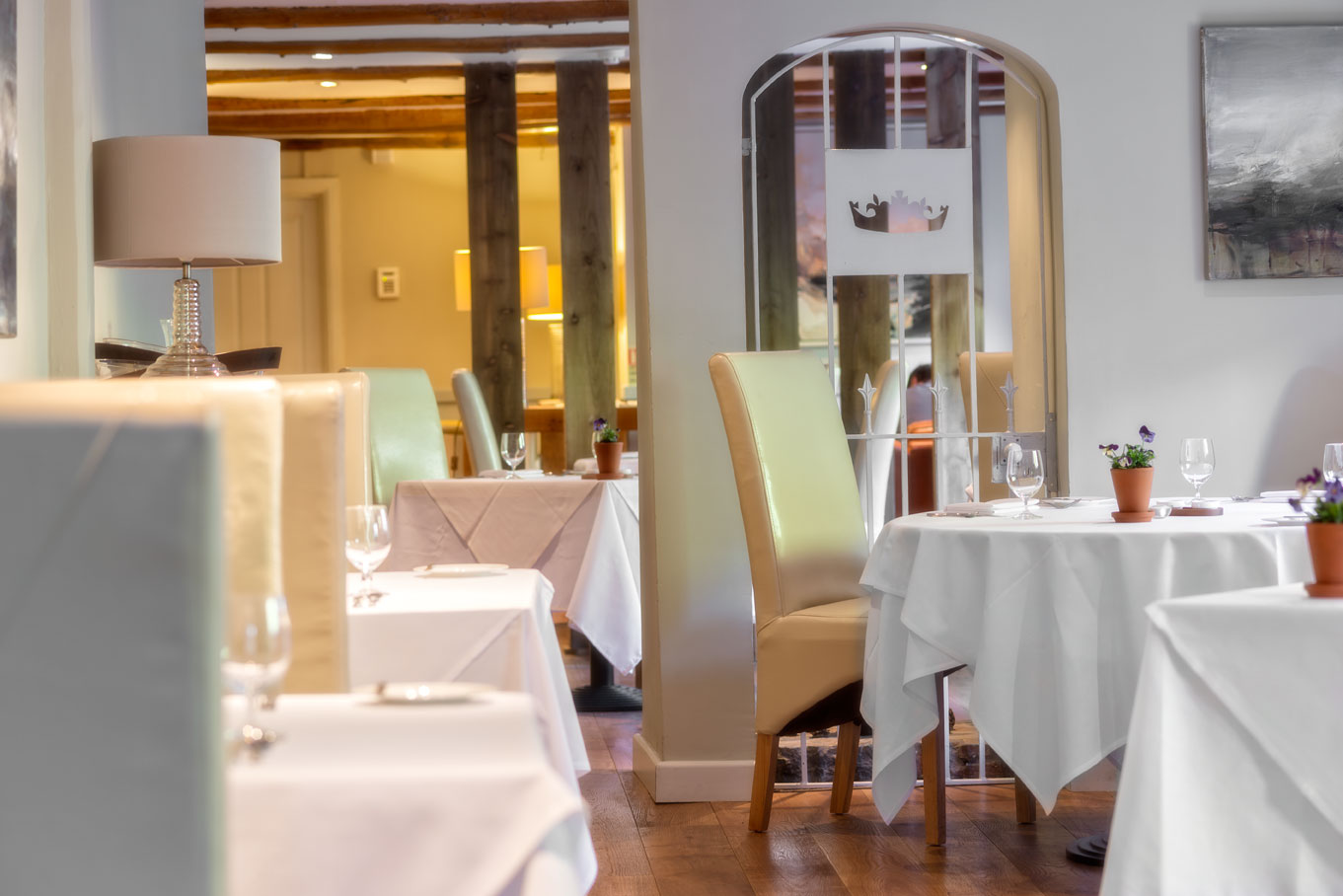
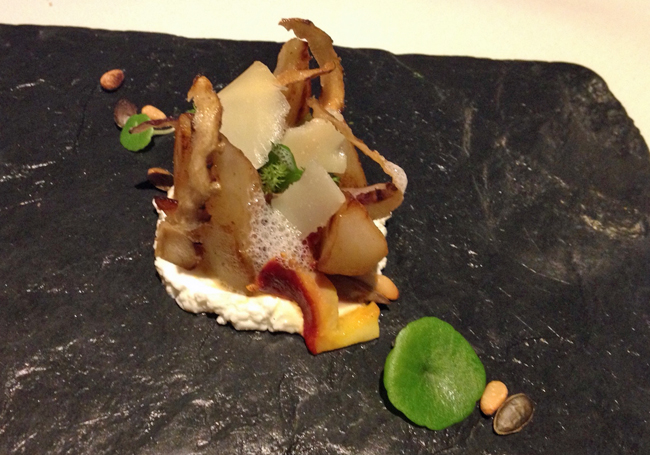
Inspired by the rural location, Chris’s “Valley on the Plate” cuisine reflects the natural surroundings. Blessed with the services of Henry, an expert forager, his findings from the valley floor are a distinctive and integral part of Chris’s dishes. Each presents a new challenge in matching them with the main ingredients, much of which is sourced locally. Dishes also showcase vegetables, many supplied by Amanda Stradling’s award winning company Veggie Galore in Ross of Wye. Nearby, Richard Vaughan’s Huntsham Farm is the key source for rare breed meats. Trealy Farm, the famous charcutier, supplies the applewood-smoked bacon used in a fish dish. Stout, used in the same dish, comes from Kingstone Brewery in Tintern. Fresh seafood arrives regularly from Cornwall. Given their impeccable quality and abundance, Chris’s ultimate aim is to use only British organic produce. Whilst this ambition might not apply equally to his wines, 40% are already organic.

The beauty of Chris’s cooking lies in the extraction of maximum flavour using both classical and contemporary techniques, including a restrained use of molecular gastronomy. A critical approach emphasising quality and freshness are fundamental prerequisites he learnt in the formative and inspirational three and a half years with Raymond Blanc, his chief mentor, at Le Manoir aux Quat’ Saisons. Having sharpened his skill in a career embracing the acclaimed kitchens of the Lanesborough, L’Ortolan and Collette’s at the Grove, where he was head chef for five years, Chris now enjoys the creative freedom that comes from of being his own master.

Terse menu descriptions give no idea of the painstaking preparation, cooking techniques and exquisite presentation involved in each dish. Cuts of meat are not stipulated, allowing for versatile treatment of different parts from the whole animal and an element of surprise when served at the table. For example, a signature dish of suckling pig includes the herb and spice marinated shoulder cooked for two days in a water bath; a croquette of pig’s head; and the cutlet or saddle served with a golden celeriac puree.

The menu structure and price point are well-judged to suit all pockets. Three course set lunches at £24 on weekdays, £34 on Sundays are offered in addition to tasting menus: five courses for £45 at lunch – a bonus for those not staying the night – and seven courses for £65 at dinner. A £54 three course a la carte dinner menu has a limited choice from the more established dishes, making the tasting menu a more attractive proposition.

Whitebrook_DiningRoom
The recently refurbished lounge and dining room have an elegant feel and relaxed ambience.  A new laid oak floor, the natural colours in the décor and fabrics, large wooden framed mirrors and impressionistic landscapes by George Weissbort reflect the arborial landscape outside. The low beamed ceiling, small windows and spotlighting combine rustic with contemporary features, giving a cosy feel.  Candle lighting adds a romantic touch  – appealing to couples who form the majority of guests at The Whitebrook.

In summer, the decked terrace is ideal for pre-prandial drinks. Inside, the lounge features comfortable armchairs and sofas in coffee and cream. The three dining areas, decorated with paintings by local artists, have well-spaced tables dressed in fine napery and elegant leather chairs and paintings by local artists.

Fine Dining Guide visited on a weekday evening in early December, finding much to appreciate in the food, wine and service.
Canapes served with drinks fulfilled their purpose in exciting the palate: warm pheasant croquette with bread sauce burst with rich gaminess and rye crisp with pumpkin hummus and brassica flowers gave a colourful sweet and savoury hit.

An amuse bouche of broccoli comprised a velvety smooth mousse topped with al dente florets. The salty creaminess of local Perlass blue cheese lifted the dish and was balanced by the sweetness and crunch of caramelised walnuts. Extra foraged interest was provided a scattering of hedge bedstraw.

Roasting Jerusalem artichokes in a first course emphasised its sweet, nutty earthiness. The soft texture contrasted with crisp strands of its bark garnish. Goat’s curd gave a fresh, tangy flavour, and shavings of Wye Valley ewe’s cheese, acting almost as a seasoning, worked well with this humble yet adaptable vegetable. Blewits and wax cap mushrooms, yarrow leaves and pennywort, gave fungal and herbal complexity whilst the addition of roasted pine and pumpkin seeds gave aroma, crunch and a clean, subtly sweet nutty flavour. With its impeccable attention to detail and stunning presentation, this was a tour de force of modern vegetarian cookery. (Wine: Shoreline, 2014, Lyme Bay, Axminster, Devon, UK)

Whitebrook Artichoke

A second course juxtaposed the white and brown meat of utterly fresh Cornish crab. The sweetness of the white meat was balanced by the gentle pepperiness of charlock puree and mustard leaves. A foamed reduction flavoured with horseradish added another layer of flavour. The use of celeriac bark again demonstrated the chef’s imaginative use of the whole vegetable to add texture and flavour. This was another original dish in conception and execution.  (Wine: Vouvray Sec, 2014, Didier Champalou, Loire, France)

Whitebrook Crab

Precise timing of a breast of Brecon partridge rendered it tender and moist, whilst the leg benefitted from slower braising. Parsnip puree gave a sweet earthiness and baked apple an acidity, both of which complemented the gentle gaminess of the partridge. Quinoa added a light and nutty touch and burnt onion a smoky crispness. The dish was dressed with a baby parsnip cooked in the sweet fragrant leaves of Woodruff, and free corn garlic for a muted herbal note. (Wine: Brouilly,2013, Chateau du Pave, Beaujolais, France)

Pan roasting of a fillet of Cornish brill, producing a caramelised crust and translucent flakes of sweet, succulent flesh, demonstrated excellence in fish cookery. More robust but complementary flavours were provided by smoked bacon emulsion, onion puree, beer pickled onions, the mildly aniseed notes in caraway cabbage, and the horseradish taste of scurvy grass. Here was another dish, billed simply as Cornish Brill, caraway cabbage, smoked bacon, scurvy grass which belied the complexity of preparation and understatement of the ingredients: the onion puree had been cooked sous vide overnight with nutmeg; the bacon emulsion comprised half chicken stock and half milk into which the bacon was infused; and the charred baby onions, not even mentioned, had been picked in stout and apple balsamic. (Wine: Monte Velho Branco, 2014, Herdade do Esporado, Portugal)

Whitebrook Brill

A dish of local wild fallow deer was cooked medium rare to maximise its soft texture and rich gamey flavour. Home grown beets smoked with dried mugwort had both sweetness and herbal aroma. Celeriac puree with its mild, sweet nuttiness and a riot of wilted chard, kale and cavalo nero leaves completed this flavoursome and visually stunning composition. (Wine: Barbera d’Asti “La Court” Superiore, 2011 Michele Chiarlo, Piedmonte, Italy).

Whitebrook Venison

The kitchen’s skill and ingenuity do not flag at the dessert stage.

An iced roulade of blackcurrant and chamomile also featured crunchy “fizzy rocks” made from citric sugar to temper the inherent bitterness of blackcurrant sage. Paired with an inspired “cheeky Ribena cocktail” of local vodka, lemon juice and soda water, this was a refreshing and playful palate cleanser.

A dessert focusing on violet was both old fashioned its use of the flower and contemporary in its overall design and flavour. The firm, creamy parfait was scented but not overwhelmed by the floral fragrance – a difficult balancing act successfully achieved. Velvety smooth lemon thyme ice cream added a herbal note, contrasting with the sweetness of the parfait. Delightful miniature meringue “branches” flavoured with blueberries added crispness the dish needed.  (Wine: Noble Riesling, 2014, Framlingham Estate, Marlborough, New Zealand)

Whitebrook_Violet
The final dish was a veritable masterclass of invention and technique, a brilliant marriage of tastes and textures. Delicately poached pears partnered with buttermilk ice cream were complemented by a yogurt crumble and maritime pine powder. This last element, based on a parsley stock syrup infused with pine needles, imparted an Alpine like fragrance and vivid colour, lifting the whole composition. Thin, crisp shards of meringue added height as if to resemble the peaks of a mountainous terrain of which the green of the pine powder were the lower slopes. (Wine: Blenheim Super Ice cider, 2011, Once Upon a Tree, Ledbury, UK)

Whitebrook_Pear

Good coffee and petit fours – quince jelly and rosemary sugar and macaroons – completed a meal clearly worthy of a Michelin star. Our enjoyment was enhanced by welcoming and solicitous service of the young staff  who were fully briefed on the menu and answered questions in a knowledgeable way. Manager and sommelier Andy Stoneley matched wines with consummate skill and assurance. The paired wine service – timed before the arrival of each dish and with clear, brief descriptions devoid of the florid language encountered elsewhere – showed real professionalism.

Chris Harrod and his team have clearly made a strong impact since gaining a much deserved Michelin star.  Apart from a loyal local following, The Whitebrook attracts most of its guests from Bristol, Bath, Cheltenham, Birmingham, Cardiff, Hereford and even London, making it a destination restaurant.  Since the publication of the 2015 guide (in September 2014), the 32 cover dining room averages 20 diners each night, no mean achievement given its fairly isolated location in a secluded valley on an unnamed narrow and winding road off the A466.

And yet one feels that Chris Harrod is only in the early stages of his independent gastronomic journey. A sharp culinary intelligence with a true understanding of flavour, allied with a fertile imagination and inexhaustible energy will take him much further. We relish the prospect of a future visit and in the meantime will follow his career with interest, anticipating further acclaim from Michelin and other respected guides.

Restaurant Review: Orwells, Shiplake (Dec 2015)

Posted on: December 15th, 2015 by Simon Carter

Orwells Restaurant Exterior

How rare is it for chefs to walk away from a restaurant that has just been awarded a Michelin Star? Yet this is what happened in January 2010 when head chef Ryan Simpson and sous chef Liam Trotman made national headlines by parting company with the owner of The Goose at Britwell Salome. It says much for their culinary integrity that they rejected the owner’s plans for the address and decided instead to pursue a path that had brought them success, star or no star: A path that married the concept of ‘fine-dining’ with the modern day desire for ‘accessibility’, in other words a welcoming gastronomic restaurant with ‘relaxed formality.’  The formula is clearly a success as after five years since the opening of Orwells, they continue to thrive, with 60% of diners at any one time being regulars. Recognised in major Guides, Orwells has achieved three AA rosettes, 6/10 in the Good Food Guide – a notoriously hard marker – and inclusion in its top 100 restaurants. In 2012, the same guide awarded it Readers’ Restaurant of the Year.

The traditional whitewashed walls of the original pub belie the smart contemporary interior. The long room, with space for a maximum of 45-50 covers has a low oak beamed ceiling and wooden floor. It offers  two dining areas, one brightly lit by the bar, the other at the far end being more cosy and subdued. Wall lighting, well-spaced tables dressed in fine napery and upholstered dining chairs make for refined and leisurely dining experience.

Front of House is led the engaging Kurt, Liam’s brother, who oversees service in a cheerful, welcoming and relaxed style. The young assistants are particularly well briefed on the components and preparation of each dish. The sommelier offers  knowledgeable advice as well as thinking, like the two chefs, outside the box for a more adventurous approach.

Orwells Chefs

Ryan and Liam, with a team of four, have achieved a balanced division of labour, with Liam overseeing desserts whilst Ryan concentrates more on the savoury courses. Liam, a Liverpudlian by birth, started his career at the city’s famous 60 Hope Street restaurant before stints at Bovey Castle and Wintringham Fields, then finally joining Ryan at The Goose. At Orwells he also focuses on baking bread, (in which he offers popular classes in the restaurant’s kitchen), and growing vegetables in their smallholding in Lower Shiplake. Ryan served his culinary apprenticeship in France, overseen by such legends as the Troisgros family, Guy Savoy and Pierre Gagnaire. In England, he sharpened his skills in the kitchens of Restaurant Gordon Ramsay, Sketch, the Langham Hotel, Wintringham Fields and The Elephant in Torquay, before his appointment as head chef at The Goose, achieving a Michelin star after 18 months.

“Rural cooking with a modern approach” is how Ryan and Liam describe their food. “Rural” certainly reflects the restaurant’s location, surrounded by farmland at Shiplake Row, Binfield Heath in the south Oxfordshire countryside near Henley on Thames. More importantly, it captures the essence of their gastronomy, as seen in the essential rusticity of their dishes, a cuisine de terroir, embracing a real concern for sustainability and using the best local and seasonal produce.  With 75% of vegetables home grown, the production of their own honey, the baking of their own bread, and the future rearing of their own pigs, Ryan and Liam remain true to this philosophy. Pork is currently sourced from the Windsor estate and Tamworth, venison from the Chilterns and duck from Crediton in Devon.

Not that “rural” cooking means simple cooking. The understated dishes give little idea of the successive stages of preparation and execution in marrying flavours successfully. Scrambled egg in an amuse bouche is cooked in a water bath before being siphoned into an egg shell. The dashi for a halibut dish is made from the fish bones, kombu, shitake, scented with lemon grass then slightly reduced. True understanding of flavour is shown in the same dish where the umami taste is heightened with a garnish of crispy Hen of the Woods mushrooms and white truffle, both being rich in amino acids. There is also a dalliance with the ‘Heston-like’ concept of revisiting childhood in a top end dining setting, this best exemplified by Brown sauce ice cream, a partner for pig’s cheek, which was created by Ryan to remind him of the emulsified butter and brown sauce taste in a bacon sandwich.

Whilst due regard is paid to classical skills, a “modern approach” is clearly evident. Contemporary techniques are used for instance in the sous vide preparation of meat and fish and the aeration of chocolate. Unusual but compatible combinations  include lobster with capers and radish and scallops with chicken and leek. Stylish presentation, enhancing the finished product, is visible in the clean lines of uncrowded plates.

The sparsely worded menus at Orwells are ingredient led with no indication of cooking method or cut of meat, giving an element of surprise at the table. The carte offers a choice of six dishes in each course with a well-judged price point. Mains, apart from Highland Wagyu beef at £34) average £25 , starters £11 and desserts £9. A six course tasting menu at £69 with an optional £40 wine flight is the best way to sample the delights on offer.  A set dinner with a choice of three dishes is a remarkable £24.95 for three courses, £19.95 for two. An impressive all British cheese menu comprises well known favourites including Stinking Bishop and Mrs Kirkham’s Lancashire along with more obscure varieties such as Tornegus.

Fine Dining Guide visited Orwells on a week day evening in early December, finding much to admire in the food and service.

Warm breads rolls, with their crisp crusts and soft crumb were impressive. In particular the Wessex Cobber was rich and malty and the Red Leicester so buttery it could easily have passed  for a brioche

A playful amuse bouche, English Breakfast, presented in a egg shell resting on hay, featured creamy aerated scrambled egg and tiny cubes of black pudding and bacon.  A hint of white truffle lifted this simple yet memorable opener.

Orwells_Breakfast

An element of theatre was provided by a signature starter of Smoked Pork. Served in a bell jar infused with a gentle smoke, the lifted dome released an ashen cloud masking a caramelised pig’s cheek of burnished mahogany. This delectable porcine morsel was succulent and meltingly delicious. Brown sauce ice cream added a luscious piquancy which cut the richness of the meat, whilst celeriac and carrot ribbons gave an autumnal garnish of earthy crispness. Overall, this brilliantly conceived dish was a visual triumph of aroma, taste, texture and temperature.

Orwells Pork

By contrast, a crab starter was delicate and light. The freshly prepared white meat, bound by a light herb mayonnaise, was dressed with paper thin tuiles of the brown meat and dried slices of cauliflower florets. A dressing of grapefruit provided the tart acidity which the dish needed.

Orwells Crab

An intermediate course saw king scallops precisely seared to produce a caramelised crust and sweet, succulent flesh. Partnered with a rich and creamy risotto flavoured with white chocolate and white truffle, the balance of savoury and sweet flavours, with the heady, musty fragrance of the fungi, were well judged.

Orwells Risotto

Breast of Creedy Carver duck for a main course was cooked sous vide to maximise its firm texture and rich, full flavour. Meltingly soft shredded confit leg meat provided a contrasting texture whilst the duck skin, served as crisp shards helped to offset the fattiness of the meat. Caramelised squash added an element of sweetness and salsify and pearl barley gave earthy flavour and contrasting texture.  Finally, this composite plate was brought together by a light but intense duck jus.

Orwells Duck

Precise timing did full justice to a generous fillet of halibut, the flavour of the meaty, translucent flesh being allowed to sing. Contrasting texture and umami flavour were provided by crisp Hen of the Woods mushroom, cabbage leaves and dashi. White truffle enhanced but did not overpower this impressive main course of four elements, which proved the principle that less can be more.

Orwells Hallibut

Desserts did not prove an anti-climax, as can so often be the case in high end restaurants.

A Trio of Chocolate showed technical skill and culinary invention. It featured white, dark and milk varieties layered in a rich but light mousse topped with a thin caramelised tuile and aerated milk chocolate.  Peanut butter ice cream of velvety smoothness worked well with the other elements, with a scattering of toasted nuts gave a necessary crunch.

Orwells Chocolate

The recommended wine pairing of Frangelico hazelnut liqueur proved a perfect match for this decadent dessert.

Equally accomplished was the Raspberry mille feuille of thin, crisp Arlette pastry sandwiching well flavoured vanilla crème patissiere and fresh berries at room temperature. An intense pistachio ice cream and scattering of the chopped nuts gave contrasting colour, temperature and texture, whilst aerated white chocolate and raspberry coulis provided  a final flourish.

Orwells Raspberry

Good coffee with well-crafted passion fruit jellies, lemon meringue macaroons, chocolate truffles, peanuts and caramel completed a memorable meal.

Clearly, Ryan and Liam have an inexhaustible energy and creative drive that have bought them well deserved accolades for their inventive cuisine. Why they have not received a coveted star remains a mystery and is Michelin’s loss. Surely, it can only be a matter of time before they achieve this award.  Fine Dining Guide thoroughly enjoyed its visit to Orwells, will definitely visit again, and will watch its progress with interest.

Restaurant Review: Fox and Goat, Tiddington (Dec 2015).

Posted on: December 1st, 2015 by Simon Carter

fox goat pub

Although the quality of food served in pubs has improved beyond all recognition over the last 30 years, eating in them can still be an unpredictable affair: At one extreme they might appeal to the lowest common denominator – offering unexciting, unchanging menus, at the other they may aim for more adventurous cuisine well beyond the capacity of chefs to execute them well.

Getting the balance between traditional fare and a more modern approach, with level of skill and a price point to match, has become increasingly difficult to achieve.

The Fox and Goat, a pub with rooms in Tiddington, has cracked this elusive formula. Located on the A418 off junction 8a of the M40, it is ideally placed for those who seek freshly cooked, good value food whilst avoiding the inflated prices encountered in the quaint market town of Thame or among the dreaming spires of Oxford.

The exterior is typical of hundreds of pubs across the country: Two levels with shuttered windows, whitewashed walls and an entrance porch.  Inside, however, there is a cleaner, fresher look than that encountered in similar establishments, the result of a refurbishment a year ago. The oak beamed, low ceiling’d room with a floor of Indian stone is tastefully decorated and well lit.  Large oak tables (with an eclectic collection of chairs) are well spaced, whilst an inglenook fireplace with wood burning stove give that classic feel, especially appealing on cold winter evenings.

Manager Doug Sheard oversees a dining room of 44 covers with 12 more in the bar area. Service is young and welcoming, with Ryan, who served us, being engaging and helpful without being intrusive.

Chef Meredydd Stables offers, where possible, locally sourced ingredients. Steaks, for instance, come from A&M Butchers in Worminghall, and herbs from the kitchen garden. The late Autumn menu pleasingly featured an abundance seasonal fruit and vegetables.

The dishes on offer are a mixture of pub classics, sandwiches, steaks, sharing dishes – Meaty, Veggie and Fishy – for two or four, and a selection of Carte starters and mains with international influences. Although there is an extensive choice, there is neither over-ambition nor pretension.

Portions are generous and prices fair indeed. Most dinner starters are under £6, mains average £14, and pub classics such as beer battered fish and chips or F&G Beefburger average £10.95. The most expensive dish is an 8oz Sirloin steak at £18.95.

A slightly more limited choice at lunch sees five starters all under £6; five mains all under £15; and four desserts all under £6. Perhaps best value of all is a set menu costing £13.25 for two courses.

Sunday lunch has proved especially popular with roasts and a range of dishes from the weekly menu

The select wine list, with a balance of Old and New Worlds is another set of bargains, with ungreedy mark ups. A 2014 Pinot Grigio and a 2013 Australian Merlot are keenly priced at £15.50 per bottle. At the higher end, a bin end Puligny-Montrachet 2012 is £58, or a Louis Jadot, Mersault 2012 at £60.

Free bread is becoming a rarity among pub restaurants, so the varieties offered must be of good quality to justify the cost. The grilled garlic Ciabatta we sampled before the first course was satisfyingly warm, crisp, soft and not too pungent.

A starter of Mini beef Kofta was anything but small with spicing well judged which enhanced rather than overpowered the meat. The skewered minced beef was accurately timed on the griddle, producing a rich crust and succulent interior.  Roasted pumpkin seeds added a nutty smokiness whilst beetroot cream gave a rich sweetness to this Middle Eastern inspired dish. Overall, it would have benefitted from a less bland couscous and a hit of citrus to lift the flavours.

focx kofta

Beetroot appeared in a salad of Capricorn goat’s cheese, where it acted as a sweet foil to the warm, creamy tanginess of the cheese. Pine nuts gave texture and watercress salad added a fresh, peppery note which balanced the dish well.

fox goats cheese

Braised pork belly was an accomplished, attractively presented main course. Long slow cooking had produced meltingly succulent meat and a blast of heat gave crisp, thin crackling. The richness of the meat was offset by cubes of roasted root vegetables which gave sweetness and contrasting texture. Red cabbage and apple sauce added a degree of acidity the dish needed.  Although a quenelle of celeriac mash lacked the nutty, mild celery taste of this underrated vegetable, it did not detract from the overall success of this course which was finished with a rich jus which brought the elements together. This proved greater than sophisticated comfort food.

fox pork belly

Another hearty main course was a flavoursome 8oz Sirloin steak, precisely grilled to a medium rare and properly rested. The rich peppercorn sauce, served separately, had a moderate heat and smooth texture.  Chunky fries, watercress salad, and grilled tomato proved well executed, traditional accompaniments.

For dessert, a Plum Bakewell had thin, crisp shortcrust pastry and a deep layer of moist almond sponge. Spiced plum compote proved a delicious autumnal accompaniment, although the dish might have benefited from more vanilla ice cream to balance the large helping of tart.

Fox_Bakewell

Another dessert featured a well-executed chocolate ganache tart, the richness of which was cut by cherries and a fragrant pistachio ice cream. Crushed salted pistachios gave texture and crunch. Aesthetically, this composition might have been better served on a white plate rather than on slate, allowing the glorious colours to shine.

Fox_Choc

Overall, we enjoyed the food and service at The Fox and Goat and will return in the summer to eat in the garden, sampling some of its sharing plates, pub classics or speciality sandwiches. In the meantime Fine Dining Guide will follow its progress with interest.

Restaurant Review: Stockbridge, Edinburgh (Nov 2015)

Posted on: November 4th, 2015 by Simon Carter

Stockbridge Exterior WebHaving visited Edinburgh several times in the last three years, I am constantly surprised to discover yet another hidden corner of this majestic city.
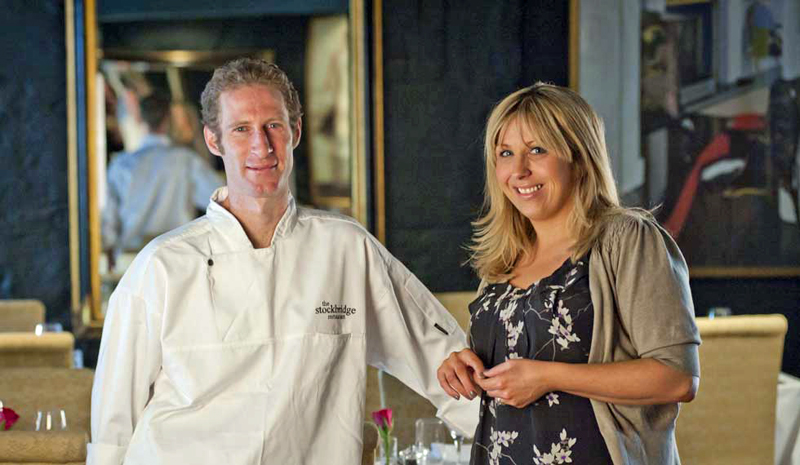
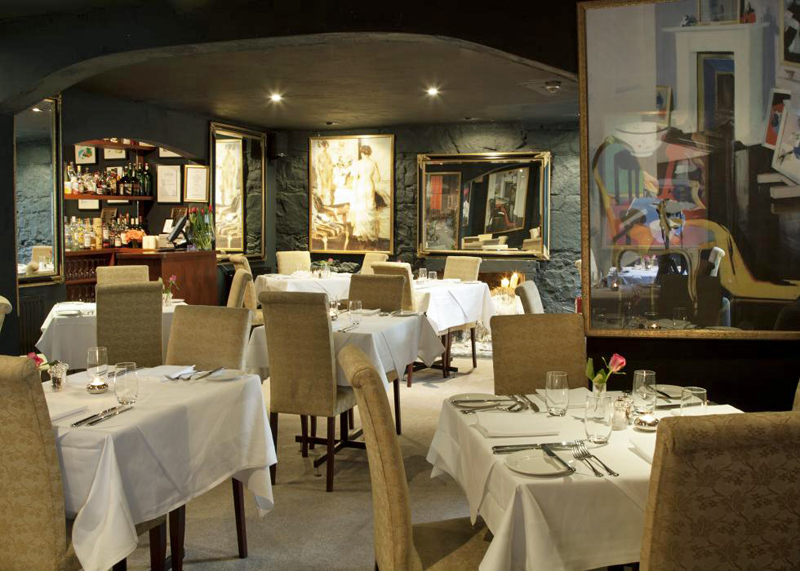
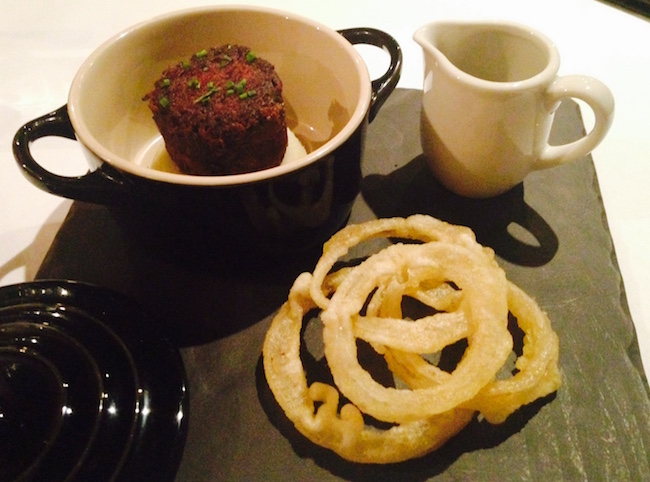
Stockbridge, in the north-west edge of Newtown, is slightly off the beaten tourist track, but only ten minutes’ walk from the city centre. With its quaint cobbled streets and village feel, it has attracted an increasing number of well-heeled residents in recent years. Although this “Shoreditch of Edinburgh” lacks the redeveloped warehouses of its London equivalent, evidence of gentrification exists in abundance. Property prices have rocketed whilst and abundance of  jewellers, craft shops, galleries, coffee houses, restaurants, gourmet grocers, artisan bakers and charity shops, along with the Sunday market, all contribute to the communal, Bohemian charm.

Along with an eclectic range of niche shops and pubs at basement level, St Stephen’s Street is home to the Stockbridge Restaurant, owned by Chef  Jason Gallagher, and his partner Jane Walker, who heads front of house. In a highly competitive market they have, over 11 years, established a thriving neighbourhood restaurant which also attracts those from further afield. Sound business acumen, judicious pricing and, most importantly, mastery in the kitchen are the secrets of their success.

Stockbridge Chef Owners
Being open at lunch only for advance bookings of parties of six or more makes shrewd business sense. Recently, the restaurant has played host to groups of American and Scandinavian visitors, golfers from the EU and a wine club annual lunch. The policy also facilitates a healthy work – life balance often lacking amongst restaurateurs. That Jason and Jane couple have been able to happily raise a young family as well as maintaining high standards in cooking and service is a testament to their success. Indeed, Jane comments that theirs is a “lifestyle rather than a job.”

Stockbridge Interior
The pricing strategy also works, with a variety of menus to suit most pockets. The three course Tuesday to Friday evening set menu, with three options in each course, is £23.95 for two courses or £27.95 for three. The evening carte, with five choices at each stage, is realistically priced at an average of £8.45 for starters, £22.95 for mains and £6.45 for desserts. Best of all is the Sunday night menu, featuring dishes from the carte and set menu for a bargain price of £27.95 for three courses, with the additional attraction of Bring Your Own wine for a modest corkage fee. Overall, such pricing has encouraged much repeat custom including many early, pre theatre diners.

The wine list contains sections helpfully described as “Soft and fruity”,”Powerful reds”, “Spicy” and so on. It was also pleasing to see Nyetimber sparkling wine amongst the Old and New World vintages.

The low ceilinged basement dining room with black stone walls and large gilt mirrors which create a greater sense of space is given light relief by colourful artistic prints. Spotlighting and candles add to the cosy, intimate feel. Well-spaced tables dressed in fine napery add a degree of formality which is only fitting given the delights to be served on them.

Jason, who was awarded City Chef of the Year, 2008, prepares a seasonally changing menu using first rate ingredients, the suppliers of which are proudly listed on the menu .What impresses about his cooking are its honesty and lack of pretension. There are no gimmicks or experimental techniques. Instead, classical skills are employed to produce accurately timed, well balanced dishes in terms of flavour, texture and temperature. Presentation is attractive without being too contrived and portions are very generous indeed.

A Sunday evening dinner allowed me to try a range of dishes from the menu.

A selection of breads – walnut, white and granary – impressed with their crisp crusts and delicate crumb. A chive and chervil dip with fruity olive oil gave a punchy, herbal lift to the home baked breads.

A cup of smoked haddock chowder was suitably rich and creamy with great depth of flavour. Contrasting texture was provided by diced butternut squash, sweetcorn and mushrooms, whilst a scattering of spring onion added a lively fresh note.

Braised ox cheek, a starter on the menu, could easily be offered as a main course, given a larger portion.  The slow cooked unctuous meat had a soft texture that simply melted in the mouth.  Perched on a mound of smooth horseradish mash which soaked up the intense red wine sauce, it was attractively presented in a mini casserole dish. Onion rings added a contrasting texture, although the batter in this instance might have been a little crisper.

StockbridgeBeef

A dish of seared scallops was precisely timed to produce a caramelised crust and succulent sweet flesh. The seafood worked well with butternut squash puree and a lively apple salsa of contrasting texture and temperature. Serrano ham added a savoury note which the dish needed although the caramelised walnuts proved one ingredient too many.

Stockbridge_Scallops
Roast grouse, not a dish for the faint hearted, offered a punchy, peaty flavour, It benefitted by being wrapped in bacon, preserving its moistness during its roasting which was well timed. So too was the resting time for this notoriously difficult to cook game bird.  Duck liver pate on toasted brioche added a decadent note whilst crisp game chips, a flavoursome bread sauce and a rich jus completed the classical garnishes.

Stockbridge_Grouse

A pre dessert took the form of a miniature strawberry trifle, again classically rendered with layers of jelly, custard and cream.

An assiette of chocolate featured an embarrassment of riches: a chocolate and walnut brownie with a crisp top and soft gooey interior; a chocolate crème brulee with a perfectly caramelised crust and rich custard; piped mounds of light white chocolate mousse; and a velvety smooth  milk chocolate ice cream. Overall, this composition succeeded in not being too heavy, rich or sweet.

Stockbridge_Chocolate

A magnificent sharing cheese board supplied by I J Mellis featured a range of Scottish cheeses in prime condition.  Served with quince jelly, honey and pine nuts – an ideal foil for blue cheese – crackers, oat cakes and crisp bread passed  through pasta machine, this could easily have  been a meal in itself.

Stockbridge_Cheese

Good coffee and petit fours – mini fondant chocolate, Rocky Road; fondant cape gooseberry and walnut and chocolate biscotti completed a memorable meal. This was enhanced by the welcoming, cheerful service and well informed service of the young front of house assistants seamlessly managed by the charming and engaging Jane Walker who also demonstrated an extensive knowledge of wines.


Overall, it is not difficult to see why The Stockbridge Restaurant was awarded Gold in the fine dining category in an award scheme for the city’s restaurants, founded by the Edinburgh Restaurateurs’ Association. This involves a process by which diners can assess the venue, service and food using a points system.  With such a distinction, along with two AA rosettes and other accolades, its future looks assured and it is likely to go from strength to strength. Fine Dining Guide enjoyed its visit and hopes to return to this delightful, understated gem of a restaurant.

Restaurant Review: Marwell Hotel, Hants (Oct 2015)

Posted on: October 22nd, 2015 by Simon Carter

MarwellExterior

If you go down to the zoo today you’re in for a big surprise! Marwell Zoo that is, or more precisely, the adjacent Marwell Hotel where Phil Yeomans is cooking.  During our visit, Phil Yeomans emerged from the kitchen looking a young 36 years. The hard work, long hours and stress had not carved his face with premature age lines. After a particularly active summer with busy services in the restaurant and an average of two weddings a week, one might expect him to look drained and exhausted.  Instead he exudes a healthy glow, masking his enthusiasm under a self-effacing, mild mannered and softly spoken persona.

MarwellPhilYeomanswebAs our conversation progressed, it became clear that the freedom as Executive Chef had reignited his passion for food. Time off before starting at Marwell also allowed him to spend more time with his family, giving a work-life balance so rarely encountered in this pressurised industry.  Phil’s impressive CV includes experience in some of London’s top kitchens, spells in the USA and Bermuda, and eight years at Lainston House where his food achieved critical acclaim, including  three AA rosettes and 5/10 in the Good Food Guide.
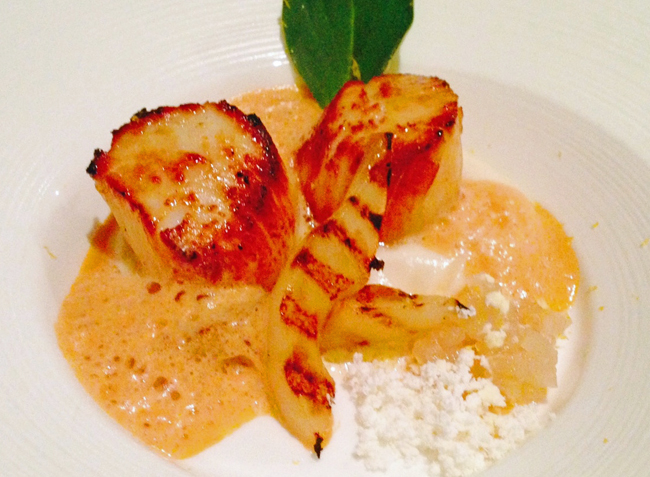
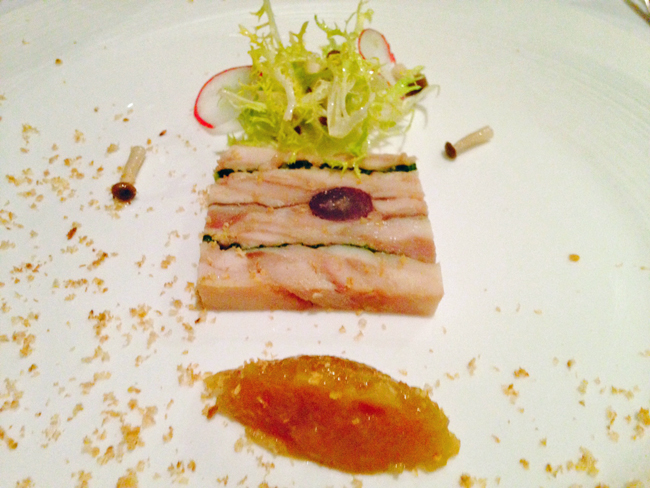
In 2014 Phil accepted an offer he couldn’t refuse from the Bastion Brothers, owners of Marwell Hotel. As Executive Chef, his brief was to transform the Zavanna dining room from one serving adequate but unexciting food, eaten in somewhat soulless, functional surroundings, and delivered with perfunctory service into a fine dining restaurant staffed by a strong brigade in the kitchen and a more professional front of house team.

Such an ambitious project, with huge potential, has been challenging but highly rewarding. Progress was ahead of schedule so that within his first year the kitchen has been redesigned – always a chef’s dream and an essential prerequisite for gastronomic success. This also enabled Phil to offer a tasting menu beyond the normal three course carte.  A team of ten chefs, including two colleagues who followed him to Marwell, has been established.

As Phil says, “Unusually, the back of the house has been done before the front of the house.” The arrival of a good pastry chef will enhance that part of the offering, whilst he is able to train his mainly young team to master the basic skills which can be so lacking amongst aspiring chefs joining the profession – before progressing to more demanding techniques.

With major investment at every stage of the process, including refurbishment in some of the hotel’s rooms, it is hoped to launch a new look dining room, with its high pitched roof, by Easter 2016.

Phil appreciates the importance of building a strong front of house team, capable of liaising effectively with both kitchen and diners.  This is his next priority. The downfall of many otherwise good restaurants, diners are more likely not to return if they suffer poor service than disappointing food.  On the gastronomic front, Phil deserves more exposure, although he prefers to wait until the project is complete before inviting full media coverage.

Nevertheless, his cooking has already been well received and is certainly attracting much local attention, with the restaurant averaging 50-60 covers mid-week and 70 at weekends. One important reason for this is its lack of pretension.  Although elements of experimental/molecular technique are evident, these are now used in moderation and where used are integral to the success of the dish rather than mere garnishes. Many dishes are now stripped back, employing classical techniques to maximise clarity of flavour and balance of texture.  The apparent simplicity of dishes, making them more accessible to the diner, belies the creativity, flair and technical skill in their conception and execution. Happily, the presentation still features clean lines with a conscious sense of artistry.

The menu, which changes frequently, uses local ingredients wherever possible, sourced from the same suppliers he used previously. As a leading member of Hampshire Food Fair and Farmers’ Market – the largest in England – Phil is passionate about the sourcing of high quality regional produce. Dishes might include ingredients like squid and rabbit, commonly used in the capital but seen less frequently elsewhere. Here is a modest attempt to expand the conservative tastes of some of his provincial diners.

Fundamentally however, his aim is to “offer simple, good value food at a good price” in relaxed and unintimidating surroundings. Whilst this underplays the complexity of his dishes, his success in attracting custom is clearly evident.
The very fair pricing is another bonus. The carte, offering a choice of five starters, mains and desserts is £24.50 for two courses, £32 for three, whilst the five course Tasting Menu (seven including amuse and pre dessert) is £49 or £76 with matching wines. At these prices, it is not surprising that a strong local following, enjoying a standard of cooking that competes easily with many Michelin starred establishments, has developed.

Whilst Phil does not cook primarily for the guides, he aims to achieve at least three AA rosettes to match those he gained at Lainston Country House hotel. Ultimately, he hopes the increased popularity of his cooking will enable the restaurant to stand alone in its own right. Not that the restaurant is the only place where his cooking can be sampled. The stylish Zanzibar lounge offers a good choice bar menu of freshly cooked dishes that attracts families and those who prefer a lighter meal.

Given the embarrassment of choice – I wanted to try everything – I opted for the tasting menu, which includes dishes from the carte. The multi component ingredients are understated, allowing for a surprise element revealed as they are presented.

The mini white, brown and fennel loaves, fresh from the oven, immediately created a good impression with their yeasty aroma, crisp crusts and delicate crumb.

An ethereally light amuse bouche of shitake, artichoke espuma, black olive and parmesan was a happy marriage of subtle and strong flavours which served its purpose of exciting the palate.

The first course of seared scallops was accurately timed to produce a caramelised crust and succulent flesh. The surprise ingredient and a real revelation was the oyster leaf, which, far from being decorative, gave the dish another dimension, as if eating a whole ozone infused oyster. A light crab bisque added a rich crustacean flavour without being overpowering whilst sauvignon poached pear gave a contrasting sweetness. Lemon pearls – one of the few molecular elements on the whole menu and here used to good effect –  provided the acidity the dish needed. (Wine: Bola prosecco Conegliano-Valdobbiadene DOC)

Marwell_Scallops

A well flavoured and accurately seasoned terrine of rabbit came next, the meat retaining its moist texture and delicate flavour.  Offset by a quenelle of not over sweet Mirabelle plum chutney and dressed with frisse salad, shimeji mushrooms and a scattering of crushed hazelnuts, this was well balanced, classically based dish. (Wine: Friulano, Grave del Friuli, Borgo Tesis, Fantinel)

Marwell_Rabbit

The lightly crusted, thick plaice fillet was perfectly cooked to enhance its lively flavour. It worked well with the accompaniments of braised aubergine, mussels and squid ink farfalle, giving a Mediterranean –  Middle Eastern twist, emphasised by a judicious, surprise addition of harissa which lifted the whole dish. Crisp baby broccoli added freshness, colour and texture. (Wine: Sancerre, La Graveliere, Joseph Mellot)

MarwellPlaice2

Lamb rump was cooked to a blushing pink, doing full justice to the cut, whereas the shoulder meat benefitted from long, slow cooking.  Classic accompaniments included a smooth garlic confit and a tranche of boulangere potatoes. (There might have been more of this as it was so delicious!) The surprise element which really raised this dish to lofty heights was the gremolata, giving a herby, lemony punch to balance the sweet meat. (Wine: Portillo Malbec, Bodegas Salentein, Mendoza)

MarwellLamb2

A tropically themed pre dessert featured tangy passion fruit curd,  refreshing pineapple sorbet of velvety consistency, guava espuma and crumble for contrasting texture.  This on its own in a larger portion would have made a pleasurable course in its own right – I could have eaten a bowlful –  but it was a mere prelude for the riches to come.

MarwellCurd

A delicate, thin tube of dark chocolate encasing a luscious banana mousse was dressed with salted caramel and paired with a fragrant almond ice cream. These balanced flavour combinations and the beautifully restrained presentation were a triumph of dessert cookery.

MarwellChocolate

Equally accomplished was the cherry and pistachio delice, dressed with a pistachio coulis, fresh pistachios and an intense Morello cherry sorbet.  Again, the flavours and textures worked in harmony with one another. (Wine: Brown Brothers Late Harvest, Orange Muscat, Flora Victoria)

MarwellDessert

Clearly, these three desserts amply demonstrated  the strengths of the pastry section. Good coffee and petit fours – jellies, truffles and fudge – completed a memorable meal, made all the more enjoyable  by the knowledgeable, engaging  and unobtrusive service headed by Roberto.

Phil Yeomans has clearly made a strong impression in the last year at Marwell Hotel whose owners were clearly right to place their trust in him.  Although his task is unfinished, it has already helped the hotel go from strength to strength. Hampshire is not blessed with an abundance of good restaurants, so Marwell with help fill gap. Fine Dining Guide wishes him every success and will follow his progress with interest.