A veritable ‘Who’s Who’ of the hospitality world were in attendance at last week’s AA Hospitality Awards. With 23 coveted awards presented, the winners were all celebrating at the Grosvenor House Hotel on London’s Park Lane.
The AA Hospitality Awards are considered to be the industry’s own ‘Oscars’ and is one of the unique times when the hospitality industry come together to recognise the achievements of the nations’ best hoteliers, restaurateurs and publicans. Drawing on the unrivalled knowledge and expertise of the AA inspectorate and other industry professionals involved in the judging process, winners are selected in recognition of excellence and success within their chosen category, having shown a significant improvement in the preceding 12 – 18 months and proving their dedication to raising industry standards and enhancing both their guest and diner experiences. From top hotels and restaurants to the best of British pubs the AA Hospitality Awards celebrate everything that is great in British hospitality. All the winners will appear in the latest edition of the 2016 AA Hotel, Restaurant and Pub Guides which were launched at the event.
Guests at the event, hosted by Fiona Bruce, were treated to a gastronomic menu created the 2014 AA Chef’s Chef, Nathan Outlaw.
Last night’s winners included:
AA Chefs’ Chef of the Year 2015 (sponsored by Caterer.com)
A unique award that offers all AA Rosette-awarded chefs the chance to decide which of their peers deserves the ultimate recognition.
Winner – Daniel Clifford
Daniel is one of the countries most respected chefs, and rightfully so. His background in working in some of the best restaurants in the UK and France has led to an absolute focus on purity of flavour in his cooking.
Quietly going about his business and committed to the stove, his food and Midsummer House has evolved and matured into one of this country’s finest restaurants.
Daniel’s pursuit of continual development, sheer dedication for perfection and exemplary belief in his craft, has made him an inspiration to so many chefs at all levels.
AA Lifetime Achievement Award
Winner – Robin Hutson
This year’s decision to award Robin Hutson with the Lifetime Achievement Award was an easy one to make. The award recognises professionals within the hospitality industry who have committed their lives to the pursuit of perfection within their discipline and there is no doubt that Robin has the midas touch when it comes to hospitality.
Robin’s career began with on the Savoy Group’s management training programme including periods at Claridge’s, The Berkeley and Hotel de Crillon in Paris. He then went on to work for the Five Star Elbow Beach Hotel in Bermuda for two years before being offered the General Managers position at Chewton Glen in the New Forest. He would spend the next eight years there leaving as the Managing Director.
Robin then co-founded the highly successful Hotel Du Vin group which is generally recognised as the vanguard of the UK boutique hotel movement. After just ten years they sold the Hotel Du Vin group and Robin joined the Soho House Group as Executive Chairman. During his time the group doubled in size and was later sold for £105M.
A return to the New Forest beckoned having been approached by Jim Ratcliffe who was developing Parkhill, and in 2009 Lime Wood was unveiled. It quickly became established as one of the UK’s top country house hotels, winning many awards including the AA Hotel of the Year for England in 2012.
Now as executive chairman of the group, he has focused on developing Home Grown Hotels and created The PIG chain, a relaxed country house concept based around kitchen garden produce. The PIG in the forest opened with much critical acclaim and it was clear to see that he had created yet another ground-breaking hotel with broad consumer appeal and universal praise from his industry peers.
Two more PIGS have followed in quick succession – The PIG on the Beach and The PIG near Bath with a fourth site in Devon recently been acquired. All of his hotels have achieved three AA Red Stars this year and continue to deliver an excellent level of consistency, made even more impressive given the high level of occupancy and the tremendous food and beverage turnover that each property generates.
AA Hotel of the Year
Introduced in 1992, and awarded to hotels that are recognised as being outstanding examples in their particular market.
Winner, England (sponsored by Temple Spa) – Cliveden, Taplow
Winner, Wales (sponsored by Avanti Gas) – St George’s Hotel, Llandudno
Winner, Scotland (sponsored by PSL – the food professionals) – Rufflets Country House, St Andrews
Winner, London (sponsored by BriefYourMarket) – Corinthia Hotel, London
Winner, Northern Ireland – Galgorm Resort and Spa, Ballymena
AA Restaurant of the Year
While the standard of cuisine is at the very heart of the selection criteria for these awards, innovation, ambience, and hospitality are all part of the equation that determines the eventual winners.
Winner, England – House of Tides, Newcastle Upon Tyne
Winner, Wales – Coast Restaurant, Saundersfoot
Winner, Scotland – The Gannet, Glasgow
Winner, London (sponsored by Food & Travel Magazine) – Tredwell’s London
AA Wine Award (sponsored by Matthew Clark)
Nominees are judged on the quality of their wine list and their ability to inspire customers to make wider and more adventurous choices.
Winner, England and Overall – The Sun Inn, Dedham
Winner, Wales – Walnut Tree, Abergavenny
Winner, Scotland – Ubiquitous Chip, Glasgow
AA Pub of the Year
Combining the provision of enjoyable food, a great pub atmosphere, and a warm welcome with a high standard of management
Winner, England – The Porch House, Stow-on-the-Wold
Winner, Wales – Kinmel Arms, Abergele
Winner, Scotland – The Scran and Scallie, Edinburgh
AA Hotel Group of the Year (sponsored by Beacon)
A hugely prestigious award presented in recognition of the hotel group that has a proven track record of striving to ensure the very best levels of service, food and accommodation across the range of properties. Attention to detail is imperative and a committed and structured approach to future development is essential.
Winner – Brend Hotels
AA Eco Hotel and Eco Hotel Group of the Year
These awards recognises a clear commitment to sustainability, demonstrated through good practice and policy to make a positive contribution to reducing impact on the environment
Winner, Eco Hotel – The Savoy, London
Winner, Eco Hotel Group – Exclusive Hotels and Venues
AA Food Service Award
The AA Food Service Award recognises establishments who not only deliver excellent standards of restaurant service and hospitality but also have technical service skills, food and beverage knowledge of the highest standard and a clear commitment to staff training and development.
Winner – Belmond Le Manoir aux Quats’ Saisons
AA Housekeeper of the Year Award (sponsored by Northmace & Hendon)
The award recognises outstanding commitment and performance, identifying a Housekeeper who goes above and beyond the call of duty.
Winner – Sarah Middlemas – The Old Course Hotel, St Andrew
AA Spirit Award (sponsored by The Balvenie)
This award was introduced in 2014 to recognise the professional promotion, education and service of spirits in the hospitality industry.
Winner – The Churchill Bar and Terrace, London
AA Hotel of the Year
Winner, England (sponsored by Temple Spa) – Cliveden, Taplow
This award is the ultimate accolade for an English hotel and the 2015 winner could not be more deserving. Built in 1661, the story of Cliveden stretches back over 300 years of power, politics and memorable parties.
Cliveden was originally built by the 2nd Duke of Buckingham as a hunting lodge where he could entertain his friends. Since then the house has been destroyed by fires twice, played host to virtually every British monarch after George I, frequented by the likes of Winston Churchill and Charlie Chaplin and used as a set for the Beatles movie Help. The elite parties continued into the 1960s where John Profumo famously met Christine Keeler, igniting the biggest political scandal in British political history.
In 1985, Cliveden became a luxury hotel and has recently undergone a 16-month renovation of its public spaces, suites and bedrooms. A manor house of grandeur set amid 376 acres of magnificent National Trust graded gardens and woodland, boasting 5 AA Red Stars and 3 AA Rosettes, Cliveden is now one of the UK’s finest Country House hotels. With General Manager Sue Williams at the helm, stunning cooking from Head Chef Andre Garrett and the direction and support of Managing Director Andrew Stembridge, this iconic hotel is very much back on the hospitality industry map and has never looked or performed better. Cliveden will continue to make history as a place no one could resist an invitation to stay.
Winner, Wales – St George’s Hotel, Llandudno
This striking hotel located on the seafront of Llandudno stands out from the crowd. It is the commanding exterior and lavish interior of St Georges along with the high calibre staff that make it the worthy winner of this prestigious award.
St Georges Hotel was built in 1854 by 24-year-old Isaiah Davies. At 19, Isaiah inherited the Kings Head pub after marrying Anne Owen, the pub owner’s daughter. Isaiah later acquired the land he would later build St Georges on by exchanging the drinking debts from the Kings Head with John Williams, who was the agent for a wealthy land owner Lord Mostyn. Since then St Georges has been host to infamous guests such as Winston Churchill, Napoleon III and seven British Prime Ministers.
From the moment they arrive guests are welcomed by St Georges Victorian elegance, with highly polished brass work and red carpeted outside steps. The bedrooms are modern and stylish and many boast beautiful views over Llandudno bay.
Members of staff have perfected the balance between friendliness and efficiency, ensuring each guest feels welcome and well looked after. The team at St Georges show a commendable commitment to the hotel’s environmental policy, trying to minimise any detrimental effects as a result of the hotels business. This efficient collaborative ethos within the hotel is further complimented by the hotel achieving the investors in people standard in 2011.
Winner, Scotland – Rufflets Country House, St Andrews
One of the oldest country house hotels in Scotland, Rufflets is a charming turreted property set in extensive well-tendered gardens. These award-winning gardens are one of Rufflets most prized assets, providing fresh vegetables that are later prepared in the kitchen and fresh cut flowers to decorate the tables. It is the attention to detail and the warm welcome you receive from staff that makes Rufflets the deserving winner of this prestigious award, hotel of the year for Scotland.
Local records, stretching back more than 350 years, indicate that the land was once owned by the Priory of St Andrews and was known as ‘Ruch Fletsm’, meaning rough flat lands. The house itself was built in 1924 as a private home for Mrs Anne Brydon Gilroy, the widow of a prominent Dundee jute baron. Rufflets was designed by a well-known Dundee architect, Donald Mills. Mrs Gilroy’s initials, ABG 1924, can still be found engraved on the key-stone above the door leading to the formal south garden.
Since 1952 the house has been privately owned by three generations of the same family. The hotel is now owned by Ann Murray-Smith, the daughter of one of the original founders. Ann and two of her sons, Mark and Christopher, became partners in 2001. Since then they have invested significantly in refurbishing the bedrooms and public areas, building a new banqueting and conference suite and developing three new lodges in the grounds. These recent improvements along with the great levels of hospitality and 2 AA Rosette cooking have taken Rufflets to another level.
Winner, London (sponsored by BriefYourMarket) – Corinthia Hotel, London
Situated in the very heart of London, close to the river Thames and moments from Westminster, this grand Victorian building dates back to 1885 and is a worthy winner of this prestigious award.
In 2011, the hotel reopened with a new lease of life, a beautiful transformation of this grand Victorian building. All 294 guest rooms, 40 suites and 7 imaginative penthouses combine traditional grandeur with modern freshness. Each room offers 21st-century luxury with a Loewe HD TV, Nespresso coffee machine, media hub and high speed WiFi.
Both restaurants within the Corinthia are to rosette standard. Massimo Restaurant offers its own taste of Italy and the Northall celebrates the great British kitchen. Evenings at the Corinthia can be spent in the Bassoon, a London bar with attitude. Art deco design, jazz inspired art and 1920s music makes Bassoon a luxurious drinking den. Here fine Champagnes, bespoke cocktails and boutique spirits are served in elegant replicas of Queen Victoria’s glassware.
Set in a space of iconic beauty, ESPA spa is the next generation of spas. Spread over four floors, the spa features 17 treatment rooms, a private spa suite, nail studio, indoor swimming pool, vitality pool, amphitheatre sauna, ice fountain, marble heated loungers and private sleep pods.
Corinthia is a physically stunning hotel with rosette standard food and impressive staffing levels that over the last 4 years has evolved into a top class London hotel able to compete with the very best.
Winner, Northern Ireland – Galgorm Resort and Spa, Ballymena
Originally a gentleman’s club in the 18th century, Galgorm Resort & Spa is set in 163 acres of beautiful parkland with views over the River Maine. Established as a hotel in 1991, it has undergone significant restoration and improvement which is still ongoing. In September this year, Galgorm will see the unveiling of its newest project, a £15 million extension providing 48 deluxe rooms and suites and a unique indoor and outdoor thermal village spa.
Several dining options are available – Gillies provides casual dining and Frateli’s offers Italian favourites in a relaxed environment. The River Room, the fine dining option, has a clear focus on quality local produce and a high standard of cooking that is recognised this year in the achievement of three AA Rosettes.
The resort also includes four bars, a stand-alone banqueting facility and an award-winning spa. Galgorm emanates an overwhelming feeling of quality and luxuriousness. Investment has not only been made in the fabric of the property but also into staff training and development. Tailored training programs have been implemented to ensure that the quality of service matches the fantastic standard of the facilities.
Hospitality and customer care is really strong. The friendly team have that all-important can-do attitude and always go that extra mile to ensure that guests feel at home; it typifies great Irish hospitality. This impressive hotel has gone from strength to strength over the last few years and is a worthy winner of AA Hotel of the Year for Northern Ireland.
AA Restaurant of the Year
Winner, England – House of Tides, Newcastle Upon Tyne
Dating back to the 16th century, this merchant’s townhouse is now occupied by Kenny Atkinson and his new venture, House of Tides. Located on the Quayside, the rustic feel of the exterior is continued inside with flagstone floors, exposed beams and cast-iron columns.
Aperitifs are served on the ground floor while the dining experience continues on the upper floor. The dishes served are visual and imaginative, incorporating a sense of theatre. The produce is locally sourced wherever possible with foraged fare featuring heavily.
Chef Patron Kenny Atkinson has enjoyed much success throughout his career building up great experience in properties such as The Chester Grosvenor, Mandarin Oriental London, The Greenway, St Martins on the Isle, Seaham Hall and Rockliffe Hall. Add to that great success on The Great British Menu and various other television appearances, and there is the recipe for great success.
From the relative security of senior positions in large well-established 5 Star hotels, Kenny decided to open his own restaurant in his home city of Newcastle. Fifteen months on, the House of Tides continues to flourish well beyond the immediate attention of its opening.
Kenny has done an outstanding job establishing a great reputation in such a short space of time. The quality and calibre is extremely impressive and most definitely a deserving winner of this year’s Restaurant of the Year for England.
Winner, Wales – Coast Restaurant, Saundersfoot
This year’s restaurant of the year has been awarded to the outstanding Coast restaurant in the tranquil location of Saundersfoot. Just metres from the shoreline, this purpose built curvaceous wooden structure with huge floor-to-ceiling windows enjoys the beautiful views across Carmarthen Bay.
The interior has a relaxed feel to it with wooden floors, seating and tables with sliding doors that lead onto a decked balcony.
Before undertaking his current role, Head Chef Will Holland has previously worked at L’Ortolan and La Becasse and participated in The Great British Menu. Will works closely with local suppliers of meat, fruit and vegetables to reduce the food miles and to ensure seasonal, local produce is utilised on his menus. As you would expect from somewhere so close to the sea, local Pembrokeshire fish plays a big role on the menu. A nibbles list including a tankard of prawns or crispy pigs ears to wet your taste buds before you start on the main menu.
This great restaurant is a welcome addition to the Welsh dining scene and makes an excellent AA Restaurant of the Year for Wales
Winner, Scotland – The Gannet, Glasgow
Named after Scotland’s iconic seabird and a cheeky reference to those with large appetites, The Gannet was christened. Ivan Stein and Peter McKenna opened The Gannet in 2013 after realising a common aim to own a restaurant that reflected the best of Scottish produce prepared with passion and served in a relaxed contemporary style.
With exposed brickwork walls, floor-to-ceiling windows and a mezzanine dining area, the old tenement building in which the Gannet took up residence was vacant for almost a decade before Peter and Ivan lovingly transformed it into the modern setting for the Scottish bar and restaurant. The exciting flavours, lively venue and relaxed, friendly staff meant The Gannet quickly established itself as one of the best restaurants in Glasgow and a worthy winner of the restaurant of the year for Scotland award.
The strong relationships that Ivan and Peter have built with their suppliers and staff show in the quality of the ingredients they cook and the loyalty of the staff who work so hard to deliver the great service and create such a fantastic atmosphere. Whether you want to have a drink and a snack in the trendy bar area, a la carte dining or a banquet for larger groups, you can expect a modern take on classical cooking with the attention to detail that gives you the feeling that this is not just any old bar and restaurant.
Winner, London (sponsored by Food & Travel Magazine) – Tredwell’s London
This year’s London restaurant of the year has been won by the latest addition to Marcus Wareing’s empire. In the autumn of 2014, Marcus opened the doors to Tredwells. Split over three floors, the restaurant has a basement cocktail bar and two airy, retro-looking dining rooms lit by large windows, and done out with racing-green leather.
As well as the lower ground bar area, the restaurant also features an ‘eat at the bar’ arrangement on the ground floor. There is a selection of cocktails on offer created by Dav Eames and the wine list is global, selected by Michael Deschamp the Executive Sommelier.
Named after the butler in Agatha Christie’s novel, The Seven Dials, the restaurant is buzzing with a high-decibel West End vibe. The menu describes itself as ‘modern London cooking’ which translates as good-quality British ingredients mixed up with globetrotting flavours, aimed squarely at the comfort zone.
The food is fun, inventive and original. Flavours are big and punchy and there is a selection of dishes cooked on the Robata Grill. Tredwell’s also offers a variety of gluten free and vegan dishes.
It is certainly a refreshingly new concept addition to the Marcus Wareing group and will be a well-received winner of this prestigious accolade.
AA Wine Award (sponsored by Matthew Clark)
Winner, England and Overall – The Sun Inn, Dedham
The Sun Inn is situated in the picturesque heart of Constable country. It has been a watering hole for locals and a resting place for travellers for centuries. Built in the 15th century it has been lovingly restored by its current owner and proprietor Piers Baker. With its cosy open fire, beams and wood panelling the Sun Inn is a perfect place to eat great food, drink fine wine and relax.
The staff at the Sun Inn are highly trained and provide excellent customer care.
The menu is influenced by the season and locally sourced with homemade jam at breakfast and fresh baked scones for afternoon tea.
It is the attention to detail that has been given to creating the wine list that has made it an easy decision to award the Sun Inn with the Overall Wine Award. The Italian and French bias of the list allows guests to taste beyond Pinot Grigio, Merlot and Sauvignon, sampling wines from South West France and Italy. Piers pays special thanks to his friend Hamish Anderson whose help, advice and general good taste is invaluable in helping him shape the list.
Winner, Wales – Walnut Tree, Abergavenny
A famous inn and restaurant since the early 1960s, The Walnut Tree sits two miles east of Abergavenny. The whitewashed inn goes for an unaffected rustic look enlivened with contemporary local art as a backdrop. Offering great food and a fantastic wine list, the restaurant has an informal setting with 20 tables simply laid. The three-Rosette standard food is an eclectic mix based on chef proprietor Shaun Hill’s personal taste.
Shaun is one of the UK’s most exceptional chefs. He began his career in 1966 working for Robert Carrier in his Islington restaurant. He then went on to work in some of London’s most prestigious addresses including The Capital Hotel in Knightsbridge with Brian Turner and Blakes in South Kensington. The Merchant House, his much missed 24-seat restaurant in Ludlow was hailed as the 14th best in the world and turned the Shropshire market town into a gastronomic destination. His decade there from 1994 to 2005 will be remembered fondly by anyone who was lucky enough to have eaten his food.
Never one for chasing culinary fads and trends, Shaun prefers to keep it real, sourcing the best ingredients he can lay his hands on and unleashing his formidable, seemingly effortless technical skills on making it all look deceptively simple.
The intriguing wine list promises bottles from small artisan winemakers, and staff are impeccably helpful and attentive.
Winner, Scotland – Ubiquitous Chip, Glasgow
The Ubiquitous Chip was opened by Ronnie Clydesdale on the 11th January 1971, at a time when chefs of the day knew only Italian or French cooking and Scottish cuisine was confined solely to the home. Aunties, grannies and even folklore have been the inspiration behind the Ubiquitous Chip’s cuisine, a trend that has now been embraced across the country.
Inside, the Chip is a warren of four dining areas including a brasserie, a mezzanine and the courtroom with its glass roof making it one of the most magical places to eat in the area. Intrinsic to good eating is good drinking. Complementing the restaurant are three bars, the Big Pub, The Corner Bar and lastly the Wee Pub (the smallest in Scotland).
The sommelier team has worked incredibly hard to continually develop the wine list, ensuring new and unusual wines are added. The wine list contains an immense range – from the finest of clarets to the most interesting boutique wineries of both the old and new world. The wine is important to the restaurant and it shows with added extras such as the wine flights, a monthly wine club, and regular wine dinners in the Restaurant, offering our guests the opportunity to meet the producers.
AA Pub of the Year
Winner, England – The Porch House, Stow-on-the-Wold
The Porch House occupies a handsome, Grade-II listed, Cotswold-stone building, steeped in history. The oldest parts of the building, with its uneven ceilings and low door frames, date back to 947AD, and is thought to be the oldest inn in England.
Completely refurbished in 2014, the pub is an excellent example of how period properties can be brought into the 21st century without losing the character and charm of their former selves. Porch House manager Alex Davenport-Jones has gathered a great team around him and has devoted a good deal of time to training his friendly staff to provide the very best in customer service.
Full of character, the public areas, with flagstone floors and wood burning stoves, offer cosy lounge areas and an authentic bar with a great range of craft beer and real ales. The menu is simple yet robust, using the best locally sourced ingredients where possible. There is plenty of choice about where to enjoy your meal – the bar, lounge, dining room, conservatory or the pretty courtyard garden.
The 13 bedrooms are of a particularly high standard and all individually designed with no expense spared. The high quality beds and bedding, vintage radios and phones and the sleek modern bathrooms show the level of detail considered when Brakspear made the modernisations. The carefully selected bar range ensures a wide variety of spirits, beers and wines from all over the world. Special additions such as the Porch House Bloody Mary and Inn Made Lemonade are concocted using a 100-year-old recipe, making the bar menu that little bit special.
The Porch House is an exceptional example of a great English pub and a worthy winner of this year’s award.
Winner, Wales – Kinmel Arms, Abergele
Bought on Valentine’s Day 2002, owners Tim and Lynn had a vision. They wanted to create a peaceful place to eat, drink and rest. Nearly fourteen years on this is exactly what you can expect from the Kinmel Arms. As soon as you walk in you know you have arrived somewhere very special.
The beautiful 17th-century building with sandstone mullion windows is a direct contrast to the warm, modern interior. The buzzy bar with its open fire and some of the best wines, spirits and beers is popular with locals as well as staying guests. You can enjoy over twenty different house wines served by the glass and by the bottle or sample Tim and Lynn’s real passion – cask ales – for which they have recently won an award.
The two-Rosette standard restaurant is the reason for the Kinmel Arms existence; after all, it’s all about the food. Tim and Lynn pride themselves on sourcing good quality, fresh food with many of the ingredients being sourced locally. The varied menu has plenty to offer those who love local seafood and different types of meat.
Not only is there a great bar and a Rosette standard restaurant, but there are also four luxury rooms available. The upper floor rooms have lofty ceilings and skylights and are bright and airy while the ground floor offers the ultimate peaceful hideaway.
The Kinmel Arms is not only a pub, it is Tim and Lynn’s home and the team are a family. This makes the great customer service look effortless. When there is the warm welcome of the Kinmel Arms, with a great bar, fantastic food and luxurious rooms it makes St George the perfect place to get away.
Winner, Scotland – The Scran and Scallie, Edinburgh
The Scran and Scallie is a vibrant gastro pub that offers relaxed dining and menus showcasing great Scottish food. The food, coupled with a range of traditionally brewed ales, is served in a relaxed, cosy setting full of charm and character.
The vision Tom Kitchin and his business partner, Dominic Jack, had when they opened The Scran and Scallie was to bring ‘nature to the plate’. With the help of head chef James Chapman, they created menus that demonstrate their passion and knowledge using the very best produce Scotland has to offer. A map in the pub shows the locations of where produce is sourced so guests get a true understanding of how local their ingredients really are.
Overseeing the operations and front of house are co-owners and Directors Michaela Kitchin and Philippe Nublat along with Restaurant Manager Levi Sweeney-McGrath. The excellent customer care received by the highly skilled and knowledgeable staff at the Scran and Scallie are one of the key strengths of the operation.
The charming interior of the pub features many of the original aspects of the building. Furnishings are distressed and reclaimed with tartan and tweeds adding character and bringing the original interior back to life. The menu has fresh, modern dishes alongside some forgotten favourites, such as sheeps heid, scotch broth and traditional cottage pie. Having served 2,353 portions of ham, egg and chips from the al’la carte menu, The Scran and Scallie is testament to how good, honest and comforting food in a great pub is still a nation’s favourite.
AA Hotel Group of the Year
Winner – Brend Hotels
Brend Hotels is a family-owned hotel group with a collection of unique luxury hotels in Devon and Cornwall. Since the first hotel was purchased by Percy Brend over 50 years ago, the group has steadily evolved and grown into one of the top 150 employers in the South West.
The company is still family owned and run, with the second and third generation of the Brend family now directors and the fourth generation being trained for future management. The directors play a hands-on role and are often out front welcoming guests and listening to what they have to say. For Brend Hotels, the personal touch and the genuine feel of a family business has been a hallmark of the business.
The Brend Hotel Group has grown through the purchase and restoration of carefully selected distinctive hotels, some with outstanding coastal locations and some at the heart of Devon market towns. The collection now includes eleven luxury hotels in Devon and Cornwall, eighteen restaurants, five spas and a Championship Golf Course.
The directors’ hands-on and enthusiastic approach sets the tone for the way the team approach their work. Their passion for excellence means that their staff go the extra mile for customers as a matter of course. Investment into top quality training and the Brend training academy has led to some of the highest staff retention in the industry. Brend are loyal to their staff and in return their staff are loyal to them.
The traditional values of impeccable quality and customer service have created a following of loyal guests to the Brend Hotels. Often many have been visiting for decades for that personal touch and ‘home from home’ experience they wouldn’t get in any other hotel.
AA Eco Hotel and Eco Hotel Group of the Year
Winner, Eco Hotel – The Savoy London
One of the London’s most famous landmark hotels, The Savoy is a great example of how a five-star hotel can successfully be sustainable, environmentally responsible and luxurious. Previously shortlisted for this award, it recognises the hard work, dedication and overall commitment to sustainability of the whole team at The Savoy.
The hotel and team have achieved a host of other environmental awards in the past few years including Gold Award status with Green Business Tourism, best food waste strategy with Sustainable Restaurant Association and Sustainable Hotel of the Year in successive years within their own group, Fairmont Hotels & Resorts. It demonstrates that with the creation of their Sustainability Partnership Programme, sustainability has become integral to the hotel culture, importantly making an impact and a real difference.
Results, which are clearly measured and monitored, include a significant reduction in their energy baseline involving CO2 footprint, electricity and gas consumption and LED lighting retro-fit. Water efficiencies have been created by a variety of initiatives including their own in-house water bottling plant. There are many initiatives to educate, train and motivate which result in the team’s pro-active approach. These have included active membership of the Northbank Business Improvement District Organisation, launch of central London’s ‘River of Flowers’, the gift of a ‘bee hotel’ to Canada House and much local charitable fundraising.
Their totally inclusive approach to sustainability, great creativity and innovation, clear and regular communication, both internally and externally, is bound together by the clear passion and commitment from all the team. This makes The Savoy a great winner.
Winner, Eco Hotel Group – Exclusive Hotels and Venues
A family-owned group, Exclusive Hotels and Venues was established in 1981 when their first hotel, Pennyhill Park, was bought. The group now has six luxury, award-winning hotels led by Managing Director and current Hotelier of the Year, Danny Pecorelli.
This award recognises the success of the group’s ‘Exclusively Green Programme’, which has delivered a cohesive platform to establish a pro-active and responsible approach to sustainability. The group has taken strong measures in order to reduce the impact on the environment and therefore delivers products and services that are as environmentally friendly as possible. Energy initiatives include investment into biomass boilers, firewood from the hotels’ own trees that have naturally fallen, together with a replanting programme and air-source heat pumps and induction fuelling both the new cookery school and banqueting kitchens at Lainston House.
As the group’s ‘Exclusively Green Programme’ is companywide, there have been a number of new initiatives over the last 12 months. These include replacing the spa’s 40,000 slippers that once went to landfill with flip flops that are now donated to the Salvation Army. All departments are represented on Green Committees that meet once a month to discuss, present and solve issues concerning waste-management schemes. Particularly impressive is the autonomy given to all employees so they can suggest and implement ideas in order to maintain sustainability.
Another strong focus is on food initiatives via the promotion of ‘Food Heroes’, a group-wide programme to support and promote local suppliers in tandem with the increasing harvest from their own kitchen gardens at each hotel. Several hotels have installed rocket composters, including two at Pennyhill Park which have helped greatly towards their goal of achieving 95% waste diverted from landfill. The compost created is used on the kitchen gardens, creating a ‘closed loop’ from plate to garden and back to plate
AA Food Service Award
Winner – Belmond Le Manoir aux Quats’ Saisons
One of the UK’s most celebrated gastronomic destinations, created by Raymond Blanc in 1984. Here he realised his personal vision of creating a harmonious hotel and restaurant where guests would find perfection in food, comfort and service. Completely self-taught, his significant influence on British cuisine has brought scores of awards and he is the only chef to have achieved and held five AA Rosettes since their inception in 1991.
It comes as no surprise that Raymond’s passion and attention to detail extends far beyond the kitchen and is reflected across the whole of Le Manoir, in particular in the immaculate levels of service and professionalism that the team deliver in the restaurant. Mourad Ben Tekfa, Master of Culinary Arts, started at Le Manoir in 1994 and after a few stints away at L’Ortolan and Hambleton Hall, returned in 2010 to succeed Alain Desenclos as Restaurant Director.
A fundamental part of Raymond’s philosophy is a strong commitment to training and development which is clear to see throughout the whole of the structured restaurant team. Personal presentation, product knowledge, customer care and technical service skills are consistently first class. It is then no surprise that year on year the team excel in well-established industry skills awards such as from the Royal Academy of Culinary Arts.
Le Manoir is a beacon of excellence for all things food and beverage. It delivers a seamless guest experience where genuine customer care combines with technical skills of the highest order.
AA Housekeeper of the Year 2015(sponsored by Northmace & Hendon)
Winner – Sarah Middlemas – The Old Course Hotel, St Andrews
The five Red Star Old Course Hotel, Golf Resort & Spa borders St Andrews, one of the world’s most famous golf courses. The iconic resort with 35 suites designed by Jacques Garcier, 144 luxurious rooms and state-of-the-art conference wing employs up to four hundred staff that work across different areas of the resort. Each member of staff is trained and empowered to go the extra mile to ensure that every guest receives nothing but VIP treatment.
This year’s winner of the Housekeeper of the Year Award, Sarah Middlemass, has proved her ability to motivate and manage a team that maintains a first class standard. Not just happy with that, Sarah has gone the extra mile by taking the time to focus on the wider guest experience. In recent months, she has been working on the development of products for ‘Kohler at Home’. This innovative project gives guests the opportunity to take the Kholer Spa experience home with them.
Drawing on her previous experience of high profile events, Sarah also plays a lead strategic role in preparing the team for The Open golf championship. Not only did she and her team maintain the five red star standards of housekeeping throughout, but she also did a piece for ESPN who were filming at the resort ahead of the open.
This award recognises the hard work and dedication of those integral members of staff that work behind the scenes. There is no doubt that when the time comes, Sarah will leave a strong legacy of first class housekeeping at the Old Course Hotel.
AA Spirit Award (sponsored by The Balvenie)
Winner – The Churchill Bar and Terrace, London
The Hyatt Regency Churchill is a well-established AA 5 Star hotel enjoying a great central location on Portman Square. Named after Sir Winston Churchill who stayed at the hotel, the bar in particular pays homage to its famous guest complete with a specially commissioned life-size bronze of a young Churchill entitled “In Conversation” in its terrace.
The Churchill Bar & Terrace has clearly become a destination in its own right, which comes as no surprise given the strong focus and attention to detail. Re-launched in December 2012, the bar has a strong commitment to its team and their training. Highly skilled mixologists ensure high standards of service and product knowledge are delivered with flair and fluency in equal measure. Training not only involves regular contact with brand ambassadors, distillery visits and competitions, but also photography and social media, which they use to promote services and products to followers.
The excellent bar list is full of character and innovation and is reviewed seasonally to ensure the spirits vary according to the time of year. This has featured a range of hot chocolate cocktails in the winter in collaboration with organic chocolate brand Green & Black’s and their own take on British cocktail classics in the summer such as Pimms and the G&T.
The cocktail list is unique featuring its own Churchill Craft Gin and homemade tonics. A nod to British suppliers is clearly evident with Nyetimber as the house sparkling and the majority of the bars liquors coming from UK based Sacred and Sipsmith distillers.
In their own words, “The Churchill Bar & Terrace is not a place where a cocktail is just delivered to guests; it is a place where cocktails have stories that are told upon delivery”. It is this passion that resonates throughout everything they do that makes them the 2015 AA Spirit Award winners.




 Profile of Camellia Panjabi
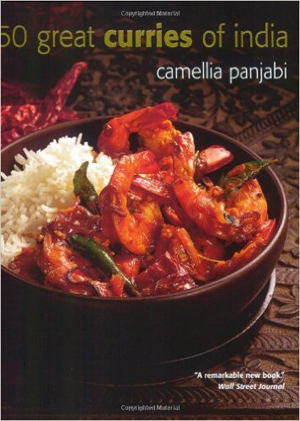 Camellia found that recipes were the closely guarded secrets of families across the country. To expand her knowledge of regional Indian cuisine, she embarked upon a project that sought to eek information from those families, private chefs and home cooks, a corollary of which was her publication ‘The 50 Great Curries of India’, which has sold 1.25 million copies, and is probably the best selling cookbook on Indian cuisine outside of India. The resulting book logs ingredients and their roles in the make-up of dishes – thickening agents, colouring agents, souring agents, spicing for taste, spicing for aroma, herbs and chilies. Starting simply, breakfast in a Taj Hotel became the now familiar Southern Indian fare of Idli and Dosa but this must be considered in the context of a time when top end hotels served ‘international’ dishes of egg and waffles. Indeed, Indian media personality and journalist Vir Sanghvi pointed out “today everyone knows what an appam is or how a Mangalorean gassi should taste but till the Taj took the plunge back in the 1980s, the food of the south remained restricted to the south.”
 Luke’s effective management style has produced a higher than average retention rate, often for three years or more, in an area with few local attractions for young chefs. This means they are passionate about their work and show the dedication and consistency needed in a highly pressurized environment. Not that he overworks his “great” team as his insistence on an afternoon break and a maximum five day working week demonstrates. His nurturing of young talent through the Academy of Culinary Arts scheme – five have joined the team and two more are in training – is a recent initiative that has also added value to the team.


 Having taken Chewton Glen forward in major directions during his 12 years at the helm, he might reasonably be expected to take stock and consolidate, but this is far from being the case; indeed, new projects are always in the pipeline. Perhaps this is not so surprising from a man named the “2010 Caterer and Hotelkeeper Hotelier of the Year”. Despite its Relais & Chateaux membership, five AA red stars, being recently voted “Best UK Holiday Hotel” and listed as one of the “World’s Best Hotels” by Conde Nast Traveller readers in 2014, the need to improve even further is constantly present.


