Author Archive

Britain’s Top Twenty-Five (25) Restaurants 2017 Guides (Jan 2017)

Posted on: October 16th, 2016 by Simon Carter

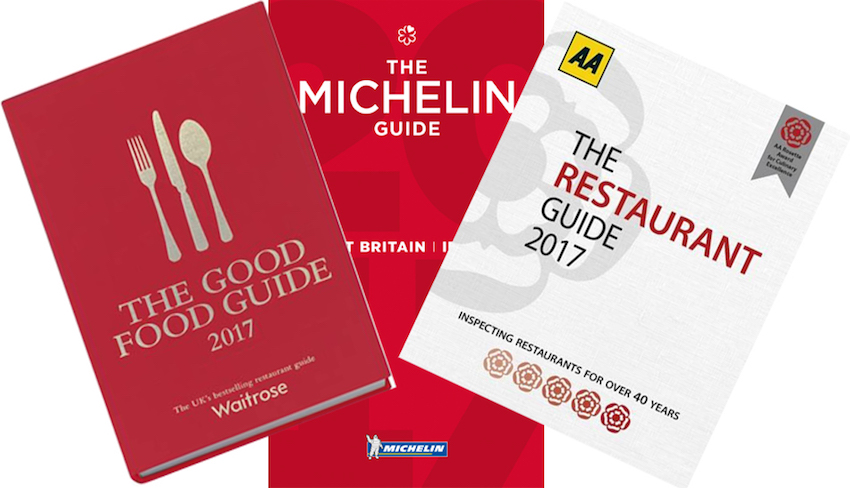
restauarant-guides-2017

Below is a formula applied to the scores in leading guides to discover the top 25 (twenty-five) restaurants in Britain. This is up-to-date as at October 2016 – post publication of the September editions (2017) of leading guides.

1) The Fat Duck, Bray.  FDG Points 55

2) L’Enclume, Cartmel.  FDG Points 52

3) Alain Ducasse at the Dorchester, London. FDG Points 50

3) Restaurant Nathan Outlaw, Cornwall. FDG Points 50

5) The Waterside Inn, Bray. FDG Points 47

5) Restaurant Sat Bains, Nottingham. FDG Points 47

7) Marcus, London. FDG Points 46.

7) Midsummer House, Cambridge. FDG Points 46.

9) Restaurant Gordon Ramsay, London. FDG Points 45.

10) Le Gavroche, London. FDG Points 44.

10) Ledbury, London. FDG Points 44.

10) Andrew Fairlie at Gleneagles, Auchterarder. FDG Points 44.

10) Whatley Manor, Malmesbury. FDG Points 44.

10) Le Champignon Sauvage, Cheltenham. FDG Points 44.

15) Pollen Street Social, London. FDG Points 43.

15) Sketch Lecture Room and Library, London. FDG Points 43

15) Gidleigh Park, Chagford, Devon. FDG Points 43

15) Le Manoir aux Quat’ Saisons, Oxon. FDG Points 43

19) The Greenhouse, London. FDG Points 41

20) Dinner by Heston Blumenthal, London. FDG Points 39

21) Fera at Claridges, London. FDG Points 38

22) Helene Darroze at the Connaught, London. FDG Points 37

22) Restaurant Story, Bermondsey. FDG Points 37

22) The Kitchin, Edinburgh. FDG Points 37

22) Casamia, Bristol. FDG Points 37

Interview: Michelin, Rebecca Burr. Editorial: Launch 2017 (Oct 2016)

Posted on: October 13th, 2016 by Simon Carter

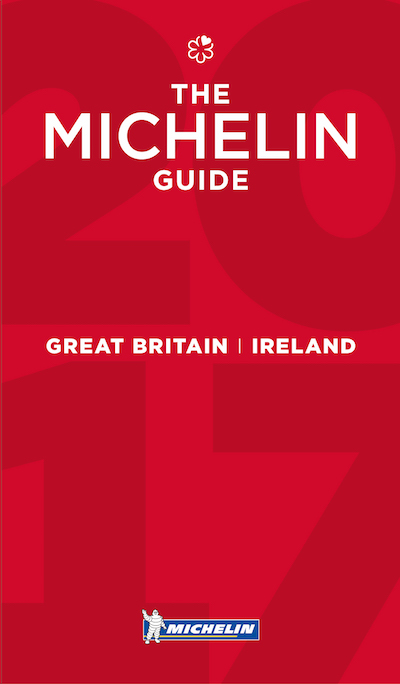
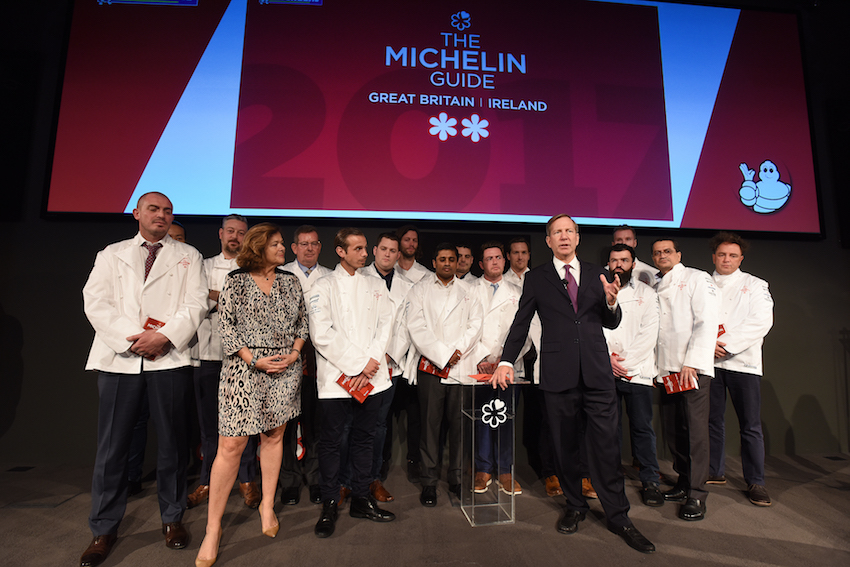
michelinguide2017coverInterview with Michelin Guide GB&I 2017 Editor, Rebecca Burr, conducted by Simon Carter on October 3rd 2017 at IET, Savoy Place. Fine Dining Guide Editorial comment on the launch event and guide content.

Congratulations on Michelin GB&I delivering a first live launch event!

We’re delighted to have delivered a first live launch event, there’s certainly a lot to maneuver, a first time in GB&I so everything is new, sometimes challenging but exciting in equal measures. Such events have proven successful in many of the other geographies, primarily in Asia, and certainly in Spain and Germany. It is year one for us and from what I saw it went well.

What were the logistics like?

Logistically events like this are challenging, it is not a Michelin Guide event without chefs so we are extremely grateful for the sacrifices many chefs have made in travelling to London, some at very short notice, and some quite long journeys, to participate in this event.

Tell us about the two new sponsored awards?

There has always naturally been an attraction to the Michelin Guide for potential sponsors due to the strong reputation, fierce independence, unerring commitment to quality and the representation of a certain lifestyle. The commercial arm of the company have teamed up with some very professional people to deliver two awards this year where the recipients have been determined by our team of inspectors.

The Michelin Female Chef 2017 award winner is a reflection of Clare Smyth’s dedication to maintaining (and ever evolving) the standards of a Michelin three star address at Restaurant Gordon Ramsay. In terms of The Michelin Service and Welcome Award 2017 the inspection team felt Peel’s at Hampton Manor (also in receipt of their first Michelin star) was the right 2017 recipient of this award.

Hampton Manor is essentially a business hotel located not too far from Birmingham airport with many corporate events going on, the restaurant offering has been thoughtfully and carefully tweaked to reflect the scope of their customer base and Michelin were happy to recognize their achievements is getting every aspect of service and welcome right for their customers.

How do you see the current industry trends?

In terms of state of play and trends in the industry, to demonstrate by examples, when (as a team) we looked at the candidates for a Michelin star we found a clear and broad variety of restaurant that reflected the diversity of the modern market place: From Veeraswamy to The Ritz through to Ellory and The Ninth. This was nothing contrived, it was purely about the natural flow of a decision making process determined by strict criteria. I mention these purely to reflect how vibrant and diverse the dining scene is around the country.

Was it a big decision to award The Fat Duck a regained three Michelin stars?

We thought it was a completely right decision to reintroduce the Fat Duck at three stars for the 2017 Michelin GB&I Guide. We knew when the restaurant closed that The Fat Duck had plans for changes, evolutions and developments in the offering so we felt to be true to our principles it was right not to include the restaurant in the Michelin Guide 2016. However, having reviewed the situation rigorously and most carefully, it was completely the right decision to re-instate the three stars for Michelin Guide GB&I 2017.

The Michelin GB&I on twitter is widely talked about, what is your thinking there..

In terms of the social media: The Michelin Guide is produced once a year and while we are already working on the new guide, an idea of where we are visiting plus occasional opinions may be found on twitter. The concept of posting some pictures and making a descriptive comment on where we have visited is a useful standard in so far as it goes. Michelin are a little bolder in that occasionally we offer a value added statement that reflects the opinion of the inspector. We don’t take this responsibility lightly and are careful in its application.

The decision is simple, to back ourselves in our expertise of the opinion! As you might expect, sometimes we find restaurants deliver very good food and other times the results are not always perfect. In terms of the latter we follow rules to be careful and sensitive, we are not here to tabloid sensationalize, neither to name and shame nor in any way to make a chef who has put in a 16 hour working shift, feel he is looking up the Michelin twitter page to see which chef has been knocked by Michelin.

Having said this, Michelin do believe in carefully reflecting important information that is not always rosy, for example, an ingredient combination may not work, or where a restaurant may have missed something at check-in. At the same time there’s plenty of good news opinions to reflect: A fellow table commenting that a restaurant is worthy of a star, which from the meal eaten could be confirmed (Gilpin) or beautifully constructed dishes using the best of ingredients.

Overall the Michelin GB&I twitter has proven very popular with chefs and readers as well as useful for disseminating information to a broadly interested audience. This will continue.

michelinlivelaunch2017

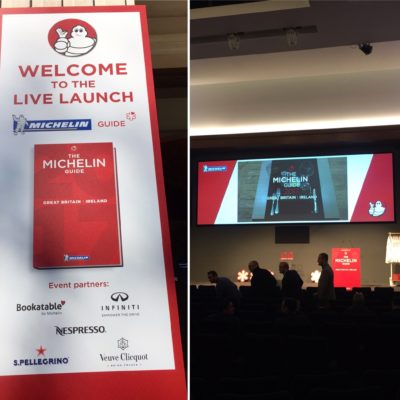
Fine Dining Guide Comment: Siân Jones http://sian-jones.com/ hosted the first ever live launch event for the Michelin GB&I Guide 2017. The event took place on October 3rd 2016 in the auditorium of IET (Institute of Engineering Technology) in Savoy Place, London.   Siân handed over to key Michelin executives during the ceremony: Claire Dorland-Clauzel, Executive Board Member of the Michelin Group (very senior indeed!) and Michael Ellis, International Director of the Michelin Guides (Executive to the lead (Managing) Guide editors across geographies – Europe, Asia and Americas).

Michael Ellis started proceedings with an effortless, understated delivery, which seemed completely in keeping with the image of Michelin to industry watchers. This was no surprise, having interviewed Mr Ellis the primary impression of intelligent and professionally clear, articulate communication was confirmed.

So having initially spoken briefly about the mantra of consistency, including consistency in the ‘value’ of a star worldwide (much debated by GB&I starred chefs who travel the world dining) and also of the importance of the Guide in reflecting new dining trends back to readers.

From time to time, handing back and forth with Siân Jones, who possibly displayed a more – as Siân’s website may suggest – ‘motivational’ approach was perhaps more enthusiastic than required for this type of event while still managing a fair job.

The invitation only audience was made up of representatives from the pool of accepted invites, which had been extended to all the one star restaurants in London, all of the GB&I two and three star restaurants plus some restaurants that would be awarded stars during the event. There was also a gathering of press at the back of the auditorium. The event was filmed and screened live over the web via http://marketing.michelin.co.uk/guide2017/

Two sponsored awards were given, each with an introduction by an executive of the sponsor – Michelin Female Chef 2017 (Veuve Clicquot) and Michelin Service and Welcome Award 2017 (Nespresso). Clare Smyth (MBE) and Peel’s of Hampton Manor were the respective winners

Those restaurants that retained stars in spite of a change of circumstances – new chef for instance – were celebrated – these included Michael Wignall at Gidleigh Park who retained two stars at that address having moved from The Latymer at Pennyhill Park which had also held two Michelin stars. Heston Blumenthal at The Fat Duck regained three stars after a one year hiatus. All the existing two stars and one stars present also retained their accolades.

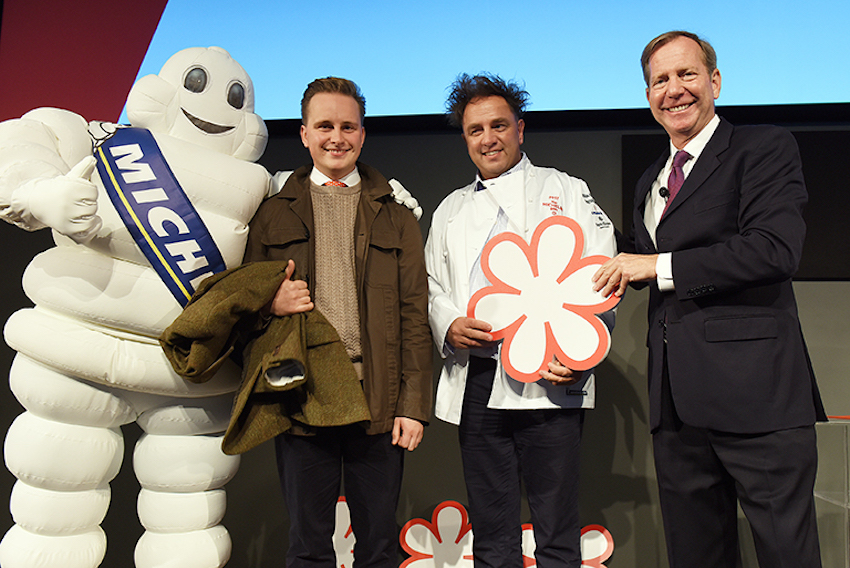
Then came the new star announcements of the ceremony. Beautifully done. A plan view of a map of GB&I produced on the large video screen zoomed into a location which then transformed to the page in the Michelin Guide GB&I 2017 that gave the name and details of the newly awarded entrant. Each chef then came to the stage to receive their commemorative chef’s whites and be photographed with Michael Ellis, a large Michelin Star, and the Michelin Man in full costume.

thecrownburchettsmichelinstar

Then came the award of a new two Michelin star to Raby Hunt, which proved a popular decision. In the absence of other new two stars nor a new three star this concluded the event.

MIchelin Event Stars 2017

Overall Bright Consultancy (contact Louise Hall) in conjunction with the Michelin PR department (contact Dave Johnson) pulled off a strong event. Logistically getting the complete set of newly starred chefs to the event at very short notice must have been very challenging. In addition for a first time event, some teething troubles were to be expected but they can take away satisfaction at the 90% that went very well.

Content wise there were always those you would dearly love to have seen awarded a star that don’t quite get there for 2017 Guide. Each year also seems to see a star deletion that you didn’t see coming. Further Michelin Guide GB&I 2017 saw only one new two star and no new three stars – may this mean that Michelin are treading a conservative line a little too much? The industry is craving good news and recognition for homegrown talent all over the region.

In reality the three news stories of the Michelin Red Guide in GB&I this side of the millennium have been the meteoric rise of The Fat Duck to three Michelin Stars, the rise of The Hand and Flowers with chef Tom Kerridge to two Michelin stars (for a pub, a GB&I unique selling point) and Alain Ducasse being awarded three Michelin stars at The Dorchester (was that actually seven guides ago?)

For a guide that helps feed the readers of the nation well, do they feed the industry they serve enough? The twitter presence is a massive positive step, very well received and cleverly implemented. Digital apps are useful and events like these help, too. The inevitability of the commercial link-ups with booking systems through to lifestyle brands must be seen as funding the resources that help to protect and retain integrity rather than challenging it!

With the on-line, dynamic and ever faster changing world, reflected through tastes and restaurant offerings changing, at an ever greater pace, what else will Michelin do to retain their forefront position? Perhaps, as ever, we’ll all wait and see with baited breath and in particular for next autumn!

Michelin Bib Gourmand: Defined and Listing 2017

Posted on: October 4th, 2016 by Simon Carter

Bib GourmandIn the unique “language” of the Michelin Guide, the Bib symbols indicate the inspectors’ favourite establishments, offering high-quality products and services and good value for the money.

For even though the Michelin Guide is known and recognised for its “star” system, these restaurants represent only 5% of the selection, the rest of which is comprised of good, small, affordably priced establishments.

Among these establishments are the “Bibs,” with the Bib Gourmand symbol for restaurants and the Bib Hotel symbol.

Bib is short for Bibendum, the character created in 1898 from the imagination of the Michelin brothers, André and Edouard, and the pen of cartoonist O’Galop. Over the years, Bib—the one and only Michelin Man—has become the Group’s “mascot.” In the Michelin Guide, Bibendum’s head is a familiar, widely recognised red symbol.

The Bib Gourmand symbol was created in 1997 so it is celebrating its 20th anniversary. It indicates a restaurant offering good food at moderate prices. For the 2017 Guide, the price of a full meal (excluding drinks) is under £28 (40 euros in the Republic of Ireland).

The Michelin Guide Great Britain & Ireland 2017 includes 140 Bib Gourmands of which 24 are (N – New) Bib Gourmand restaurants, the full list is found on the Michelin supplied .PDF file link below, please skip to page 15/24 and beyond:-

the-michelin-guide-selection-2017


Michelin Guide GB&I 2017: Press Release

Posted on: October 4th, 2016 by Simon Carter

Michelin Guide Great Britain & Ireland 2017 Reveals 20 New Michelin Stars

Michelin Guide 2017 GB&I

The Michelin Guide Great Britain & Ireland 2017 is published today, October 3, priced at £16.99 (€18.99 in Ireland)

Twenty new Michelin-Starred restaurants were unveiled at the first-ever live launch of the Michelin Guide Great Britain and Ireland this morning.

The 2017 edition of the guide includes a new Two Michelin Star restaurant: Raby Hunt at Summerhouse, near Darlington, where self-taught chef James Close cooks unfussy, modern dishes.

Eighteen new One Michelin Star establishments were revealed, including two pubs: The Wild Rabbit in Oxfordshire with Tim Allen in the kitchen; and the Crown at Burchetts Green in Berkshire, run by Simon Bonwick and his family.

The Lake District has two new Michelin Stars: Forest Side and Gilpin Hotel, while Dublin has another Michelin Star in Heron & Grey.

In Wales, Sosban & The Old Butchers in Anglesey has gained a Michelin Star, as has James Sommerin in Penarth.

Rebecca Burr, Editor of the Michelin Guide Great Britain and Ireland 2017, said: “London’s great variety of establishments, its history, but also its dynamism and vitality are illuminated by the capital’s new Michelin Stars.

“The Ritz Restaurant and Veeraswamy, London’s oldest Indian restaurant, both receive One Michelin Star. These establishments have long and illustrious histories, but the cooking at both has never been better than it is today.

“There have been some excellent additions to the guide across both Great Britain and Ireland – restaurants that are producing consistently good food using excellent ingredients.”

Newcomers to the London dining scene awarded a Michelin Star include Ellory and The Ninth.

Establishments which have retained their Michelin Stars under new chefs include Gary Foulkes at Angler, Tom Brown at Outlaws at the Capital Hotel and Robert Potter at Bybrook Restaurant at the Manor House Hotel.

Special congratulations were given to Michael Wignall, who made a very successful move from Surrey to Devon and retained the Two Michelin Stars at Gidleigh Park.

Heston Blumenthal’s Fat Duck returns to the guide with Three Michelin Stars. The restaurant offers a truly memorable and visceral multi-sensory experience which is informed by a clever narrative.

Rebecca Burr said: “Our inspectors had many meals here during the course of the year and found the restaurant invigorated, rejuvenated and unquestionably worthy of being re-awarded our highest accolade.”

This edition of the guide also marks the 20th anniversary of the Bib Gourmand – Michelin’s award for good value, good quality cooking. This year the guide includes more than 140 ‘Bibs’, of which 24 are new.

Also published today is the Michelin Guide London 2017, priced at £12.99 (€14.99 in Ireland). This guide provides extended text on London’s restaurants, with photographs and information on all Michelin Starred establishments, as well as a pull-out map. It also includes a selection of London’s best hotels, across all categories of comfort.

Both guides can be purchased from bookshops and at http://travel.michelin.co.uk/

The first ever live launch of the Michelin Guide Great Britain and Ireland took place at IET London, Savoy Place.

Click the links below for full list of Michelin stars 2017, the 2017 bib gourmands, the 2017 additions and deletions, the complete star history outside London since 1974 and finally the complete star history of London since 1974.

NOTE: THESE LINKS ARE TO SAFE DOCUMENTS THAT HAVE BEEN PROVIDED BY MICHELIN IN .PDF FORMAT

the-michelin-guide-selection-2017

star-history-all-but-london-2017

star-history-london-2017

Chef Interview: Phil Howard, Elystan Street (September 2016)

Posted on: October 4th, 2016 by Simon Carter

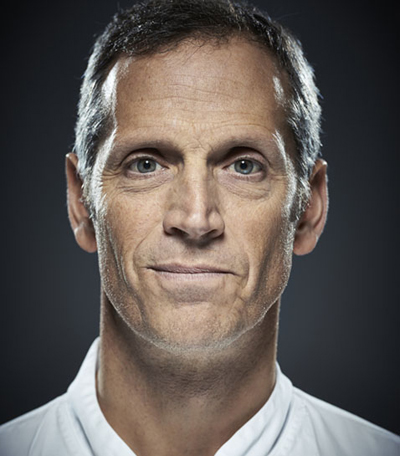
After a tremendously successful 25 years at The Square, iconic ‘chef’s chef ‘ Phil Howard and business partner Nigel Platts-Martin sold the Michelin two starred Bruton Street restaurant to Marlon Abela Restaurant Corporation (MARC).

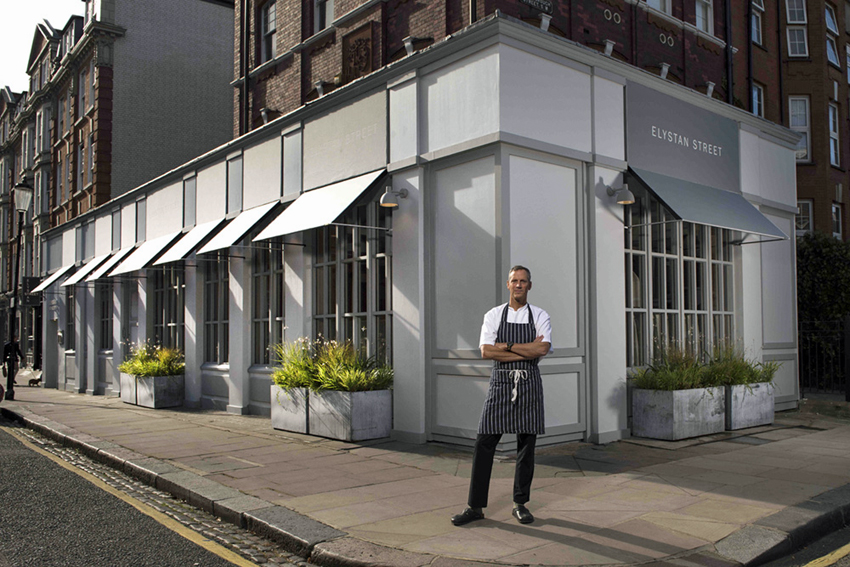
Phil Howard has relatively quickly returned to the kitchen at the old Tom Aikens’ restaurant site on Elystan Street in Chelsea. The new venture, which is named after the street it occupies, promises to deliver a combination of neighbourhood and destination restaurant to its local and traveling clientele.

Phil Howard Elystan Street

The restaurant extends Phil’s successful business partnership with Rebecca Mascarenhas, forming a restaurateur/chef team that includes the sites Kitchen W8 in Kensington and Sonny’s Kitchen in Barnes. As a strong team that understands both the food and business needs of particular markets they can rightly expect to make a success of this new venture Elystan Street.

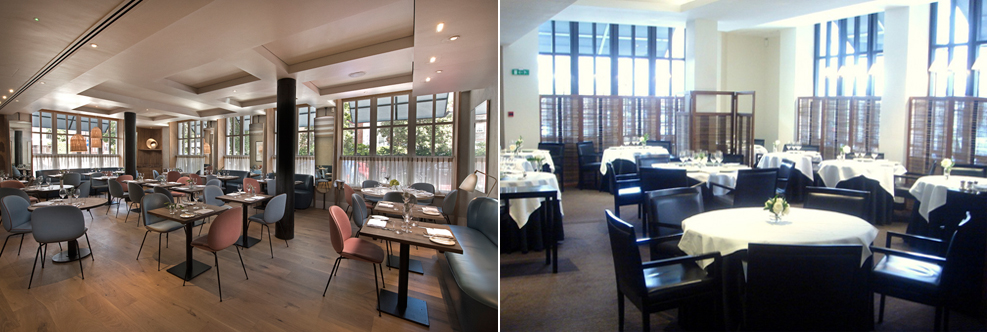
Upon entering, the transformation of the space from it’s former guise was a clear contrast: The interior design of the 64-seat dining room featured chairs in two shades (air force blue and soft salmon), and sofa banquettes in teal leather. Tables were a mix of oak and concrete tops, and the lighting included numerous resin spun pendants. Two walls featured almost floor-to-ceiling windows with café-style curtains providing low-level privacy.

I am shown too, into the makings of the 14-seat private dining room, which featured a clever adaptable table and stools, that could be raised or lowered to suit either a dining function or for more informal canapé and drinks. The table’s steel base was topped by white Corian, and there were long tubular lights made in marble.

Two weeks prior to official opening, Phil and Rebecca found time to sit in the new dining room at Elystan Street and discuss their restaurant with Simon Carter of fine-dining-guide.

Tell us about your new project at Elystan Street?

Phil: Elstyan Street offers us very exciting and vibrant new space for a restaurant venture. The idea is to set up a restaurant which is absolutely aimed at what Rebecca Mascarenhas and I perceive the market to be in this part of London.

This is an important point because gone are the days when a restaurant, whatever its purported ‘identity’ can come into an area of London and dictate what will sustain a full restaurant of customers, at a lunch and dinner service, without due deference to the tastes of the neighbourhood.

Phil HOwardSo we have to look, listen, reflect and create menus with elements that are lighter, cleaner, perhaps more vegetarian influenced.  You might find demand for less dairy or gluten but when looking at the menu you perhaps wouldn’t notice these attributes, however some subtlety of thought has gone into that, particularly at lunch time. So to feature salads, Carpaccios, certain raw foods and so on will be items taken on board as a conscious decision, however there will also be provision along side these dishes for tastes that are looking for more ‘destination’ style food.

How does this opening compare to your days at The Square?

Looking back, an over-riding feature of top end dining in London was the significant market change over the life of The Square; tastes and offerings became more diverse as the choices customers faced became more numerous.

While at one time, The Square may have been on a top end restaurant diner’s list of five ‘proper food’ destination restaurants to visit in London, nowadays people (pleasantly) find an extraordinary mix of food types and styles to consider. It is no longer a sustainable business model to just serve a great plate food in a relaxed formal environment and hope or expect to regularly fill the restaurant. Much more thought is required on what type of identity of restaurant you are reflecting back to a given market space in your part of town.

So the market at Elystan Street is completely different, hence a different offering?

I might suggest that at lunch time in Elystan Street there are almost three distinct lunch time food requirement markets solely based on day of the week, the way people think about their food needs might vary between weekdays versus a Saturday versus a Sunday.

So Rebecca and I have thought carefully about a flexible, adaptable and accessible restaurant vision in the modern world. In this context it is also about personal job satisfaction – getting it right – delivering a quality product and making the restaurant successful at this venue. I am excited, ambitious and happy to deliver a restaurant, which is very new, which applies the disciplines of delivering consistent quality that people know me for from The Square and applying that to a modern 2016 dining concept at Elystan Street.

So these are different career goals from The Square: Still cooking! No stepping back?

The Square ticked all the career aspiration and cooking boxes for me and was a great success for a long time. Ultimately I look back on that journey with a great deal of pride and satisfaction. Achieving two Michelin stars, gaining a solid chef reputation at the top end of the industry, while cooking some serious food.

Make no mistake I am not ‘stepping back’ nor drifting off into semi-retirement, quite the opposite! I retain the desire to put on my chef’s whites but at the same time to put my ego to one side; to adapt my skills to gain complete satisfaction from the mission to prepare and deliver consistent, quality food that will fill a modern restaurant in this part of town – lunch and dinner! This is the new challenge, certainly no stepping back, but fully focused and forward looking about what I wish to achieve in the business.

Rebecca Mascarenhas: Dining out has perhaps become less about special occasion dining and about more regularly visiting restaurants that have a slightly different product offering – a relaxed warmth of welcome, in a light and airy space, while providing food that matches their high level of intelligence about what they are eating in a social meeting place – which while being a ‘grown up’ restaurant – it is not a restaurant for a restaurant’s sake.

Editor’s Comments: The theme is that a restaurant today is a home for a set of needs of target customers compared to a vent for what a high-end chef chooses to create (without regard for the market space). The latter once had a natural and strong independent restaurant market but today, people’s needs in different parts of town require more thought put into the offering to get it right.

Two fundamental facets of the great restaurants, the temples of gastronomy, was the personality of the house developed in tandem between the chef and the key personnel out front and from a food perspective the signature dishes.

What Phil Howard achieved at The Square was about more than exceptional and consistent food but the consummate front of house professionals such as John Davey, David O’Connor and Cesar Lopes who developed their own ‘club’ of returning guests; like coming home to family for a hospitable chat and a warmth of welcome combined with first rate execution of the science of service. The art of making someone feel good was a feature of The Square that became associated with the chef, too!

Perhaps the modern vision of this scenario is the guests will treat a restaurant aimed at this space as a social meeting place where the venue automatically turns into a returning guest club because the feel good factor is generated by the package of the venue itself: The right type of meeting place where they happen to eat and drink?

elystanstreet

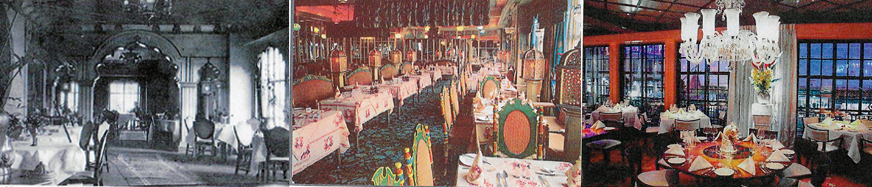
Phil Howard Elystan Street 2016 (left), Tom Aikens’ Restaurant 2009 (right). Same space: The shifting needs of a venue in modern top end dining!


This assertion goes too far, venue presentation is one thing, food presentation another and so this significantly understates the value and importance of Phil Howard as the chef at the venue!  To establish this only takes a matter of reviewing the dinner menu. While certain food content dinner presentations are less relevant, for example tasting menus, which are not currently offered at Phil Howard’s Elystan Street, signature dishes, which naturally take time to develop, will remain likely to be relevant and further important for business. At The Square the Michelin two star signature dishes (being those listed in the Michelin Red Guide each year) were a symbol of the cooking that gently defined the chef’s work – Langoustines, Crab or Brillat-Savarin Cheescake – which as Phil Howard says “could alone take care of business during a dinner service.”

The first impression of the dinner menu at Elystan Street is that it is born of The Square – essentially with a cleaner, lighter touch and a modern twist, but still with a Phil Howard identity. Clearly evident at dinner is an evolutionary rather than revolutionary tone for Phil at this stage of the restaurant. From these early menus signature dishes can most certainly develop and should these retain the impact that similar dishes held at The Square then this bodes well for business. This is further enhanced by the fact that even though the market is now more firmly with the social and dining requirements of the local customer there will remain a strong flow of clients traveling to Elystan Street, to once again enjoy a memory of the food they’ve always loved at The Square. So once again, a well thought out, winning recipe for the new restaurant!

Phil Howard is a truly iconic chef, and with the partnership of Rebecca Mascarenhas (and formerly Nigel Platts-Martin) builds formidable businesses. Fine dining guide will continue to follow his great career with full admiration and best of wishes for the future.

The AA Hospitality Awards 2016 Press Release (Sept 2016)

Posted on: September 27th, 2016 by Simon Carter

AA ANNOUNCES THE WINNERS OF THE AA HOSPITALITY AWARDS 2016

 aahospitality-awards

The great and good of the hospitality industry came together tonight to celebrate the winner of the AA Hospitality Awards 2016.  Held at the Grosvenor House Hotel, London, the winners of the 23 awards were recognised for their hard work and expertise in the fields. 

Drawing on the unrivalled knowledge and expertise of the AA inspectorate and other industry professionals involved in the judging process, winners are selected in recognition of excellence and success within their chosen category, having shown a significant improvement in the preceding 12 – 18 months and proving their dedication to raising industry standards and enhancing both their guest and diner experiences.  From top hotels and restaurants to the best of British pubs and college restaurants the AA Hospitality Awards celebrate everything that is great in British hospitality.  All the winners will appear in the latest edition of the 2017 AA Hotel, Restaurant and Pub Guides which were launched at the event.

Guests at the event, hosted by Hugh Dennis, were treated to a gastronomic menu created by the 2015 AA Chefs’ Chef, Daniel Clifford.

The winners of the 2016 AA Hospitality Awards are:

AA Chef of the Year 2016 (sponsored by Caterer.com)

A unique award that offers all AA Rosette-awarded chefs the chance to decide which of their peers deserves the ultimate recognition.

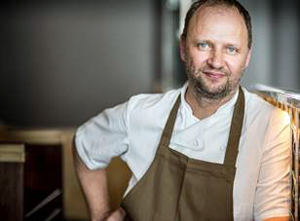
Winner – Simon Rogan

IMG_5564

Simon is one of the most creative and dynamic chefs working in the UK today and his food has made an indelible impression on the country’s food scene, his influence is far-reaching.

AA Lifetime Achievement Award

Winner – Pierre Koffmann

IMG_5372

Pierre Koffmann has been one of the undisputed heavyweights of the British restaurant scene since he arrived in England in the early 1970s. Born in Tarbes, Gascony in 1948, he was inspired by his grandmother’s method of cooking – living off the land and cooking as the seasons dictated on a big open fire.  Leaving school at 14, he tried for a variety of jobs, but eventually opted for the local cookery school. Arriving in London at the age of 22, his original plan was only to stay for six months, but he quickly found a job working for Michel and Albert Roux at Le Gavroche. Within six months he had been promoted to sous chef and was soon appointed head chef at the Roux Brothers’ Waterside Inn at Bray, where he stayed for five years. In 1977, he opened their first restaurant, La Tante Claire, and it quickly gained a reputation as one of the best dining experiences in London. Two decades later, he took up residency in the Berkeley Hotel in Knightsbridge, where he continued to cook until he decided to hang up his apron in 2003. However, his retirement was short-lived. In 2009, he made a high-profile comeback running a pop-up version of La Tante Claire on the roof of Selfridges. The original one-week event sold out immediately and it continued for two months, during which time he served up 3,200 plates of his signature dish of pig’s trotters stuffed with chicken mousseline, sweetbreads and morel mushrooms. The huge success of this pop-up inspired him to make an unexpected return to The Berkeley Hotel.  During his career, he has trained a number of chefs including Gordon Ramsay, Marco Pierre White, Marcus Wareing and Jason Atherton. With so many culinary giants working under him over the years, this chef’s ongoing influence on the British restaurant scene is immeasurable.

AA Hotel of the Year

Introduced in 1992, and awarded to hotels that are recognised as being outstanding examples in their particular market.

AA Hotel of the Year for England (sponsored by Temple Spa) – Northcote, Langho

AA Hotel of the Year for Wales –  The Angel Hotel, Abergavenny

AA Hotel of the Year for Scotland (sponsored by ReviewPro)– Cromlix Hotel, Dunblane

AA Hotel of the Year for London (sponsored by PSL) – The Beaumont

AA Hotel of the Year for Northern Ireland – Manor House Country Hotel, Enniskillen

AA Restaurant of the Year

While the standard of cuisine is at the very heart of the selection criteria for these awards, innovation, ambience, and hospitality are all part of the equation that determines the eventual winners.

AA Restaurant of the Year for England –  Lumière, Cheltenham

AA Restaurant of the Year for Wales – Restaurant James Sommerin, Penarth

AA Restaurant of the Year for Scotland – Inver Restaurant, Strachur

AA Restaurant of the Year for London (sponsored by Food & Travel Magazine) – Sosharu, London

AA Wine Award (sponsored by Matthew Clark)

Nominees are judged on the quality of their wine list and their ability to inspire customers to make wider and more adventurous choices.

AA Wine Award for England and Overall Winner – Sketch (Lecture Room and Library), London

AA Wine Award for Scotland – The Kitchin, Edinburgh

AA Wine Award for Wales – The Whitebrook, Whitebrook

AA Pub of the Year

Combining the provision of enjoyable food, a great pub atmosphere, and a warm welcome with a high standard of management

AA Pub of the Year for England (sponsored by Cobra)–  The Boot, Repton

AA Pub of the Year for Wales – Penhelig Arms, Aberdyfi

AA Pub of the Year for Scotland – The Ship Inn, Elie

AA Hotel Group of the Year

A hugely prestigious award presented in recognition of the hotel group that has a proven track record of striving to ensure the very best levels of service, food and accommodation across the range of properties. Attention to detail is imperative and a committed and structured approach to future development is essential.

WinnerThwaites Shire Hotels

AA Eco Hotel and Eco Hotel Group of the Year

These awards recognise a clear commitment to sustainability, demonstrated through good practice and policy to make a positive contribution to reducing impact on the environment

Winner AA Eco Hotel (sponsored by Belu) – Battlesteads Hotel, Hexham

Winner AA Eco Hotel Group (sponsored by Chargemaster) – AccorHotels

AA Food Service Award

The AA Food Service Award recognises establishments who not only deliver excellent standards of restaurant service and hospitality but also have technical service skills, food and beverage knowledge of the highest standard and a clear commitment to staff training and development.

WinnerThe Ritz London

AA Housekeeper of the Year Award (sponsored by Aslotel)

The award recognises outstanding commitment and performance, identifying a Housekeeper who goes above and beyond the call of duty.

Winner –  Nan McDowall, Crewe Hall, Crewe

AA College Restaurant Award (sponsored by People 1st)

The College Restaurant of the Year Award has been developed in conjunction with our partner, People 1st, the leading workforce development expert for the hospitality, tourism, travel, passenger-transport and retail industries.  The AA College Rosette Scheme was designed to recognise the efforts of students, both front and back of house who are the future of our hospitality industry.  Colleges within the AA College Rosette Scheme that have shown outstanding achievements in a realistic working environment have been put forward for the AA College Restaurant of the Year Award.

WinnerFoxholes Restaurant, Runshaw College

The AA also announced the restaurants that have been awarded new Four and Five rosettes as well as the new Red Star hotels.

The new Five Rosette restaurants are:

  • Hélène Darroze at The Connaught, London
  • Casamia Restaurant, Bristol
  • Restaurant Story, London
  • Pollen Street Social, London

The new Four Rosette restaurants are:

  • The Whitebrook, Whitebrook
  • Winteringham Fields, Winteringham
  • Number One The Balmoral, Edinburgh
  • Hampton Manor, Solihull
  • Paul Ainsworth at No 6, Padstow
  • Orwells, Henley-on-Thames

The new Five Red Star hotels are:

·         The Royal Crescent Hotel and Spa, Bath

·         South Lodge, Lower Beeding

·         The Bath Priory Hotel, Restaurant and Spa, Bath

·         Rosewood London

·         Ashford Castle, Cong, County Mayo, ROI

Interview: Thomas Mercier, General Manager, Stovell’s (Sept 2016)

Posted on: September 27th, 2016 by Simon Carter

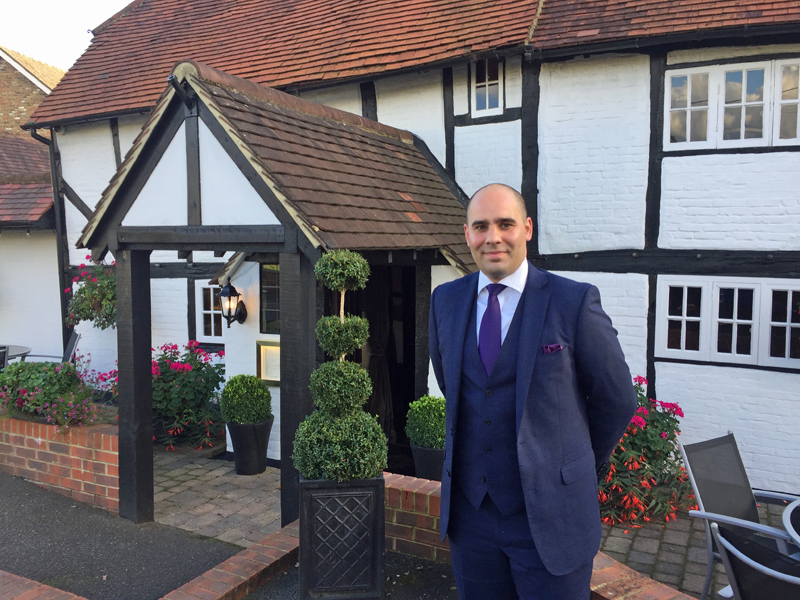
Thomas Mercier has enjoyed a distinguished front of house career in the UK, delivering the finest service and hospitality to a generation of happy and returning guests. Born North-East of Paris, Thomas studied under the inspirational Emmanuel Fournis in Paris.  A subsequent move to the UK saw Thomas develop his trade over the following decade or so, through positions at Michelin firmament recognised establishments, at The Waterside Inn, Cliveden, The Vineyard, Coworth Park, Pennyhill Park and now General Manager at Stovell’s in Chobham, Surrey.

Thomas’ relaxed charm is a trade mark, coupled with his effortlessly natural ability to make a guest feel at ease and comfortable in their surroundings, warmth of welcome, world class hospitality and high quality service standards follow.  Here, Thomas found the time to speak to Simon Carter of fine-dining-guide about the insights into the tools of his trade to date…
thomas_mercier_stovells_2016

1) Tell us some background about your move into restaurants and service…

My family foundation was strict and based on respect, honesty and hard work. My home town is Meaux, just north-east of Paris, and I had an early introduction to catering when cleaning plates and glasses in a local, traditional French restaurant at the age of twelve.

Sometime later, I considered working around computers but my father said I should work in the vineyards first over winter and summer. I was actually driven to be independent thinking and found that working in restaurants was a great escape, offering a different way of life while enjoying not playing by the book of following a strict course of academic study.

So there was no particular ‘moment’ when I made a decision about a future in the industry, more a gradual realisation, I enrolled at Catering school in Paris and in my second year met the tutor Emmanuel Fournis who opened my eyes to a gamut of styles of service and food preparation, this ignited the passion that I retain to this very day.

As part of his studies, we had a front of house practice restaurant, which when not busy, Mr Fournis would send us to the college teachers to sell the menu to gain bookings. It was so rewarding to end each week with a fully booked restaurant.

There were always new techniques to learn; practice and discipline helped to perfect these new skills – from flambé to carving. To improve dexterity, the class once had to carry four plates covered in sauce and run out into the forest and back without spilling or dropping anything!

I competed in the ‘George Baptiste’ which was a form of intense training on top of college study; five months including working weekends, again the focus was on acquiring knowledge, skills and performance through practice (of details).

Through developing connections I worked in a variety of well-known establishments in Paris such as Le Meurice, Automobile Club de France and La Coupole before taking my parents advice of moving to the UK to further my experience.

However I am delighted that I remain in contact with the inspirational Mr Fournis who is now part of an association spotting the talents of tomorrow which promotes the art of service.

2) What is your restaurant management philosophy?

A leader must set a good example, as a good example is well followed. To borrow a phrase from another, ‘constant gentle pressure’ is also so true, to keep the team motivated, always aspirational, and keeping standards in place. I do still think it is important not to forget the ‘old-school’ methods as these remain the foundation of the industry, whilst adapting techniques to the modern team, as well as modern clientele.

I believe in certain practices that I learned at corporate style hotels that includes things such as on-going appraisals to monitor how staff are progressing; keeping open mutual lines of communication and feedback, allowing team members room to succeed. It is important across the team to have mutual respect and loyalty.

It is also important to choose the right people; people who will flourish and reflect their own personality back into the restaurant in the context of the disciplined ‘relaxed formality’ of service. As a rule this might mean holding appropriate conversations with each guest based on an instinctive judgement of what the guest is looking for from the front of house. This will vary across guests and can only be developed in staff over time.

Staff must not fall into too much of a routine, so adopt methods to keep people fresh and motivated, while continually practicing techniques and new techniques every day.

Managing the interaction between front and back of house is important, in particular the restaurant and kitchen teams. This stems from instilling mutual respect, not only between people as human beings but also respect for the hierarchy of the business. You have to understand who is who in the restaurant and adhere to that to progress in the business.  The location of the kitchen compared to the dining room can be a logistical challenge as the chef likes to see that his food is being delivered and presented properly.

All staff members go through an induction of how to go about their job professionally, they receive a starter pack with all information about the restaurant that will include modern day Health & Safety.

3) What is involved in being a general manager as you are at 4 AA Rosette Stovell’s Restaurant?

Everything from managing people from the top to the bottom of the business through to the challenges encountered in the maintenance of a Grade II listed Tudor cottage!

A big part of people management is identifying and developing talent and then giving them the right tools and coaching to unlock their potential. Team members must be encouraged to develop and take on board responsibility as well as think through projects to their conclusion.

Listening, understanding and acting as a leader and mentor in decision making. The process of making those decisions must be owned by the staff member – some ideas (not all), will demonstrate a place in the vision of the business and thereby motivate staff as they see their direct contribution to the overall brand of the company. Giving staff feedback is vital, this has to be carefully constructive.

We had a recent example with our linen that needed changing. I passed the project to the restaurant manager (Cameron). It was a successful process and procedure, but only after drawing up a proper plan of action including cost and supplier analysis. We needed to improve the linen quality and service provision while reducing cost (the perennial challenge) and through the delivery of the project plan the results were very pleasing. This exercise was then extended to the waiters so that they could be part of the implementation, it shows that if you give your teams the right tools and guidance they can succeed and deliver momentum and benefit to the business.

As well as maintaining the building, within the context of a quality brand with realistic budgets, we also need to look at best use of the space. To do this, I have a personal project to make the cellar, the dry store and the gin rooms incorporated in the theatre of dining at Stovells. This is naturally becoming more and more a part of the value add of fine dining – customers want as much as possible from the dining experience, successful restaurants will be the ones who deliver a great product.

4) How does this compare with the front of house roles at the large hotel environments you have represented?

An independent restaurant is a very hands-on job that requires constant dedication, alongside anticipating any issues that may arise. From both a customer and staff perspective this means there is a far more intimate working environment that naturally creates more of a family atmosphere.

As GM of an independent restaurant you need quick, agile thinking and take on board a lot more practical knowledge, compared to Coworth Park for instance (where I was restaurant manager for nearly 5 years) any building maintenance would require one or two (at most) in-house phone calls, at Stovell’s on the other hand, it is a full scale personal project plan.

Likewise payroll, staff issues, purchasing, staff accommodation were all taken care of by other departments. In an independent restaurant the GM is each and every department! So you learn a lot by wearing many hats, whereas the flip side is that you spend a smaller percentage of your time working the floor of the restaurant during service.

5) What would you say makes great service from the front of house of a top end restaurant?

People are our greatest assets. Yes, there are certain training skills and techniques that need to be implemented to learn the precision that comes with excellent and seamless (award winning) service, however it cannot be robotic. As long as the service fundamentals are there, there needs to be a certain charm to engage with the guest and keep them talking about you and your restaurant: It is a pleasure to make people happy and if you don’t succeed then you have not done your job.

Service must run smoothly through organisation. Planning and good management skills are the foundation of any service team, which will likely include; recognition, training, product knowledge, upselling, consistency, attention to detail and a proactive eye.

Personality and being natural with the guests are the final steps that will ensure repeat business; using skills to adapt yourself to different guest personalities while putting your ego to one side. When diners walk into a restaurant they are expecting everything to be perfect and they do not need to know about anything going on behind the scenes. It is crucial to talk with the guests and get feedback and be part of their dining experience, and not just to rely on the food. Perhaps true hospitality is when someone leaves your restaurant feeling better about themselves, not about you, but returning to meet you again because you have that magic dust of world class hospitality.

6) What is your view of trip advisor and social media generally (as a means of customer interaction)?

Trip advisor is beneficial as it provides a platform for ‘free’ feedback which can show trends and highlight patterns for areas of improvement – this is all valuable.

Bogus reviews from people who never visited, demonstrates a system that could be improved through vetting whether a diner has actually eaten at the restaurant? Social media is a free marketing platform – twitter, Instagram, Facebook and trip advisor – must be treated with careful consideration and caution as each, in different ways, are double edged swords.

7) What piece of advice would you give to a new starter in hospitality?

It is more of a lifestyle than a job and you will know when you fall in love of this industry – work doesn’t feel like working. A tip to a new starter would be: “The drive of excellence through repetition will lead to peak performance over time.”

8) Who have proven your greatest mentors and what have they taught you?

Emmanuel Fournis taught me how to coach others and how to spot talent from early stage by attitude. He also instilled an appreciation of the value of young people, because our society is evolving and we have a duty to adapt our leadership skills to show a contemporary image of the profession.

Diego Masciaga for his on-going support, both personal and professional, he is inspirational in so many ways, he shows how to hire young talent from a well-connected world and then develop them in ‘the Diego Masciaga way’

Both have made an impact on my way of managing teams. They taught me that if we want to have an impact on our diners’ experience it must start with team members and the way we recruit, listen, develop and retain staff. Our new generation must be shown the right path to excel for the future. This is almost a sense of duty for managers today, to be custodians of the art and science of service for future generations.

9) What bodies are there to support front of house staff and are they useful and effective?

A business like this relies of having a flow of part time and casual staff to adjust to business requirements, part of this maybe seasonal. Location plays a part, leafy surrey has a good supply of casual workers from say local colleges who may offer resource to do anything from runners to a host. This helps with flexibility of working conditions to enable rest and holidays for staff.

At the professional level, The Wine and Spirit Education Trust (WSET) is a good body for developing staff, there are also numerous other effective bodies such as Royal Academy Culinary Arts, Gold Service Scholarship and Acorn. Many suppliers also offer educational events for staff to help them develop and learn.

Booking systems such as Top Table are really easy to operate at the same time help optimise bookings. Their support systems are available 24/7 and are amazing! We can allocate tables with confidence and provide time slots to suit our schedule. We don’t take bookings for certain times of an evening service as this allows us to stagger service to the benefit of the kitchen and customer. We may also get the opportunity to turn 3 or 4 tables from early bookings on busy services.

10) Describe ‘a day in the life’

I get in at 9am and catch up with Kyle Robinson, head chef and the kitchen team, followed by meetings with Tami (office manager) and then Maria (Housekeeper). I will then walk around the property to see if everything is in order. After the front of house team arrives there is a briefing with the restaurant manager, Cameron Bownes, regarding staff matters. I am then in the office until the lunch briefing at 11.45am.

12.00pm lunch service starts with all team members in position. At 3pm I hold a reservations meeting with Chef Patron Fernando Stovell to discuss the business forecast. This will also be conducted with managers once a week. 5.45pm is the dinner briefing. 6pm dinner service commences.

11) What are your aspirations for the future?

To continue to develop people and teams as I gain so much pleasure and satisfaction from sharing my knowledge and experience. My current aspiration is to see a Michelin star here at Stovell’s as a reward for Chef Stovell and all the team.

Restaurant Review: The Beehive, White Waltham (August 2016)

Posted on: August 28th, 2016 by Simon Carter

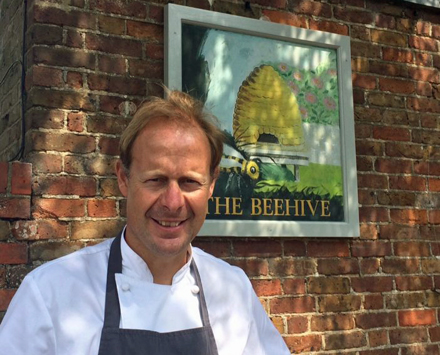
DomChapmanBeehiveFoodies in the Maidenhead area face an embarrassment of riches when dining out. The 2016 Good Guide lists no less than 11 entries within a few miles radius of the town centre. Disregarding the four restaurants with Michelin stars, the standard of cooking amongst the rest is remarkably high; indeed, it has to be given the well-heeled, knowledgeable diners who live in this affluent area.
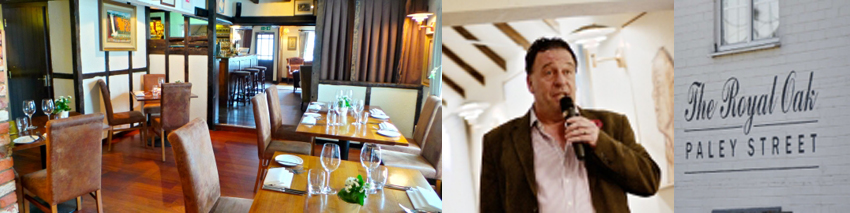
Foremost in the competitive market of food-led pubs is the Beehive in White Waltham. Since opening in August 2014 it has attracted serious attention from locals and those from further afield. This is largely because its chef patron Dominic Chapman has a distinguished pedigree with many loyal followers. He benefits from an impeccable background in hospitality: His family has owned the acclaimed Castle Hotel in Taunton for over 65 years and his father is a chef and author. Having cooked in the kitchens of heavyweights such at Rowley Leigh (at Kensington Place) and Heston Blumenthal (the Fat Duck in its early days and the Hind’s Head – his first head chef position), he was awarded a Michelin Star, three AA rosettes and 6/10 in the Good Food Guide during his seven years at the Royal Oak in nearby Paley Street.

The challenge of running his own place proved irresistible, hence his move to the Beehive.  Here, he has maintained the sense of community successfully nurtured over 15 years by the previous owners. The annual cricket match in June, complete with hog roast, refreshments and live music, helps to cement this. Locals can pop in for a drink, not deterred by the need to have a meal as is the case in many pubs with restaurants. Alicia Corlett’s extensive experience in high end restaurants, enables her to lead a front of house team which is both relaxed and professional. A good memory for names and faces ensures a warm welcome to those revisiting. Service is knowledgeable, solicitous and unobtrusive.

The food offering is flexible, with a wide choice from the bar and a la carte menu.  Bar snacks including Scotch eggs and Lincolnshire Poacher “Welsh Rarebit” are £3.50 with larger dishes like steak sandwich with tomatoes and rocket at £10.95.

I once had withdrawal symptoms for a hamburger and did not regret my choice of a one course meal. The juicy, well-seasoned patty, proper fries and delectably crisp onion rings in panko breadcrumbs outclassed anything similar produced in those high end chains which are now so fashionable.

On the restaurant menu, the provenance of meat and fish is clearly displayed, indicating the importance of top quality ingredients sourced from a network of trusted suppliers, built up over the years. Starters are priced from £6. 95 to £10.95, mains from £14.95 to £24.00, and desserts from £6.95 to £8.00. These are realistic and affordable, given the excellence of ingredients and the skill in cooking. A choice of eight dishes in each course ensures there is something for all tastes. Three daily specials, one for each course, make decisions even harder. There is no need to choose three courses, although once the menu is scrutinised, few can resist.

Dishes on a summer menu range from those which have comfort food appeal, such as “Fish n chips”, mushy peas and tartare sauce or Stream Farm chicken, ham and leek pie with mashed potato, to more sophisticated, fine-dining offerings such as Peppered haunch of Denham Estate venison, creamed spinach and sauce poivrade.

Although a sound classical base underpins the precise cooking, clear flavours and textural harmony of the dishes, a degree of international influence can be seen in dishes such as Fillet of Sea Bream with Tarka Dhal, cucumber, red onion and coriander salad.

Desserts are primarily British classics such as Blackberry trifle or Bramley apple crumble with custard, but no less distinguished. A highly refined version of Baked Alaska was enjoyed on an previous visit.  Presentation is clean and unfussy often with a rustic theme.

On a previous visit, I savoured a signature dish is Lasagne of wild rabbit with Wood Blewits and chervil. The silky smooth pasta, encasing the moist, flavoursome pulled rabbit dressed in a rich, creamy sauce enhanced by the earthiness of wild mushrooms and the gentle aniseed fragrance of chervil, made this a dish that would be hard to take off the menu.

A recent impromptu lunch on the hottest day of the year proved memorable more for culinary delight than the heat and humidity.

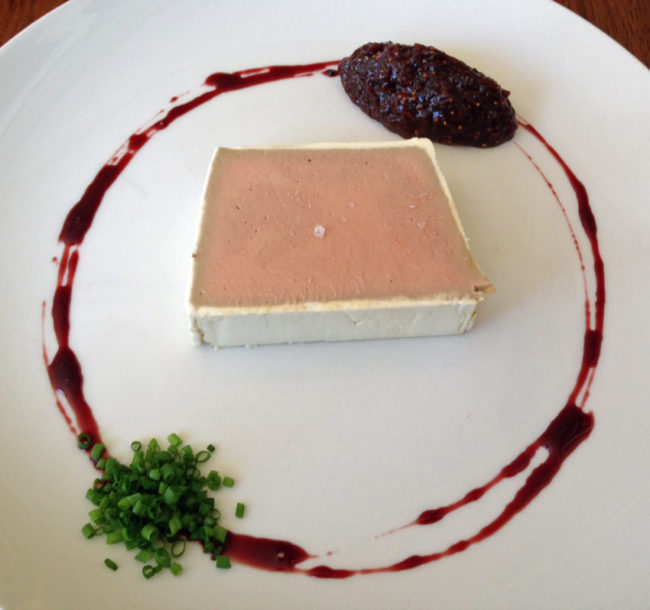
A starter of chicken liver and foie gras parfait had been properly marinaded, seasoned and sieved. The velvety texture and intense, creamy flavour of the pureed offal made it a model of its kind. A lively – over sweet? – fig chutney helped cut the richness, whilst a scattering of chopped chives added a welcome, gentle onion note. Lightly toasted sourdough was probably a better vehicle for spreading the delectable parfait than the billed toasted brioche, which sometimes can make this classic combination a little TOO rich.

Beehive_Foie

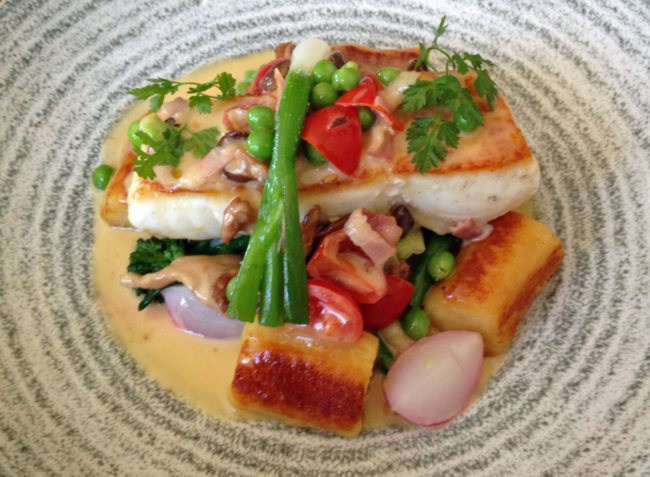
For a main course, a generous fillet of beautifully fresh roast Scottish halibut was accurately timed to produce a caramelised top and succulent, flaky flesh. The accompanying gnocchi were deftly executed cushions of soft potato with burnished crusts. A “casserole” of peas, radish, broccoli, tomatoes, wild mushrooms and spring onion added flavour, texture and colour, whilst the whole dish was bought together by a well-judged lemon butter sauce. All the elements worked well together, showing a culinary intelligence in dish composition. Visually also, this tour de force of fish cookery was stunning.

Beehive_main

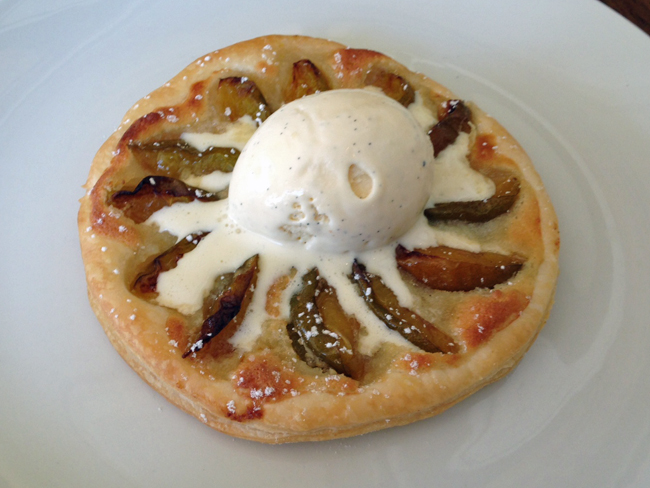
For dessert, a greengage tart has crisp flaky pastry and smooth, fully flavoured vanilla ice cream. The use of seasonal produce – and it is a very short time for greengages – is axiomatic for chefs at this level.

Beehive_Dessert

After two years, the ambience, service and, most importantly, the cooking, are now finely tuned, all contributing to a very enjoyable dining experience. The Beehive is invariably busy with regulars and is building a reputation as a destination restaurant. The garden where al fresco diners can watch matches on the cricket pitch opposite, is an attractive addition in the summer.

Overall, The Beehive has deserved the success it has already achieved. With entries in the Michelin GB and Ireland, in the Good Food Guide, a Certificate of Excellence from Trip Adviser, and other inclusions for being amongst the top pubs with restaurants in the country, its future looks assured. Fine Dining Guide will visit more regularly and will follow its progress with interest.

Waitrose Good Food Guide 2017: Press Release

Posted on: August 24th, 2016 by Simon Carter

The Waitrose Good Food Guide 2017 Press Release has been distributed for use from midnight on the morning of Thursday 25th August 2017, ahead of a launch in the shops from September 5th 2017.  The press release is reproduced in full below and is a comprehensive introduction to the Guide.  It includes highlights, the top 50 Restaurant List for 2017, Editor’s Awards and Editor’s Comments.

Good Food Guide reveals Nation’s best restaurants:  No. 1 restaurant serves up five years of perfect tens.

Unusual gourmet locations include a motorway service station with top trucker tucker, a restaurant in a yurt and a bike shop café. The nation’s best desserts uncovered.

The Good Food Guide has announced its top eateries and award winners today.  Alongside the finest dining establishments in the country the guide, owned by Waitrose, celebrates some more unusual discoveries including a café located in a motorway service station, another in a bike shop, and a restaurant in a yurt. And, for the first time, The Good Food Guide has revealed where the nation’s best dessert menus can be found.

Perfect 10s

RoganGFG2017

Chef Simon Rogan’s restaurant L’Enclume, in the historic village of Cartmel in Cumbria, has been crowned “number one restaurant” for the fourth year running, also securing five years of perfect tens. The Good Food Guide (GFG) awarded the restaurant top billing due to the “soaring sophistication of Mr Rogan’s cooking”, highlighting the 17-course tasting menu which offers “clever elements of technical wizardry to keep the ‘oohs’ and ‘aahs’ going,” with “the cooking forever breaking new ground”. Many ingredients  are local and grown on L’Enclume’s own 12-acre farm. 

Rogan said, “It’s amazing news to be number one for the fourth year running. I’m really grateful to The Good Food Guide for their faith in awarding us top spot once more, and appreciative for the enormous effect it has on our business. It’s a huge achievement but could not happen without a massive team effort. For me, it’s a privilege to lead this outstanding group of people. There’s no doubt that L’Enclume is approaching the most creative period in its history, and achieving the quality I dreamed of when I first opened its doors.”

The guide has also announced a brand new ‘perfect 10’ in the form of Restaurant Nathan Outlaw in Port Isaac, Cornwall, which appears at no. 2 in the Top 50. Editor Elizabeth Carter praises his seafood restaurant as “a role model of its kind – no pretensions or gimmicks, just first-class food and knowledgeable, welcoming service – and there is no doubt in my mind that Restaurant Nathan Outlaw deserves its place as one of the best restaurants in the country.”

Responding to news of the accolade, chef Nathan Outlaw said, “I honestly thought I was dreaming when I found out. Over those years of continuously cooking and serving our customers we have always tried our hardest to do our best and when you get recognised like this it means the world to us all.”

Unusual eateries

The GFG, along with its team of anonymous inspectors and loyal readers, also uncovered a range of foodie finds in unconventional settings and structures.

The foodie bible features three restaurants housed in shipping containers: Cook House in Newcastle; Craftworks Street Kitchen in Truro, Cornwall; and Kricket in Brixton, London.

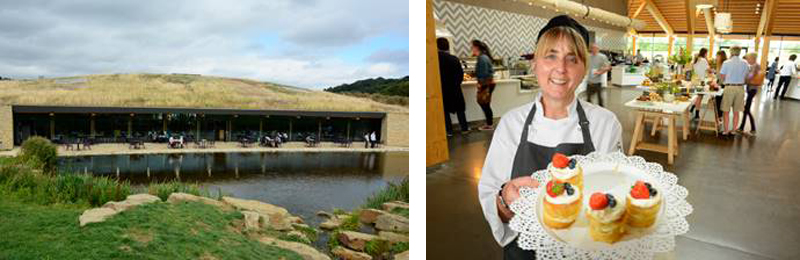
Then there’s a “modern marvel” in a service station – Gloucester Services on the M5 is an “independently run motorway pit-stop” with a gourmet café that is “committed to locally sourced food”.

GFG17First

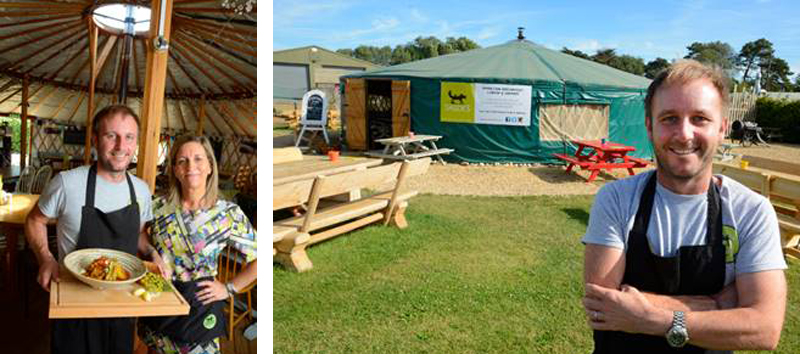
 Also new to the GFG this year is a reader discovery, Shuck’s at the Yurt, a restaurant housed in a quirky tent in Norfolk. The yurt eatery is located in a beautiful orchard and run by husband and wife team Phillip (Head Chef) and Beth Milner.

 GFG17Second

And in Bristol, you’ll find a brilliant brunch menu and tasty tapas at Spoke and Stringer, a seriously cool café which is part of a bike and surf shop. 

_____

Elizabeth Carter, who is celebrating ten years as Consultant Editor of the Waitrose Good Food Guide, said: “From yurts to campsites, bike shops to shipping containers, the vessel in which a good restaurant sails is no barrier to entry in our guide. We look for great food wherever we can find it – and that’s sometimes in highly unusual places. With an army of Good Food Guide readers on the ground, and our inspectors scouring the length and breadth of the UK, we check out as many recommendations as we can to make sure that no stone is unturned and no good eating opportunity missed; and this year we’ve found some excellent cooking in some very unexpected places, giving even greater choice to our readers.”

Beth Milner, joint owner of Shuck’s at the Yurt, said: “We are absolutely delighted and overwhelmed to be featured in the Good Food Guide through recommendation from our customers. As a new business it means so much to be recognised for our great food. We hope to go from strength to strength and have exciting new plans for 2017 from our unique setting in the beautiful Drove Orchards.”

Kristian Crews, owner of Spoke and Stringer, said: “It’s exciting to be a part of The Good Food Guide as we are still a start-up business and it gives us an opportunity to share our amazing food, venue and identity with a wider audience. We have a very active, lifestyle-orientated menu which lots of people stop by for to enjoy after the gym, with our evening menu also popular with cyclists.”

Sarah Dunning, CEO of The Westmorland Family, which owns Gloucester Services says, “What an honour to be featured in this guide.  Our motorway service areas champion interesting food from their locality and beyond and we are lucky to be able to connect many small, local food producers with the British travelling public.  Good food is very important to us and it’s great to be recognised for what we do.”

Editors’ Awards

Waitrose has also announced the Editors’ Awards from the 2017 Good Food Guide. These awards recognise restaurants and chefs who have shown excellence in their field. This year, Chef of the Year has been awarded to James Close from the Raby Hunt in Darlington, Durham.  Restaurant of the Year has been named as Orwells in Shiplake, Oxfordshire and Best New Restaurant Entry is Forest Side in Grasmere, Cumbria. A new award for this year is Best Front-of-House, which celebrates the best restaurant customer service in the UK. This has been awarded to Jason Atherton’s Pollen Street Social in London. 

Just Desserts

For some, dessert is the best course on the menu and for the first time the GFG has revealed where the nation can tuck into the very best puddings. 

Top recommendations were awarded to the North of the Border Tart, which can be found at The Whitehouse, Lochaline, also winner of Scotland’s Local Restaurant of the Year. The tart is “filled with dried fruits, cherries, nuts and whisky. Nothing fancy, no towers, or twirls or crisps, just a really comforting pud.”  

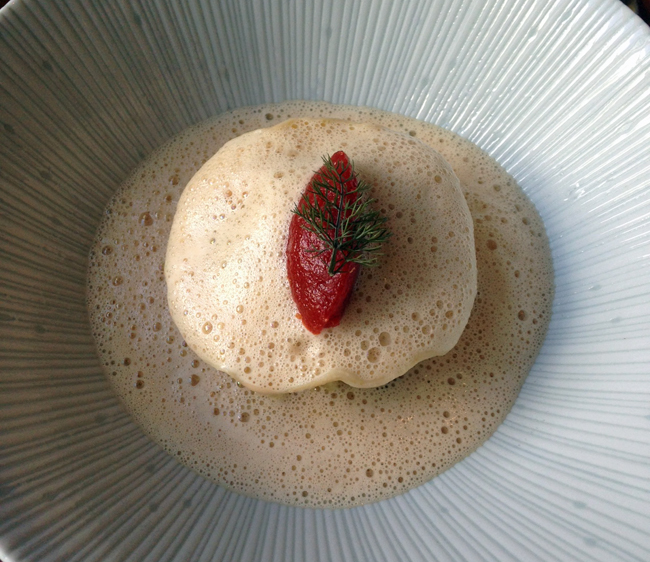
The unusual Warm Blood-orange, Sheep’s Milk Yoghurt and Wild Fennel Granita can be found at the Clove Club, London. The inspector noted it “came with shards of dehydrated milk-froth – like eating a crisp, malty cloud. The whole thing was seriously delicious.”

Sometimes traditional is best. At the Village Pub in Barnsley diners can find the “finest sticky toffee pudding”, described as “a dark, moist, treacly sponge swimming in a runny toffee sauce, and rich as muscovado, with a scoop of homemade vanilla ice cream.”  

The exceptional dessert menu at Orwells in Oxfordshire may be why it won Restaurant of the Year in the guide’s Editors’ Awards. Its take on caramel apples, “a cylinder of chopped, braised apple encased in a wafer of pastry, itself wrapped in a thin layer of apple jelly” with “salted-caramel and a milk ice cream” was described by one inspector as “extraordinary.”

A golden era for restaurants

This year, the GFG also celebrates the tenth year of editor Elizabeth Carter at the helm. Carter said of the last decade:”I’ve certainly seen changes in the UK restaurant scene in my ten years as consultant editor – what a golden era for restaurants it has been. London will always have an extraordinary wealth of top restaurants and chefs but I love the fact that the restaurant scene is flourishing beyond the capital; more affordable start-up costs outside of London have made our great regional cities viable dining destinations. 

“At the same time, dining out everywhere has become less structured, less formal, with more flexible opening times and menus, and with a much broader choice of quality venues in the lower price bracket. It means we’ve all had to come to terms with exposed ductwork, hard seats, small plates and communal tables – but well worth it when you consider the all-day eateries, cafés, pizzerias, seafood shacks and pubs of genuine high quality offering everyday eating at everyday prices.”

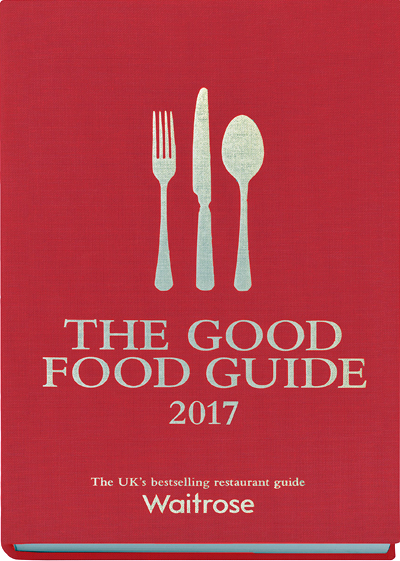
goodfoodguide2017webThe Waitrose Good Food Guide 2017 Editors’ Awards
Chef of the Year

James Close. The Raby Hunt, Durham

Chef to Watch

Ben Murphy. The Woodford, South Woodford, London

Restaurant of the Year

Orwells. Oxfordshire

Best New Entry

Forest Side. Cumbria

Best Front-of-House

Pollen Street Social. London

Best Small Group

Dishoom. London

Local Restaurant of the Year

Wine & Brine. Moira, Armagh

Top 50 Restaurants

The Good Food Guide’s annual Top 50 restaurant ranking is highly regarded by chefs and restaurant-goers alike, with particular attention paid to those chefs and restaurants who make it into the Top 10. The Top 50 recognises the very best talent in the country; a place on the list represents a huge achievement, with each position earned by its score in The Good Food Guide, editor appraisal and strength of reader feedback.  A top score of 10 means “Just perfect dishes, showing faultless technique at every service; extremely rare, and the highest accolade the Guide can give.” Straight into the Top 50 at no.37 is Forest Side, Cumbria and also new in the Top 50 are Castle Terrace, The Greenhouse, Simpsons, Orwells, Restaurant Marianne and The Whitebrook.

1 L’Enclume, Cumbria (10)

2 Restaurant Nathan Outlaw, Cornwall (10)

3 Restaurant Sat Bains, Nottinghamshire (9)

4 Pollen Street Social, London (9)

5 Hibiscus, London (9)

6 The Fat Duck, Berkshire (9)

7 Restaurant Gordon Ramsay, London (9)

8 Hedone, London (8)

9 Restaurant Andrew Fairlie, Tayside (8)

10 Fraiche, Merseyside (8)

11 The Ledbury, London (8)

12 Midsummer House, Cambridgeshire (8)

13 Le Champignon Sauvage, Gloucestershire (8)

14 Alain Ducasse at the Dorchester, London (8)

15 Fera at Claridges, London (8)

16 Le Gavroche, London (8)

17 Marcus, London (8)

18 The French, Manchester (8)

19 André Garrett at Cliveden, Berkshire (8)

20 The Peat Inn, Fife (8)

21 Whatley Manor, The Dining Room, Wiltshire (8)

22 Castle Terrace, Edinburgh (7) New to the top 50 this year

23 The Kitchin, Edinburgh (7)

24 Bohemia, Jersey (7)

25 The Greenhouse, London (7) New to the top 50 this year

26 The Waterside Inn, Berkshire (7)

27 Casamia, Bristol (7)

28 Paul Ainsworth at No. 6, Cornwall (7)

29 Dinner by Heston Blumenthal, London (7)

30 Artichoke, Buckinghamshire (7)

31 Le Manoir aux Quat’Saisons, Oxfordshire (7)

32 Restaurant Story, London (7)

33 Gidleigh Park, Devon (7)

34 Restaurant James Sommerin, Glamorgan (7)

35 Simpsons, Birmingham (7) New to the top 50 this year

36 Sketch, London (7)

37 Forest Side, Cumbria (7) New to the top 50 this year

38 Murano, London (7)

39 Restaurant Martin Wishart, Edinburgh (7)

40 Ynyshir, Powys (7)

41 Adam’s, Birmingham (7)

42 The Raby Hunt, Durham (7)

43 Freemasons at Wiswell, Lancashire (7)

44 Orwells, Oxfordshire (7) New to the top 50 this year

45 Restaurant Marianne, London (7) New to the top 50 this year

46 Hambleton Hall, Rutland (7)

47 The Whitebrook, Gwent (7) New to the top 50 this year

48 Llangoed Hall, Powys (7)

49 Lake Road Kitchen, Cumbria (6)

50 The Dairy, London (6)

The Good Food Guide will be available to buy at Waitrose from 5th September priced at £12.99 (rrp £17.99). The guide can also be preordered now at thegoodfoodguide.co.uk

Chef Interview: Matt Worswick, Pennyhill Park (August 2016)

Posted on: August 18th, 2016 by Simon Carter

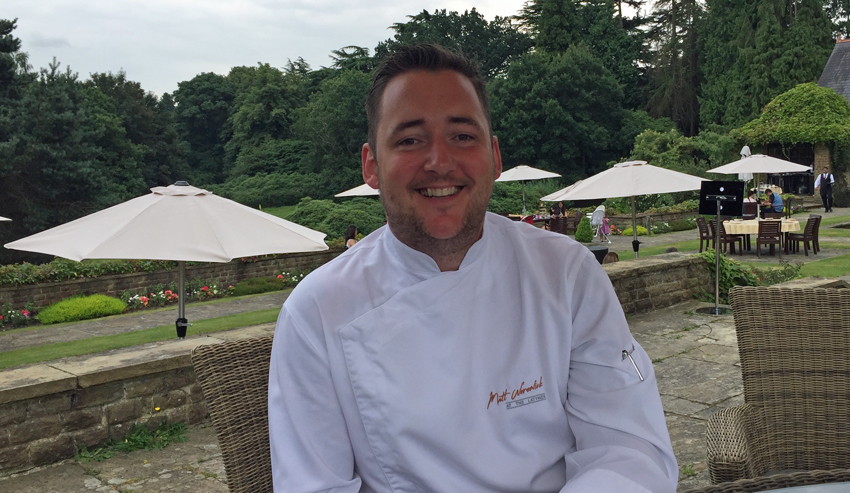
Matt Worswick has joined Exclusive Hotels and Venues as Head Chef at the currently Michelin two starred The Latymer at Pennyhill Park, filling the vacancy left by the departing Michael Wignall.  Matt has settled in very quickly, bringing his own personality and style to both food and dining experience.  As he carries the restaurant forward Matt takes time to talk to Simon Carter and Daniel Darwood of fine-dining-guide about his past, present and future.  Interview took place at Pennyhill Park in late July 2016.

MattWorswick

Describe a particular moment when you realised being a chef was possibly your future?

I grew up in a terrace house in Liverpool, which certainly wasn’t an all apron strings and AGAs, making scones of a Sunday, type of lifestyle. Yes, there was solid, good home cooking on the food front but it wasn’t an obvious inspiration for a cooking career. It was when I visited my grandmother in the Isle of Man that I took a genuine interest in the creative side of food. She grew her own vegetables and in fact made her own sorbets (which was quite something back in the day), so it was my first exposure to such fresh and interesting food.

Initially, I responded to an ad in Caterer magazine for a kitchen job in Lancashire that said ‘no experience necessary’ so I thought “I could do that!” (laughing). I fell in love with the kitchen immediately – the fast pace and creativity – it was also a place where a big personality could breathe compared to an office (the latter was never for me!).

Tell us a summary of the most influencial aspects of your professional background.

For four years I worked for Kenny Atkinson at St Martin’s on the Isle in the Isles of Scilly, the restaurant gained a rising star, then a Michelin star a year later. A really positive experience, Kenny gave me proper training, mentoring and guidance, he looked after me really well and helped me grow up!

I then worked at a couple of places before spending two years working for David Everitt-Matthias at Le Champignon Sauvage as sous chef. This provided a real exposure to a different style of food, created in a no-hiding-place kitchen, working for one the great chefs this country has ever produced.

David thinks about food in a unique way and was a leader rather than follower of fashion, foraging as well as using lesser cuts, from the 1980s onwards. This was partly driven by his natural passion and partly through the practicalities of the recession of the early years. Generations ago great, great grandmothers would have known how to pick a hedgerow but that knowledge faded and became a lost art. Now it has come back in the UK and globally but partly through food fashion rather than necessity.

I would say that the best part of Le Champignon Sauvage experience as a chef is that you have to constantly see the big picture from prepping to cooking, from washing pots to creating dishes. In that situation you quickly learn your strengths and weaknesses and become more rounded as a chef quickly through necessity: Nothing like a large brigade kitchen where you might get lost in the mix, every minute at (Le) Champignon (Sauvage) you had to be on your game. David (Everitt-Matthias) provided finishing school for me before I too got my first head chef role and I like to think he remains a very good friend and mentor to this day.

At Glenapp Castle we were three chefs for 40 covers, breakfast, lunch and dinner, so again it was very tough. I was delighted that the (Michelin) star was awarded nine months after arriving as head chef at Glenapp (Castle).

How would you describe the experience for customers at Matt Worswick at The Latymer?

First of all Pennyhill Park is family owned and that feel extends to the whole Group including the management style at each property, this is something that makes it a very attractive place to work. It could easily be very corporate but it absolutely isn’t and with the MD’s twitter handle being @Foodhero (Danny Pecorelli) you can’t go wrong! (laughing)

The whole restaurant experience is wrapped at beginning and end by a visit from the kitchen (which will often be me) to introduce dishes. At the moment this is four dishes on the tasting menus: The snacks, lobster dish, tomato dish, sometimes pre-dessert and the petits fours. Nobody can explain the dish more passionately than the chefs themselves.

It’s also good to get customers’ feedback directly but in addition answer any questions they may have about the food. I want the restaurant to be fit for a special occasion but a relaxed and accessible one; if we know it is someone’s anniversary then it’s on the briefing and the kitchen will know so I will engage with customers accordingly and hope through that they enjoy their occasion to the best level that we can provide!

How would you describe your style as a chef in terms of kitchen team management?

Developing a dish is very much a team effort. I will always listen to the team and analyse whether an idea is suitable for the season and suitable for the restaurant. I’m not a fan of describing a style as the objective is simple – a potential dish for the menu must taste great and be an enjoyable experience to eat! Yes much of it is classical with influences from the UK and elsewhere but I will stick to a certain end product that fits with my cooking personality.

I do drive the menu but simply for the practical reason that I have the most experience! If everybody has a say then everybody has a sense of ownership then everybody cares so everybody is motivated. It makes sense to manage the team that way.

What do you think of the recent trend of tasting menus in top end restaurants?

It is a valid format for a dining experience but you have to assess your market, for each restaurant it is different, for us it works well.

The diner gets properly immersed in fine dining if they come and enjoy the full ten courses with the enhanced, showcased service. We serve two lunches and five dinners per week and have exclusively tasting menus here so a brigade of ten chefs is ideal to deliver the high quality and consistent offerings that we are aiming for with our customers.

Would you say you have any particular signature dishes?

I’m really pleased with all the dishes across the menus but at the moment the Celeriac and Octopus dishes probably stand out. Perhaps any dish could be on for as long as seasonally possible but a few will last the test of time and therefore qualify as signatures.

Are you an active social media participant and what do you think of twitter, facebook and Instagram?

Yes absolutely active across social media. It happens to be free but you have to be sensible and careful! I believe it’s great for getting your message out there as well as assisting recruitment, networking in the industry and making contacts.

Yes it can be detrimental in the wrong hands but I think I’m sensible and understand that I work within a Group where there is a brand to protect and enhance. I try and make my account personal to make it more appealing, for example pictures of developing dishes as part of a day-in-the-life in a top end restaurant.

What do you think of Trip Advisor?

Its not so much what I think of Trip Advisor but more about customers and getting as many happy ones as possible!

If a customer comes and I get a good review on Trip Advisor then yes I’m pleased – not pleased with Trip Advisor but pleased with the happy customer. Likewise for a poor review I would not be unhappy with Trip Advisor it would be about what went wrong with that customer experience.

It’s a hot topic and people talk about it to the point that it may affect whether people come to a restaurant. We’re in the hospitality industry so we have to take note of what is on that site but at the same time I don’t have the energy to argue or get angry on social media should the results not be to my liking.

Overall sites like Trip Advisor and OpenTable (via the customers in the restaurant) are potentially good platforms but we understand that the websites are still relatively young so some processes may become clearer, for example reality checks to ensure genuine reviews. I like to focus on making happy customers by evolving a consistent, high quality offering and then those sites tend to take care of themselves in a positive cycle.

What are your views on the ‘Guides’ – Michelin, GFG, AA?

Overall they are a benchmark, they give you recognition and a platform. Do I sleep well the night before the annual Michelin announcements? No, not really, but more excitement than anything else, the prospect of being in that band of chefs with such accolades is definitely exciting. Yes they do matter. I put it this way, if my great, great, great grandson decides to be a chef and looks me up, these guides will position what was achieved and hopefully make them proud.

Which other chefs do you most admire and why?

David Everitt-Matthias is inspirational in so many ways, not just for his talents as a great chef’s chef but also for his dedication, he has never missed a service and that’s been going on for approaching 30 years.

What are your plans for the future?

Refurbishment for the restaurant for the turn of the year and make it a little more colourful, to reflect my personality. I also wish to keep a happy team growing with me into the future and looking forward to what the next day brings.

Restaurant Review: The Royal Oak, Paley Street (Aug 2016)

Posted on: August 14th, 2016 by Simon Carter
RoyalOakPaleyStreet

Royal Oak Paley Street with Owner Nick Parkinson (Centre)


Owned by Nick Parkinson, and backed by his father Sir Michael, The Royal Oak in Paley Street has progressed from a country pub also serving food to a sophisticated fine dining destination restaurant. With its origins in the 17th century, the original building’s white and black frontage with picture windows gives way to a classic pub interior with a bar and reception area, wood burner fireplace, low beamed ceilings and wooden floor. The warm, cosy ambience is ideal for dining in colder months, but in spring and summer guests might prefer a table in the extension, the far end of which is sectioned off as a private dining room. With doors opening onto the new pebbled courtyard featuring large planters and waterfall designed by Richard Vines, and a high pitched beamed ceiling, this is a brighter more airy space. Throughout both parts of the restaurant, well-spaced polished wooden tables, elegant high backed leather chairs and an eclectic mix of artwork, some from Sir Michael’s private collection, make for a comfortable and relaxed dining experience.

Being just five minutes’ drive from my home in Maidenhead, I have taken The Royal Oak for granted. To my regret, having visited only a few times since it opened in 2001, I neglected to submit reviews of the excellent meals I enjoyed during the time when Dominic Chapman and his successor, Michael Chapman (no relation) were head chefs. Now that James Bennett is in charge of the kitchen, a recent meal showed he is emulating the achievement of his predecessors who gained a Michelin star, three AA rosettes and a strong showing in The Good Food Guide.

A major restaurant guide might encourage its inspectors to sample the set lunch menu, as consistency should be evident across ALL menus on offer, whether lunch or dinner and regardless of price is crucial. True, luxuries may not feature, but it is the skill of the chef that is being tested. At The Royal Oak, the dishes on the set lunch menu are the same as the carte, so this distinction does not apply (apart from the higher price at dinner). At £30 for three courses, £25 for two, Monday to Saturday, the lunch offer is a real bargain, made more agreeable by the generous choice – six options in each course – and large portions. Main courses are fully garnished, although side dishes are available. A range of snacks such as quail Scotch egg and smoked eel with apple and horseradish is also on offer.

The quality of the artisan breads more than justified its £1.50 charge. Warm glazed buttery Marmite brioche was outstanding in its balance of sweet and savoury flavour. Delicious too were the slices of rosemary and potato and caraway and rye, with their crisp crumb and firm crumb. Equally accomplished was the fennel flatbread which provided a flavour and textural contrast. My only reservation is that their irresistibility could lead to gorging oneself before the first course arrives!

A starter of Lobster raviolo, was generously filled with succulent pieces of the seafood, although the pasta was a touch too thick. This did not detract from the full crustacean flavour, enhanced by an intense bisque , (the taste of which extended to the foam) and a fondue of leeks, samphire and fennel. A cold quenelle of cherry tomato added colour, flavour and a contrasting temperature, although the dish would have been equally accomplished without it.

RoyalOak_Lobster

A tasting portion of tagliatelli was precisely cooked al dente and coated in a sauce of crème fraiche, herbs and summer truffle, the heady fragrance of which pervaded the whole dish. Although this portion was slightly claggy, perhaps due to the amount of crème fraiche needing adjustment.  This rich, indulgent and luxurious dish will be difficult to take off the menu.

RoyalOakTagliatelle

A main course of Navarin of Spring lamb proved a model of its kind. It featured two well seasoned cuts, the sweet, slow cooked shoulder and a cutlet, accurately cooked and rested, the fat well rendered and the flesh a blushing pink. Baby carrots, turnips, and onions retained the crisp texture and vibrant colour, wilted chard gave a gentle, spinach like bitterness, and Jersey royals a creamy richness. A light lamb jus brought the elements together well.

RoyalOakLamb

Finally, a crème fraiche mousse was lightly set and not too sweet. Garnished with dainty gariguette strawberries, shortbread discs, nastursiam flowers and a quenelle of mint ice cream.  The balance of this beautifully presented dessert was perfect.

RoyalOakDessert

Good coffee and petit fours completed a memorable meal, made even more enjoyable by professional service that was at once welcoming, solicitous, knowledgeable and unobtrusive.

Clearly, James Bennett’s cooking is worthy of greater attention, so visits to The Royal Oak will be more frequent in the future. Although the occasional tweak may be of benefit, the clear flavours, harmonious combinations and clean presentation show classical skills of a high order. In an area of intense competition amongst high end restaurants the focus on consistently producing a quality product is essential. In this respect, Nick Parkinson can rest assured that this prerequisite for success will be maintained by his latest head chef.

Restaurant Review: La Trompette, Chiswick (Aug 2016)

Posted on: August 12th, 2016 by Simon Carter

LATrompetteExterior

The much loved Michelin starred La Trompette continues to thrive in an area packed with competition from all types of cuisine, including another restaurant with a Michelin star. The 2013 refurbishment and extension (featuring a private dining room), completed during the recession, showed it had not lost any of its appeal.

The winning Platts-Martin formula of set menus with a wide choice, in effect an a la carte offering at a fixed price, has stood it in good stead. £29.50 for weekday lunch (£35 at weekends), and £49.50 for dinner are realistic and offer exceptional value for money at this level. Relaxed, contemporary surroundings in tones of brown and cream, with a terrace for al fresco dining and all week opening, both at lunch and dinner, are extra attractions.

LaTRompette_DiningRoom

Executive Chef Rob Weston has impeccable credentials having taken senior roles in the Michelin starred kitchens of Marco Pierre White, Guy Savoy, Michel Roux Jnr and Phil Howard – he was Head Chef at The Square for 15 years. Similarly, the career of Head Chef Olly Pierrepont has seen him cooking for Raymond Blanc, John Campbell, Simon Rogan and Chris Staines amongst others. The combined illustrious CVs guarantee a quality product in the carefully sourced, seasonally changing menus. Both chefs “cook what they love to eat”, preferring to be in the kitchen rather than being distracted elsewhere. Their skilled and versatile cooking is based on classical foundations with strong flavours, balance in tastes and textures, innovation tempered with restraint and clean presentation. Cooking methods with precise timing and accurate seasoning pay respect to the inherent quality of the ingredients, allowing purity of taste to shine.

Menus for dinner usually feature seven options in each course, with a good choice of fish dishes for both starters and mains. Lunch menus are slightly shorter. A recent innovation is a five course tasting menu, a snip at £49 for lunch, £70 for dinner.

I visited on a weekday lunchtime to find the restaurant busy – as usual – and keen to sample the tasting menu.

Two amuse bouches showed imagination and attention to detail. A delicate seaweed and tapioca cracker topped with pickled sardine needed gentle handling before producing a melting flavour explosion in the mouth. Equally enticing was a warm pork croquette with its crisp coating and satisfyingly fatty inside.

Trompette Amuses

In a well balanced first course, the mild flavour and firm texture of raw Albacore tuna and bonito were enlivened by the meaty, juicy qualities of bull’s heart tomatoes marinated in herbs, the fragrance of which pervaded the whole dish. Avocado added a creaminess cut by the slight sourness of crème fraiche.

Trompette_Tomato

Hand rolled linguine dressed in Parmesan butter had a beautiful silky texture and a rich, creamy depth of flavour. The intense fungal aroma of Australian black truffle generously shaved on top raised this simple pasta dish to extravagant, ethereal heights. This luxurious dish will be hard to take off the menu!

trompette_linguine

An accurately grilled monkfish tail retained its lobster-like taste and meaty texture. Contrasting flavour and texture were provided by nutty black venere rice, sauteed octopus, and pea puree, the whole dish being brought together by a rich jus of almonds and raisins. Visually, also, this dish was stunning.

Trompette_MonkFish

Barbequed short rib of Ayrshire beef, served off the bone with a classic veal based sauce had a soft, melting texture. This unctuous piece of meat, the most flavoursome of all cuts, showed the benefits of long, slow cooking. Potato galettes were crisp and buttery, girolles gave an earthy aroma and peppery flavour, wilted chard added a gentle bitterness and parsley puree a herbal note, all the accompaniments working well together.

trompette-beef

Rhubarb soufflé with a crumbled top was light, well risen, and intensely flavoured. The secret – previously used at The Square – lay in a base of pureed rice pudding, which holds more of the fruit mixture, rather than the classic creme patissiere. The accompanying smooth rhubarb ripple ice had a well-judged balance of sweetness and acidity. Personally, I prefer to eat the two elements separately, enjoying the contrast in temperatures; for me, the practice of dropping the ice cream into the soufflé spoils the taste and texture of both.

trompette-souffle

Good coffee and truffles ended a memorable meal. This was enhanced by informative, solicitous and unobtrusive service overseen restaurant manager Patra Panas, whose charm and quiet authority enable the front of house operate like a well-oiled machine, but one with character and personality. Her key ally in this is Tanguy Martin, who recently joined the team after being named UK Moet & Chandon Sommelier of the Year. He follows in the footsteps of a series of noted sommeliers who have maintained an impressive wine list, strong in both Old and New Worlds. Although I did not opt for the wine flight, the recommended glasses of Macon Villages and Chianti Classico for the savoury courses were ideal. I’ll be back for the full works next time!

La Trompette delights in the consistency of producing an excellent product of which the whole team can be justifiably proud. The buzz of contented diners contributes to the sense of gastronomic excitement. Whatever the reason, a meal there is always a special occasion, and certainly worth a drive down the M4 from Maidenhead. I first reviewed it in 2004, and have visited many times since; it just gets better and better!

Restaurant Review: White Horse, Duns Tew (Aug 2016)

Posted on: August 9th, 2016 by Simon Carter

Whitehorse_edited-1

North of Oxford and a modest distance from junction 10 on the M40, The White Horse Inn at Duns Tew sits in a commanding position on a bend in the road through this picturesque Cotswold village, and is a welcome haven at the end of a busy day touring the local countryside or shopping in Bicester.

The main dining area is situated in the oldest part of this atmospheric 17th century hostelry and a low ceiling, subdued lighting, two foot thick walls and an open fireplace conjure times past. Furnished with an eclectic mix of sympathetically styled wooden period tables and chairs I would be almost unsurprised to see my grandfather, who hailed from this part of the world, walk through the door with his dog. Moreover, to the right of the bar can still be found an example of the now rare ‘snug’ bar. With its stone walls and lower level floor it is rumoured to predate the rest of the inn by some hundred years and is large enough for small private parties.

WhitehorsebarJPG

The bar itself has seen extensive but sympathetic renovations and is, I note, amongst its other beverages, enthusiastically embracing the current taste for locally distilled gin! From the back of the bar doors lead to a modestly sized but carefully maintained paved outdoor seating area with wooden furniture and borders full of flowers, and as I discovered, is a trap for the evening sun.

whitehorseroomsThe bedrooms in the main building are located above the bar and are cosy with comfortable beds and an interesting collection of shabby chic furniture together with original features such as the wrought iron fire place still in situ. Decorated in natural shades such as sage green, the walls are hung with a mixture of prints and original watercolours of local Cotswold scenes. Throws on the beds match the schemes and add a finishing touch to relax the weary traveller. The compact ensuite bathroom with complementary Ebony toiletries has everything one needs, especially a hot, easy to operate shower to end the day. It has to be said, however, that these rooms are reached by an outside staircase so an umbrella is an essential piece of kit!
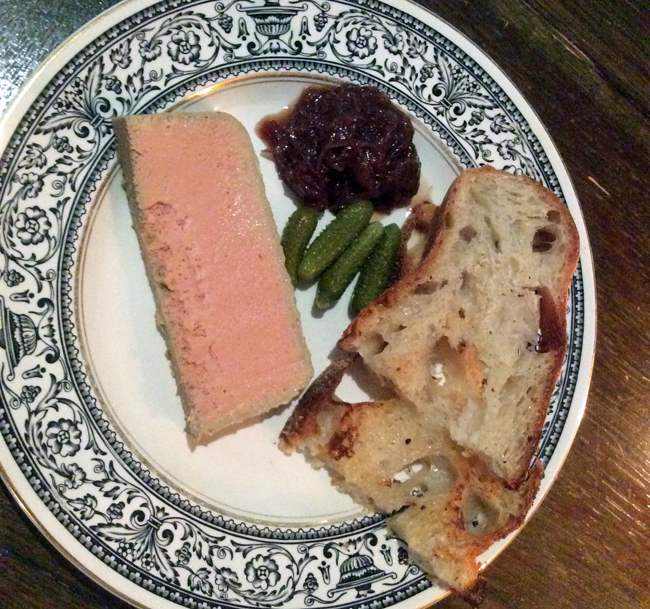
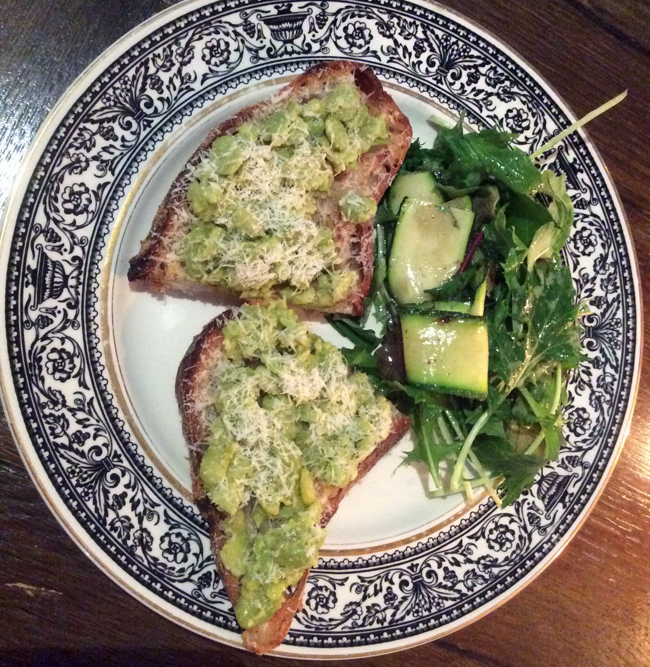
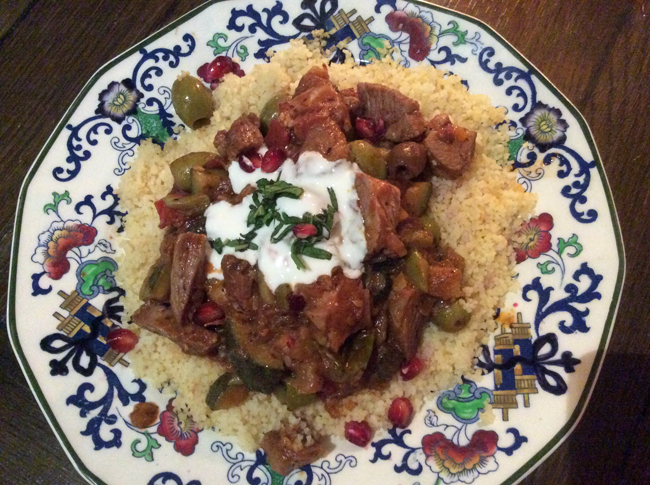
Additional light and airy sleeping accommodation has recently been created from what once were outbuildings. These rooms are at ground level and feature floor to ceiling glass panels with large French windows, and could have been more suitable for those with limited mobility had they been fitted with walk-in showers rather than baths.

Chef Alex at the White Horse in Duns Tew takes a pride in sourcing the best ethically reared local produce as far as possible. For instance, whole Pedigree Dash Wood Zwartles lambs from Home Farm in the same village are butchered in the kitchens, showing there are no short cuts are taken in meat preparation. Similar care is taken with vegetables harvested from the restaurant’s own gardens and from the well known Oxfordshire supplier North Aston Organics. This ensures that seasonality is followed

Menus not only change with the seasons but may be adapted each day. Mediterranean and Asian influences are evident amongst some the dishes offered. The idea is to allow a reasonable choice but to ensure consistency in the kitchen. The restaurant’s Supper Menu offers six starters, (£7.50 to £8.50); 6 mains (£12.50-£22); three desserts (£6.50) and Stilton and crackers (£7.50). There is also a special Village Night menu on the first Thursday of each month

Fine Dining Guide visited on a mid-week evening in late July, in what turned out to be a busy service both in the restaurant and bar area.

Chicken liver parfait was a well rendered classic: the marination and seasoning were spot on, whilst the texture was silky smooth. Cornichons added the necessary contrasting acidity and crunch, homemade chutney gave sweetness, whilst toasted ciabatta proved a welcome change from the usual sourdough or wholemeal encountered elsewhere. Overall, an accomplished starter, although the portion could have been more generous.

WhiteHorse_Parfait

A vegetarian starter showed invention and intelligent use of seasonal vegetables. A flavoursome, well balanced broad bean pesto bruschetta was enhanced by the judicious use of grated parmesan.

WhiteHorse_starter2

A hearty main course of Turkish spiced roast leg of Zwarties lamb saw tender and succulent chunks of meat dressed in a hearty casserole of tomatoes, courgettes and olives. Finishing the Middle Eastern theme was couscous which soaked up the juices nicely, yoghurt and a scattering of pomegranate seeds for sweetness and colour.

WhiteHorse_main

Asian influences were seen in the cooking of wild salmon. Accurately timed with crisp skin, the fillet was sprinkled with sesame seeds. With the rich, delicately flaking flesh, the virtues of wild over farmed were clearly evident. The noodles and stir fried bok choi proved fitting accompaniment, with the soy and ginger dressing finely tuned so as not to overwhelm the salmon.

WhiteHorse_Main2

Desserts did not reach the same level as the savoury courses, but just needed tweeking.

Chocolate brownie had good flavour but was dry. The texture could have been improved with a crisp top and soft, gooey centre. Vanilla ice cream and salted caramel worked well with the brownie, although the scoop was rather small.

WhiteHorse_Chocolate

Better was the Lemon soufflé pot, topped with strawberries. There was a good balance of sweetness and acidity in this light textured, refreshing dessert. Shortbread was rich and buttery, as it should be.

whitehorsestrawberry

Service was friendly and welcoming. We appreciated chef Alex coming out for a chat. Overall, despite the occasional flaw, the food at The Horse is well worth a visit, its standard being above many of the food led pubs in the Cotswolds. The signature dish of Korean Chicken wings, described in detail by Alex but sadly not on the menu the evening we visited, is one good reason for a return visit.

Restaurant Review: Matt Worswick at The Latymer, Pennyhill Park (Aug 2016)

Posted on: August 9th, 2016 by Simon Carter

Pennyhill_park

The Latymer at Pennyhill Park is a low ceilinged, oak beamed panelled dining room lit by mullioned windows and wall lights and furnished with heavy high backed chairs and luxurious velvet banquettes. The seating and décor might seem too traditional for the modern cuisine of contemporary chefs. Happily, a thorough makeover is planned for January 2017.

MattWorswick

In Matt Worswick, Danny Peccorelli, owner of the Exclusive Hotels and Venues group, has found a worthy successor to Michael Wignall, who achieved two Michelin stars at the Latymer. The highlight of Matt’s distinguished career to date was, at the age of 26, being awarded a Michelin Star in 2013 as Head Chef of Glenapp Castle. He previously worked with David Everitt-Matthias at Le Champignon Sauvage in Cheltenham, (two stars), and Simon Hulstone at The Elephant in Torquay, (one star), thus his experience in distinguished kitchens is unquestioned. Matt is a chef who actively enjoys being behind the stove, like his mentor at Champignon Sauvage who nurtured his love of foraging and use of less popular cuts of meat and offal

Taking over the reins as Head Chef in March 2016, Matt quickly stamped his mark on the cuisine, creating tasting menus which demonstrated the full range of his influences and talents. To ensure consistency, five or seven course tasting menus at £35 and £50 respectively are available for lunch on Thursdays and Fridays and a ten course dinner tasting menu (£100) Wednesday to Sunday. Prices are realistic given the quality and quantity of the ingredients and the expertise in cooking. Particularly good value is the lunch offer of five courses with two “tasting” glasses of wine, half a bottle of mineral water and tea or coffee for £49.

Matt has the confidence not to state the exact provenance of his ingredients, a feature which has become tediously fashionable on contemporary menus. The use of top quality, regionally sourced, organic and seasonal ingredients is axiomatic, true for any chef at this level. That they are treated sensitively, allowing their natural qualities to shine is fundamental to the success of any dish. Matt prefers classical techniques and International influences to cutting edge gadgetry and excessive experimentation; thus innovation is tempered with restraint. More importantly, Matt’s dishes reveal bold depths of flavour, the result of accurate timing, well-judged seasoning and harmonious combinations of taste and texture. Colours are vibrant and presentation is artful without looking contrived.

Menu descriptions are terse and understated, allowing for an element of surprise which may also include a touch of theatre in presentation. How refreshing, also, to see the chef himself presenting some of his dishes and giving the same time to each table – a rarity among high end restaurants.

A trio of amuse bouches with French and Middle Eastern influences; Pig’s trotter cromesquis with piccalilli gel was a dainty porcine treat with crunchy coating and warm, succulent filling. A well flavoured parmesan gougere had crisp choux pastry filled with a truffle puree exuding a heady aroma. Best of all was a delicate cornet of brik pastry filled with smoked baba ganoush, the pureed aubergine being complemented by cardamom yoghurt. The meticulous attention to detail of these delectable morsels augured well for the dishes which followed.

Latymer_Canapes716

Our tasting menu began with Matt’s signature Octopus dish. The virtues of long slow braising in a water bath, producing a pure, clean flavour and soft, almost melting texture were clearly evident. Oriental elements of miso, ginger, coriander, sesame puree and pickled kohlrabi were carefully balanced to enhance the seafood.  Wine: Sake Umetso No Kimoto 80, N.V

Latymer_Octopus716

A giant, hand dived Orkney scallop was precisely timed to produce a caramelised crust and soft, succulent flesh. Its inherent sweetness was balanced by the gentle bitterness of barbecued leek and burnt onion. A generous topping of caviar helped season the dish and gave contrasting temperature rather than being a mere indulgent flourish. Wine: Dajoar Zenit Riesling Feinherb, Bender, Mosel, 2014

Latymer_Scallop716

Next, a deceptively simple tomato dish was raised to lofty heights by adept combination and original presentation. Heritage and San Marino tomatoes were semi dried and charred to intensify their natural sweetness and paired with ultra soft, creamy burrata, instead of the ubiquitous mozzarella. Dressed with basil cress and basil oil, this classic Italian flavour combination was enhanced by a “snow” of tomato essence dipped in liquid nitrogen. This lifted the dish, adding contrasting texture and temperature, also providing a stunning colour contrast on the plate. Wine: Bressan Pinot Nero, Venezia, Italy, 2010

Latymer_Tomato716

The delicate texture and gentle sweetness of butter poached lobster reflected accurate timing that paid due respect to this luxurious crustacean. Its accompanying bisque had a deep, rich intensity and smooth texture – a model of its kind. Peas and mint worked well, adding freshness and texture. This was enhanced by the spectacular presentation at the table when mint dipped in dry ice formed a low level cloud which cascaded across the table, heightening the herbal fragrance.

Latymer_lobster716

Herefordshire beef fillet, cooked medium rare, was well seasoned with a good sear. Paired with an unctuous slice of tongue which reflected Matt’s love of offal, this was a marriage of the popular and less attractive cuts, delicious but of contrasting tastes and textures. Giant snails braised in beef jus added richness and texture. The protein elements stood up to the smoked almond pesto, the bold flavours complementing each other. However, perhaps the most accomplished element on the plate, and the undoing of many lesser chefs, was a single pomme soufflé – light, crisp and perfectly formed! Wine: 50th Gran Reserva, Marques De Riscal, Rioja, 200

latymer_beef716

Desserts maintained the same high standards, revealing the strengths of the pastry section.

An intense strawberry sorbet topped with meringue and elderflower granita combined fruity and muscat aromas with smooth and crystalline textures. Basil and basil oil provided a herbal foil to the sweetness, showing the versatility of this soft herb and helping to make this dessert a celebration of the tastes of summer.

Latymer_Strawberry716

The richer second dessert, chocolate and caramel delice, was a masterclass in the use of chocolate. A light, creamy mousse on a crushed nut and caramelised sugar base was enveloped by a rich, dark and glossy ganache topped with gold leaf. Yogurt sorbet gave a gentle sour note which cut the sweetness, whilst milk crumble gave added texture. Wine: Malvasia Passito Vigna Del Volta, La Stoppa, Italy, 2009

latymer_chocolate716

Good coffee and delicious petit fours completed a memorable meal, enhanced by welcoming, efficient and non-obtrusive service. Sommelier Sean  Arthur expertly presented the matching wines with a knowledge that belied his years.

Matt Worswick has made a distinguished start, creating dishes of which he can be justifiably proud. There can be little doubt that the Latymer will continue as a destination restaurant, attracting discerning foodies locally and those from further afield. That Matt will emulate his achievement at Glenapp Castle can only be a matter of time, given the quality of the cooking sampled. Fine Dining Guide hopes to return to sample another tasting menu, but in the meantime will follow his progress with interest, anticipating well deserved recognition in the major 2017 restaurant guides.

Restaurant Review: Ragged Cot, Nr Cirencester (Aug 2016)

Posted on: August 9th, 2016 by Simon Carter

ragged cotJust a short drive west of Cirencester, The Ragged Cot, owned by Stuart Hanson, is a stylish destination gastropub with rooms. Having started life over 400 years ago as a sheep-cot, the rag stones were at some stage re-modelled to build a small dwelling. By the mid-17th century it had developed into a busy coach house which was still popular during World War 2, and much frequented by the RAF personnel stationed nearby. In more recent times, and with considerable sympathetic modernisation and extension, it has achieved its present welcoming incarnation.
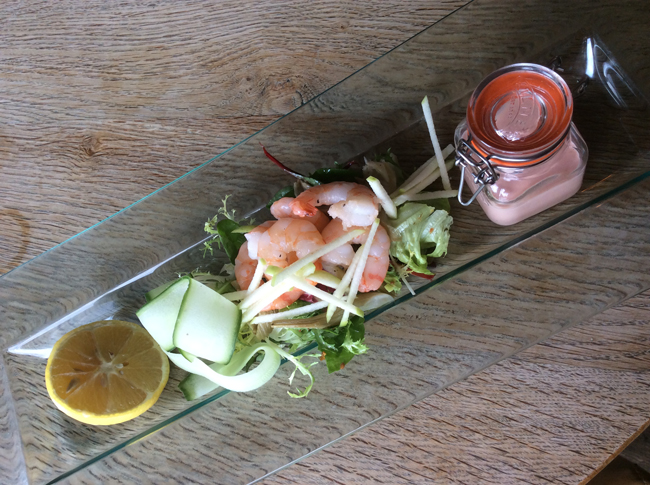
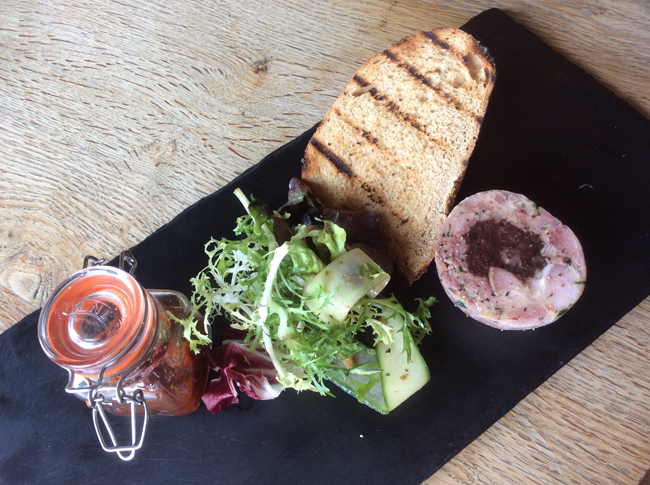
To the left of the bar the original part of the inn remains a cosy, intimate area, ideal for a small private party, whilst the main dining area is a much more recent build and elegantly continues the atmosphere of the old whilst embracing contemporary design. Guests sit at stripped hard wood tables in a variety of sizes and designs and on chairs which also differ considerably, but with a continuous theme of leather running throughout. Two sides of the dining room are given over to glass doors which look out onto a well-tended paved area with wooden seats, parasols and large planters of flowers, all inviting a relaxed pre or post meal drink.

Elsewhere the walls sport an eclectic mix of decoration, from a highly polished Rolls Royce vintage aircraft engine case over the large fireplace, to stuffed trophy animal heads and an early slot machine. Shades of charcoal through to pale grey and biscuit pick out and compliment the natural colours of the stonework and create a beautifully relaxed atmosphere in which to enjoy good food.

RaggedCot_wall

The Ragged Cot is contemporary style mixed old-world charm, and an excellent inclusion on a visit to the Cotswolds. Its proximity to Gatcombe Park ensures a healthy mixture of tourists – who can stay in one of the comfortable nine rooms – and regular locals amongst its clientele

A recent addition in the SHED lounge, which offers comfortable seating and lighter bites for those not wanting a full meal.

In the main restaurant, Chef Thomasz, in line with the kitchen’s philosophy, sources produce as far as possible locally, with a good choice of fish. The menu offers a wide range: six starters (from £4.50 to 7.25), mains (From £15.95-£16.95), Cot classics, including burgers, char grilled streaks

(£21.50 to £25.96}, two salads, five desserts (£5.50- £6.95) and a cheese boards.(7.50)

Fine Dining Guide visited for an early evening midweek dinner in late July. The main restaurant which has forty covers became busy very quickly, reflecting its popularity. (There is space for 25-30 in the bar area with a maximum of 180 in all areas including the terrace seating.)

Restaurant Manager Sam Neal was welcoming and informative, overseeing the front of house service with understated efficiency. Kosmina, who looked after our table did so with charm and courtesy. Such service makes all the difference, especially if the food dies not live up to expectations. Happily this was not the case as we found the cooking accurately timed, well balanced in flavours, textures and well presented.

A starter – a partial deconstructed version of a classic – saw succulent prawns paired with batons of Granny Smith apple, a combination which gave a lively freshness with soft and crisp textures. A well-made Marie Rose sauce was served separately so as not to overwhelm the main ingredient. Roasted fennel added a mild aniseed note and delicately dressed leaves completed this attractively presented dish.

RagfedCot_Prawn

Ham hock and black pudding terrine was an accomplished porcine treat. Moist, succulent and well seasoned, its richness was balanced by a home-made spiced chutney of tomato and plum.

RaggedCot_Terrine

A main course of pan friend breast of local chicken wrapped in bacon was moist and packed with flavour. Spinach and Dauphinoise potatoes proved suitable accompaniments, whilst the whole dish was lifted by a rich port and chorizo reduction.

RaggedCot_Chicken

Another main course, a 10 oz Sirloin steak from the grill, was accurately timed to a medium rare and well seasoned to accentuate its flavour. It was also good to see the fat well rendered, something often neglected in lesser establishments. Triple cooked chips were a model of their kind, crunchy on the outside and soft in the centre. Roasted tomatoes, button mushrooms, and beautifully crisp onion rings and mixed leaf, completed this generously portioned main course. Only the mild pepper corn sauce, which needed more punch, stopped this dish from being perfect.

RaggedCot_Steak

Desserts maintained the high level of cooking. Refreshing lemon and blueberry sorbets were smooth textured and balanced in acidity and sweetness.

RaagedCot_Icecream

Chocolate and fudge mousse was light and not too rich, the fudge balancing the chocolate. Homemade shortbread had a buttery richness and crisp texture.

RaggedCot_Dessert1

Overall, The Ragged Cot, both in terms of quality of food and service, soars high above the average quality of food led inns. Fine Dining Guide hopes to return, possibly for an overnight stay, to maximize the opportunities for lunch, dinner and breakfast!

Veeraswamy 1926-2016: Celebrating a Beautiful Institution

Posted on: July 9th, 2016 by Simon Carter

Veeraswamy Interiors

Images: Veeraswamy from respectively the 1920’s, 1950’s and 2005 onwards.

Mayfair is bordered by the roads of Park Lane, Oxford Street, Regent Street and Piccadilly, producing an uber-exclusive area that was named after the London event known as the ‘May Fair’ which took place during the late seventeenth century. Along Piccadilly, about 100 yards shy of Piccadilly Circus – where Regent Street, Piccadilly and Shaftesbury Avenue meet – is Swallow Street. Stroll down here and you walk past Bentley’s, a beautifully reinvigorated eaterie, executively led in the kitchen by the redoubtable Richard Corrigan.

To the uninitiated it may not be clear how to enter the restaurant a little further down, at the end of Swallow Street, the exclusive Indian restaurant Veeraswamy, which is situated on the first floor of a building overlooking Regent Street to the North and Swallow Street to the East. A prime top end restaurant located in prime top end real estate! With a discrete single door entrance to a corridor manned by a receptionist who then guides the visitor to a waiting lift, from whence the culinary journey of discovery unfolds…

Camellia Panjabi PortraitIt is something of a business conundrum for the food enthusiast who also sets out to be a wise and successful restaurateur: At the top end, says Camellia Panjabi (left), the best regional chefs of India are expensive to hire, manage and retain. In the finest food, the cooking processes they employ will be complex and the ingredients and recipes closely guarded secrets both of which are difficult to obtain and therefore expensive to deliver. Further there is the location – a first floor overlooking Regent Street on a large site has high costs associated. You have to be sure of your markets, says Camellia, as all of these factors lead to a higher price point and you must trust that your client base appreciate, enjoy and return to the venue that is delivering the highest quality of food and service in such surroundings.
Camellia Panjabi is a director of the company MWEat, which acquired the site of Veeraswamy in the mid-1990s and set out to sympathetically restore the restaurant to its former glories and beyond. The end product is quite stunning, easily seducing all of the senses of the diner. This is of little surprise however as MWEat boast a fine track record in the top end of the restaurant business, with their portfolio including the Michelin starred Amaya in Belgravia as well as Chutney Mary (now in its new home of St James’ Street). Further, the family run group are also wise to the changing times, through for example, their astute expansion of the Masala Zone outlets. These restaurants bring Indian street food and authentic curries to the mid-market in informal, relaxed and accessible surroundings. Its about making the most of the demand curve and product differentiating in order to bring the best possible product to each type of knowledgeable and demanding modern customer.

The ambition of Veeraswamy in 2016 is clear and extends beyond the desire to marry the old with the new, the traditional with the modern, or even the North with the South of Indian cooking. To understand the full breadth and history of Indian food is bordering on a degree subject; Camellia Panjabi’s groundbreaking book ’50 Great Curries of India’ http://www.amazon.co.uk/Camellia-Panjabi/e/B001KE7V8E has sold over 1.25 million copies worldwide and was the result of painstaking research into food found across India.

Veeraswamy Tasting Mains

Image: Tasting Menu selection of curries for main courses in tasting menu.

Many dishes originated in private homes and remained closely guarded secrets. To properly deliver a high end ‘taste of India’ therefore required a variety of specialist chefs in the modern day Veeraswamy kitchen. This has provided a great draw to the customer as well as a great challenge to the cost effectiveness (and smooth man management) in the running of the restaurant. All of this is a significant extension to the classical French kitchen, where the hierarchy might be dictated by the passion and vision of one master chef. A broader discussion on Indian cuisines can be found elsewhere on fine dining guide http://fine-dining-guide.com/profile-camellia-panjabi-of-mw-eat-sept-2015

Veeraswamy

Image: Starter from the vegetarian tasting menu at Veeraswamy 2016.

The history of Veeraswamy stems from 1924 when Edward Palmer, a trader of chutneys and spices, was named the official caterer for the Great Exhibition at Wembley. This whetted his appetite to open a luxury Indian restaurant, which became the original Veeraswamy at Victory House on Regent Street. Eight years later William Stewart MP bought the restaurant and significantly restored and upgraded the site. The new owner had a passion for India and in particular her food, it is said that he travelled over 200,000 miles in search of knowledge about the country and her cuisine. Sir William was rewarded with word of the quality of the restaurant spreading around the world. After 32 years he retired with the business eventually being taken up in late 1996 by Ranjit Mathrani and Namita Panjabi. By 2005 the forward looking but sympathetic refurbishment to the former halcyon days was completed.

So as 90 years of this beautiful instution are celebrated amongst owners and generations of regulars, the bold statements on plate and of decor, reminiscent of the Maharaja Palaces of a bygone era, continue to shine in this little corner of Mayfair and delight and enlighten yet further generations of guests. Indeed during 2016, to celebrate 90 years of Veeraswamy, there is an opportunity to sample a selection of ‘Royal Dishes’ which are proposed by the restaurant. No doubt with the stewardship in safe hands, the future for Veeraswamy remains bright as the site continues to go from strength to strength.

Reference: Royal Dishes.  Contact Veeraswamy on 020 7734 1401 for reservations.

Patiala Shahi Raan – lamb shank slow cooked for 6 hours. A recipe from the legendary royal kitchen of Patiala, served with marrow sauce.
Shahjahani Badami Chicken – Mughal recipe, boneless chicken breast in almond, nutmeg & saffron sauce
Asafjahi Lamb Pasanda – from the palace of the nizam of Hyderabad – lamb picatta, clove, fennel, rose petal
Hyderabadi Lamb Biryani – lean lamb, subtle spicing, herbs and aged basmati rice. This dish was on the original Veeraswamy menu in 1926!