Author Archive

Feature: Gold Service Scholarship 2018: Press Release

Posted on: October 30th, 2017 by Simon Carter

The 6th annual Gold Service Scholarship is well underway, and the scheme’s Trustees and Judges undertook the first challenge to discover the 2018 Scholar with a rigorous round of Quarter Finals at The Berkeley on 20 October and The Langham in London on 21 October.

Chairman of the Judges Edward Griffiths was impressed with the level of skill witnessed at this early stage of the competition. He stated: “An amazing array of talent delighted us all, with keen candidates hailing all over the country. 2018 is going to be an excellent vintage for the Gold Service Scholarship!”

More than 100 candidates were assessed over the two days by 20 Judges, with 32 successful Semi-Finalists going through to the next stage – the Semi Finals – which will take place at Rosewood London on 21 November. (See the list below.)

The 2017 Scholar Stephanie Beresforde – who is Assistant Restaurant Manager at Jean-Georges at The Connaught in London – commented on the exciting new talent competing for the 2018 Scholarship. She explained: “Each year, the Gold Service Scholarship has grown in reputation and I am so proud to be the current Scholar. The benefits to my personal and professional growth over the past months have been invaluable. I have had access to some of the most senior professionals in the hospitality industry, and their guidance and mentoring have helped me grow in my own role. The candidates for the 2018 Scholarship will benefit hugely from the experience at each stage of the competition.”

After the Semi Final stage, the candidates will be whittled down to just eight, who will compete at the Finals, scheduled to take place on 29 January at Massimo at Corinthia London. Rigorous tasks and interviews will require each candidate to display not only their job skills – from front- of-house service to wine knowledge – but also their enthusiasm to grow their careers in the hospitality industry.

The new 2018 Scholar will be announced at a prestigious ceremony in February at Claridge’s Hotel, where past Scholars, the Gold Service Trustees, Directors and Ambassadors, and key members of the hospitality industry will gather to celebrate the success.

Candidates for the 2018 Scholarship work in a variety of roles and organisations, ranging from restaurants, modern pubs and hotels, to contract catering companies, The Royal Household and the Royal Air Force.

The Semi Finalists announced for the Gold Service Scholarship 2018 are:

ADINA ANTOFIE         Assistant Restaurant Manager at Coq d’Argent, London

CATARINA CALDEIR     Head Waitress at Langshott Manor Hotel, Surrey

JEANNIE DOHERTY    Supervisor at The Savoy Hotel, London

LAUDY GIBBA-SMITH      Head Waitress at L’Enclume, Cumbria

PIERS GIBSON-BIRCH      Junior Assistant Restaurant Manager at The Wernher Restaurant at Luton Hoo, Luton

MORAG HAMILTON        Steward at Royal Air Force, Lincoln

CHRISTOPHER HURLE   Head Waiter at Jean-Georges at The Connaught, London

CLAUDIO INTROZZI   Restaurant Manager at Heddon Street Kitchen, London

ALEXANDER JAGNE    Brasserie Manager at Lucknam Park Hotel, Chippenham

SEBASTIAN KOEWIUS Assistant Room Service Manager at Corinthia Hotel, London

CHRISTIAN KÖHLE   Head Waiter at Fera at Claridge’s, London

TOMAS KUBART      Assistant General Manager at The Coach, Buckinghamshire

GIUSEPPE LABORAGINE       Assistant Restaurant Manager at The Greenhouse, London

SILVIA LISANTI    Waitress at The Collins Room at The Berkeley, London

PHILIP LITTLEWOOD     Chef de Rang at Northcote Manor, Lancashire

MARIANO GABRIELE RUIU   Waiter at The Fat Duck, Berkshire

SARAH MAY COWARD           Senior Footman of The Glass Pantry at The Royal Household,London

GEORGE MCGETTIGAN         Floor Manager at 45 Park Lane, Dorchester Collection, London

JAVIER MELENDO      Senior Waiter at Sexy Fish, London

MAURA MILIA       Junior Assistant Bar Manager at The Connaught, London

AIDAN MONK            Restaurant Supervisor at Four Seasons Ten Trinity Square, London

ALEX PERN   Assistant Restaurant Manager at The Star Inn, North Yorkshire

BEATRIZ PINTO DA SILVA      Butler at The Savoy Hotel, London

MILLIE POVEY             Chef de Rang at Core by Clare Smyth, London

CHARLOTTE POYNTON     Sommelier and Assistant Restaurant Manager at The ThreeChimneys, Isle of Skye

SAMIN PUN         Head Waiter at Sexy Fish, London

EUGENIO SIMONELLI        Junior Maitre d’Hotel at Le Gavroche, London

ALEXANDRA SPATAR        Assistant Restaurant Manager at The Woodspeen Restaurant and Cookery School, Berkshire

MICHAEL STAUB       Floor Manager at Rosewood, London ALEX SUMERAUER   1st Waiter at The Ritz, London

ALEX USOVS     Lounge and Bar Restaurant Manager at D&D London, London

DAVID WALLACE    Floor Manager at Rosewood, London

Past Scholars have gone on to achieve remarkable career growth, due in part to the networks that they establish during their association and mentoring with the Gold Service Scholarship. For full information about the Scholarship, check the website – www.thegoldservicescholarshsip.co.uk

Interview Front of House: Silvano Giraldin (October 2017)

Posted on: October 30th, 2017 by Simon Carter

In 1971 Silvano Giraldin arrived at Le Gavroche in London as a commis waiter, his extraordinary career blossomed, becoming restaurant manager by 1975. The following decades have witnessed Silvano lead generations of front of house talent both on the floor of the restaurant and also through education and training bodies such as The Royal Academy of Culinary Arts (RACA) and more recently The Gold Service Scholarship (GSS). This interview provides by far the most in depth insight into Silvano’s life and times currently found on the web, offering a fascinating, educational and at times heart warming look at the life of this legendary industry figure.  Interview took place at Claude Bosi at Bibendum, London, October 2017.   

silvano giraldin

Tell us some background about yourself including what inspired you to a life in restaurant service…

I was born in Padua, Italy, near Venice. Twelve kilometres from where I lived there was a spa Abano Terme, which became very popular in summer and I did some casual work there in my mid-teens. A turning point was a talk given at my school by the head of a catering school, I was so impressed with his presentation that I signed up and started college. It proved a real privilege to be educated there, some great Maitre d’ were part teacher and part working, indeed one of them was butler to Juan Peron of Argentina and he could speak five or six languages and he instilled in me two things; catering was the oyster to enable the travelling of the world and second that learning languages was an asset to achieve the very best in the top end of the business. Over the three years at Catering school I was sent on placements, one I remember was to Grand Hotel des Bains where they were filming Death in Venice with Dirk Bogarde. The season at The Lido finished early and the Festival of Venice started that September. I was asked to carry a tray selling cigarettes, Frank Sinatra arrived and gave me 10,000 Lire and said keep the change, that’s like 500 Euro today! My father didn’t believe me, he thought I stole the money (laughing)! The whole early experience was dazzling to a young man!

The next year I was sent to Hotel Negresco in Nice, which was another phenomenal experience! I shared accommodations with the drivers; in the 1960s virtually every guest had a driver who stayed when they came to the hotel, one highlight was a floor being cordoned off for the Beatles. These experiences leave you wanting more, especially when enjoying your youth!

After leaving catering school I spent the next five years – from 18 to 23 – working in the industry in France; from Aix-Les-Bains to Paris then onto a restaurant where a young Maitre d’ had come from England and he spoke highly of the Roux family expanding in Le Gavroche in London. I got my green card based on three years references and began working as a commis waiter at Le Gavroche on 21 January 1971. I had no English and at that time the restaurant was only open at dinner time, so during the day I went to school to learn English, within a year I had good grasp of the language which helped my development on the floor of the restaurant.   I became Sommelier and reported to Michel Roux Snr on wine, both Le Poulbot restaurant and Le Gavroche had one Michelin star when Michelin first started in Great Britain in 1974 so the brothers were doing very well.

The Waterside Inn opened in mid- 1972 and a number of colleagues left Le Gavroche to join Michel (Roux Snr’s) team in Bray, this provided me with the immediate opportunity of advancement at Le Gavroche. At the end of 1974, Pierre Koffmann was leaving his head chef role at The Waterside Inn and planning on opening a restaurant in France. I was the assistant manager at the Le Gavroche at the time when the then restaurant manager left to join Pierre Koffmann, so from the beginning of 1975 I was promoted to restaurant manager.

Tell us about your relationship with the Roux family

Having started at Le Gavroche at the beginning of 1971, Michel Roux Jnr was a 10 ½ year old young boy and throughout those early years Albert (Roux) gave his son the freedom to decide what he wanted to do for a career, he never discouraged nor encouraged Michel Jnr to follow in the family footsteps as a chef but when he decided it was what he wanted to do he gave his full support. Now Michel Jnr has experienced exactly the same with his daughter, coming through as a chef and wanting to continue the family tradition. If you look at The Waterside Inn, the family is the same with Alain picking up from Michel Snr and the restaurant continuing to flourish into the next generation.

Le Gavroche is in my heart, in fact as are the whole of the extended Roux family. Indeed, I am made to feel like part of that family, the affection we share is enormous, they look after their own very well and it is a great privilege to not only be part of the company but also in one with the genuine warmth of a family company.

Tell us about the history of the Sommelier role under your tenure at Le Gavroche.

The Roux’s always allowed me to run the floor as I saw fit, if people under my orders made mistakes it was my responsibility and I understood that situation. So I would expect a telling off from the boss if something went wrong and we all understood that it is only human to make mistakes but then understand and do not repeat those mistakes. I always believed in supporting the sommelier in service, when I hired them I explained that buying wine is not a science but selling wine is a science! What it is not about is up-selling, a customer who is upsold is upset, period. It is better to go £10 under budget and sell two bottles of wine than go £10 over budget and the customer never come back! So the Sommelier is in a trusted and important position with the customer for the restaurant.

I would train them to start with a relatively humble wine and wait for the customer to point out something they might be considering, then you have an idea of style and budget, which enables a proper conversation. Should you know the customer well then it is a different story, you can meet their needs very quickly. However, never assume anything with any customer, we had those that were regulars for years and years, some very big spending customers, with whom we had a great rapport. We would know even with these customers sometimes they would have a ‘Latour day’ but not every time and we had to be ready to meet exactly what they were wanting on each separate occasion and dealing with each individual situation in an appropriate way.

Up until 1986/87 The Waterside Inn and Le Gavroche was one company, after the split into two companies, Michel Roux Snr stepped away from wine buying for Le Gavroche and that became my responsibility. So there are still wines today that Michel (Roux Snr) negotiated on the Le Gavroche wine list, including the great first growths from 1982 and before…

John Jackson was twenty years older than me when he joined Le Gavroche, shall we say he had a relaxed manner, in taking the orders he was superb – worth his weight in gold – he could converse with customers and show assured and respected knowledge, so he would take the orders and then the team would serve the wine behind him. John went on to buy The Crown at Whitebrook in Wales with his brother as the chef. He was around six years at Le Gavroche then he has been followed by Peter Davis, Thierry Tomasin, Francois Bertrant, David Galetti and now Remi Cousin.

Le Gavroche has had relatively few sommeliers who stayed a long time but each have added value and made their mark

What advice would you give a new starter in the restaurant service profession and what key attributes do you look for in a young service professional?

Attitude, attitude and more good attitude. The right attitude is to serve the customer with dedication, passion and professionalism.   We are merchants of happiness, when the customer is pleased and comes back that is the best reward we can enjoy. The art of being professional. In terms of technique, the subtle way of making eye contact with customers as often as possible: if someone is looking at you it is because he needs something and over time you can instinctively see or anticipate exactly what the customer is about to want. That is the best form of service. People like to see service adding value and giving them value for money at the same time which is all part of setting, meeting and exceeding expectations of customers which invariably are set very high given the prices in top end restaurants.

As a leader of the restaurant I believe it is important to ensure that the team are well disciplined, this would include being corrected on mistakes as and when they happen. You would not do this in front of the customer but you cannot afford to wait until even the next day to correct a team member, as they will forget or deny that the error occurred and be likely to keep making the same mistakes. As you scan the room, your intuition will tell you where relationships between customer and waiting staff is working and where it is not, sometimes this will mean staff switching stations or tables during service. A new starter should understand and accept all of this as part and parcel of their professional development.

Tell us about The Royal Academy of The Culinary Arts and Master of the Culinary Arts (MCA) for Service.

This originally came from the French Un des Meilleurs Ouvriers de France (MOF), which literally means one of the best craftsmen of France. Created in 1924, it represents a third level degree across a number of crafts, including cooking and restaurants. The award is bestowed by the French President and recipients in the culinary world have included Joel Robuchon, Paul Bocuse and Michel Roux Snr.

Michel Bourdin (Connaught) was driving for a British equivalent recognition, which began as the concept Meilleurs Ouvriers de Grande-Bretange (MOGB) and then in 1980 officially became The Academy of Culinary Arts which later gained the Royal Patronage of Prince Charles. The Roux family have always been big supporters of the organisation and when they started the process in Great Britain, senior guest judges, such as Bocuse and Robuchon came over from France. Shortly before I had formed an alliance of Maitre d’ in London called Les Arts de la Table and put forward to the academy the idea of a competition to recognise service. By the beginning of the 1990s, this was not only taken forward in this country but also adopted officially in France as an MOF category for service and management. In its inception in France, three of the original six winners came from Le Gavroche. I was a very proud man.

The challenge we set for the MCA Service Section is very tough. At the semi-final stage you have to, for example, prepare a smoked salmon, carve a duck, prepare a steak tartare, make a Cesar salad. Also blind tasting three different white and red wines and identification of ten different cheeses. We are as interested in how candidates think through the process as much as the answer, technically they must execute tasks perfectly.

Tell us about the Gold Service Scholarship (GSS)

I have always been associated with the Award of Excellence and MCA for RACA. Willy Bauer started the process at a presentation evening with the Roux Scholars where he suggested the vision GSS. Alastair Storey put forward the capital and that was how it started. I really enjoy the role of a judging Trustee for the GSS in my (semi-) retirement. I can be involved on the inside in moulding and shaping the scholarship to reach people at every level of service to build their skills and recognise their talent.  

What keeps you busy in 2017 and beyond!

Working with youth, with the talent of tomorrow, which gives me great pleasure and pride. The Gold Service Scholarship and RACA Service Section Awards as well as the consultancy I do for Michel Jr & Albert Roux.

 Inspiring, motivating and educating the young professionals to ensure they understand that the industry is constantly changing and you have to constantly adapt and evolve to stay at the top of the game.

AA Restaurant Guide 2018 (September 2017) New Rosette Listings

Posted on: October 4th, 2017 by Simon Carter


AA NAMES NEW 3, 4 AND 5 ROSETTE WINNERS AT AA HOSPITALITY AWARDS September 2017

UK restaurants awarded with the highest recognition of culinary excellence

Now in its 20th year, the glittering awards ceremony at the Grosvenor House Hotel celebrates the UK’s top hotels, restaurants, and pubs, and the people behind them. It also marks the release of the 2018 editions of the AA’s range of lifestyle guides; the AA Hotel Guide and AA Best Restaurants Guide.

AA Rosettes are awarded solely by AA Hotel and Restaurant Inspectors with no influence from hotels, restaurants or other guides. The AA Rosette scheme is long established and successfully recognises cooking at different levels nationwide. Success or failure in achieving Rosettes is based on one or more visits by an AA inspector to a hotel or restaurant. Essentially the visit is a snapshot, whereby the entire meal, including ancillary items (when served), is assessed.

New 3 Rosette Restaurants:

Coworth Park – Blacknest Rd, Sunningdale, Ascot SL5 7SE

Palé Hall Hotel & Restaurant – Palé Estate, Llandderfel, Bala LL23 7PS

OX – 1 Oxford Street, Belfast, BT1 3LA

Dan Moon at the Gainsborough Restaurant Beau St, Bath BA1 1QY

The Peninsula Restaurant – 2nd Floor, 1 Waterview Drive, London SE10 0TW

Elystan Street – 43 Elystan St, Chelsea, London SW3 3NT

Pidgin – 52 Wilton Way, London E8 1BS

Horto Restaurant – Rudding Ln, Follifoot, Harrogate HG3 1JH

 The Coach House – 31 Main Street, Bridge of Weir, PA11 3NR

The Frog Restaurant – 2, Ely’s Yard, Old Truman Brewery, Hanbury St, London E1 6QR

Holbeck Ghyll Country House Hotel – Holbeck Ln, Windermere LA23 1LU

Thompson St Albans – 2 Hatfield Rd, St Albans AL1 3RP

Moor Hall Restaurant with Rooms – Moor Hall, Prescot Rd, Aughton, Ormskirk L39 6RT

Douneside House – Tarland, Aboyne AB34 4UL

The Coach House by Michael Caines – Kentisbury Grange, Kentisbury EX31 4NL

The Mount Somerset Hotel & Spa – Lower Henlade, Taunton, Somerset TA3 5NB

AG’s Restaurant at Alexander House Hotel – East Grinstead, Turners Hill RH10 4QD

Boringdon Hall Hotel (Gallery Restaurant) – Boringdon Hall, Plymouth, Devon. PL7 4DP

Bovey Castle – North Bovey, Newton Abbot TQ13 8RE

Tuddenham Mill – High St, Tuddenham, Newmarket IP28 6SQ

Crossbasket Castle – Crossbasket Castle, Stoneymeadow Rd, East Kilbride, Glasgow Metropolitan Area G72 9UE

The Olive Room – 102 Well St, London E9 7JA

The Square – 6-10 Bruton St, Mayfair, London W1J 6PU

The Elderflower Restaurant – 4A Quay St, Lymington SO41 3AS

Inver Restaurant – Stracthlachlan, Strachur PA27 8BU

Anglo – 30 St Cross St, London EC1N 8UH

Céleste at The Lanesborough – Hyde Park Corner, Belgravia, London SW1X 7TA

New 4 Rosette Restaurants:

Martin Wishart at Loch Lomond, Balloch

Forest Side, Grasmere

Sosban & the Old Butcher’s Restaurant, Menai Bridge

The Typing Room, London E2

The Orangery, Darlington

Restaurant Gordon Ramsay, London SW3

Matt Worswick at The Latymer, Bagshot

Restaurant James Sommerin, Penarth

House of Tides, Newcastle-upon-Tyne

Morston Hall, Blakeney

New 5 Rosette Restaurants:

Gidleigh Park, Newton Abbot

Bohemia Restaurant, St Helier

Ynyshir, Eglwys Fach

Michelin Guide Interview: Michael Ellis (WW Director, Oct 2017)

Posted on: October 4th, 2017 by Simon Carter

MIchelin Launch Michael Eillis

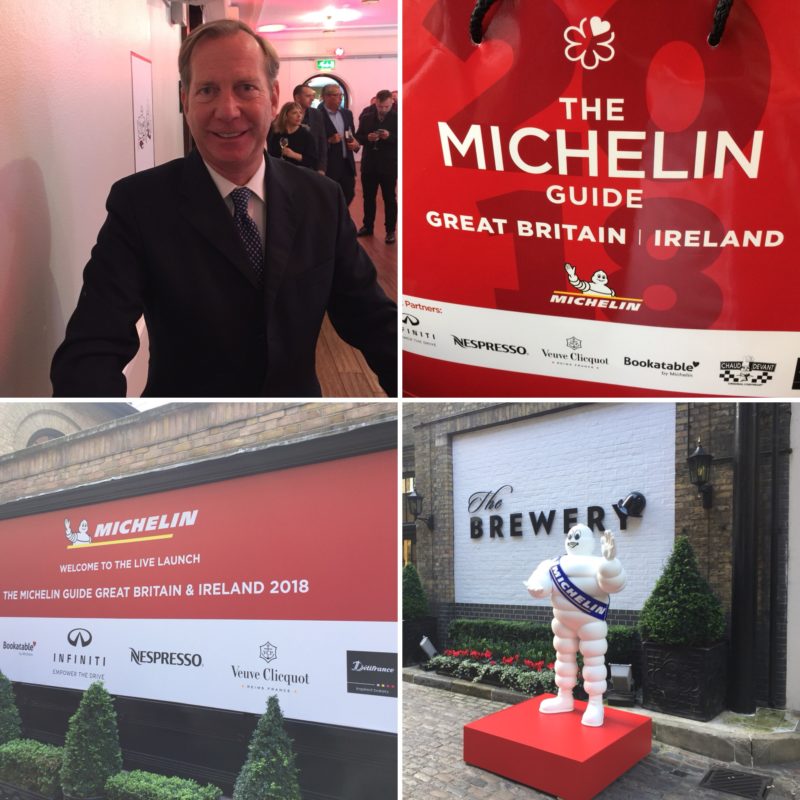
Michael Ellis is the world-wide managing director of the Michelin Guides.  On October 2nd 2017 at 11.30am Michael took to the stage at The Brewery, Chiswell Street, London to present the launch of Michelin GB&I Guide 2018.  Around 120 Michelin starred restaurant chefs were in attendance to witness the unveiling of the newly awarded stars for 2018.  Shortly after the conclusion of the event Michael Ellis found time to briefly speak to Simon Carter of fine dining guide.

How have you found the role since our first meeting in 2013?

I was delighted to conduct the first European web interview with fine dining guide in London in 2013. A lot has happened in the Michelin world since then!

What are the five criteria for awarding a Michelin Star?

The first and most important criteria is the ingredients, all great cuisine starts with great product – the actual product itself is considered for freshness, quality, flavour and texture and so on. The second criteria is mastery of cooking technique – a piece of fish, for example, might have a window as small as 30 seconds where it is perfectly cooked, before that it is undercooked and after that time it is overcooked. Our inspectors are looking for this mastery; albeit something the average diner may not realise but is in actual fact critical to the consistent quality of the experience and a key factor should the restaurant be seeking Michelin star recognition. The third criteria is equilibrium and harmony in flavours; the plate must be in balance, so the sauce is not, for example, overpowering the flavour of the fish or that the seasoning of the dish is found to be exactly as it should be. The fourth thing is regularity (or consistency) and this means starter, main and dessert are all of the appropriate standard and that each are also consistent over time. Finally, value for money is the fifth criteria.

Are the Michelin Red Guides a global marketing trojan horse for the international Michelin brand?

There’s no question that the most important activity of Michelin is that we have 115,000 people around the world making, marketing and selling tyres. The guide books however, are part of the company DNA; we wish to have the brand at the top of peoples minds and the books maintain the image of quality as the ideal of the brand. Whatever the company is doing it is about promoting quality and with the guides there is the added element of lifestyle.

What are your thoughts on the GB&I Launch this year?

There were 120 plus chef’s here today and you could see the emotion on display as to what Michelin means to these professionals.

What’s really exciting in GB&I is there is this movement towards British born chefs using the best of British produce while utilising techniques that they may have developed themselves or have been inspired through other chefs be it from within GB&I or from travels to Asia or around Europe and coming up with a personalised British signature that can be broadly categorised at Modern British Cuisine. This has taken the region to the heights on the global stage. In addition, the level and quality of cooking in pubs is very exciting and uniquely British, as an outlet for quality food in relaxed and accessible surroundings. This is part of an overall trend which is the desire for people to eat well and not necessarily get dressed up or have an overly formal experience. The development of the Michelin starred pub (or two star pub) is part of the movement in this direction, which is also touching the restaurant world right through the spectrum.

What are the plans for the future?

We will be accelerating our digital presence on-line as well as an expanding use of social media. We also believe that the paper books and the digital presence of Michelin can happily co-exist.

The situation world-wide continues to get brighter and brighter, last year we launched in Soeul, Shanghai, Washington DC and Singapore and this year we’re launching in Bangkok. We’ll continue to plant the Michelin flagpole around the world as there is a demand for it from both the chef community and the consumers in those regions.

Michelin GB&I Guide 2018: Press Release

Posted on: October 3rd, 2017 by Simon Carter

PRESS RELEASE

THE ARAKI IS AWARDED THREE STARS IN THE MICHELIN GUIDE GREAT BRITAIN & IRELAND 2018

MIchelin Guide 2018

Stoke-on-Trent. 2 October 2017. Michelin is pleased to unveil the new selection of the Michelin Guide Great Britain & Ireland, which highlights a total of 2,067 restaurants and 1,155 hotels and guesthouses.

In this selection, London continues to build on its reputation as a world-class destination for rich, varied eating experiences. But the offer across Great Britain and Ireland as a whole is developing, often based around exceptional regional ingredients.

This year, The Araki has been awarded Three Michelin Stars. “With its nine-seater counter, The Araki has gone from strength to strength. When Mitsuhiro Araki moved to London from Tokyo in 2014 he set himself the challenge of using largely European fish and his sushi is now simply sublime,” comments Michael Ellis, International Director of the Michelin guides. It joins a select group of restaurants with three Michelin Stars: The Fat Duck and The Waterside Inn in Bray, Alain Ducasse at the Dorchester and Restaurant Gordon Ramsay which has retained the award under its new chef, Matt Abé.

In this new selection, Claude Bosi at Bibendum, located in the famous Michelin House in London, gains two Michelin Stars. Claude’s sophisticated French cuisine is a perfect fit and has been one of the openings of the year. In total, the Michelin Guide Great Britain & Ireland 2018 features 20 restaurants awarded two Michelin Stars.

One hundred and fifty restaurants have one Michelin Star this year, including 17 new ones. In Ireland, there is now a Michelin-starred pub: The Wild Honey Inn in Lisdoonvarna. In Scotland, Michael Smith earns a Michelin Star for his restaurant Loch Bay, a converted crofter’s house on the Isle of Skye. Also awarded one Michelin Star is Peter Sanchez-Iglesias’ Paco Tapas – this tapas bar is named after Peter’s father and is further evidence of Bristol’s exciting dining scene. Tom Kerridge’s Marlow pub, The Coach, receives a Michelin Star, as do two much more formal establishments: Matt Worswick at The Latymer in Surrey, and Coworth Park in Ascot. Mark Birchall has put his experience from L’Enclume to good use at Moor Hall, in Lancashire, which gains a Michelin Star, as does Michael Caines’ Lympstone Manor in Devon. Meanwhile talented young chef Niall Keating has begun to make his mark with a Michelin Star at Whatley Manor in Wiltshire.

In London, A.Wong receives a Michelin Star for its contemporary Cantonese cooking, while Anne-Sophie Pic has a Michelin Star for her French cuisine at La Dame de Pic. Phil Howard receives a Michelin Star for Elystan Street and the traditional Nordic dishes at Aquavit are also rewarded with a Michelin Star. Two Indian restaurants in London are on this year’s list of Michelin Star winners: Jamavar and the re-opened Vineet Bhatia.

The Michelin Guide Great Britain & Ireland also features 27 new Bib Gourmands – which are chosen for their good quality, good value cooking. This year the new Bib Gourmands include Kricket and Kiln in Soho. In Ireland there are six new Bibs, including Two Cooks in Sallins and Kai in Galway. In Wales there’s the Hare & Hounds in Aberthin; and Noble in Holywood, Northern Ireland.

Also published today is the Michelin Guide London 2018. This guide provides extended text on London’s restaurants, with additional photographs and information on all Starred establishments, along with a pull-out map.

Both guides can be purchased from bookshops and at http://travel.michelin.co.uk/. They are published today and will be in bookshops from Thursday, October 5.

The new selection includes:

  • 5 restaurants with three MICHELIN Stars, including 1 new one
  • 20 restaurants with two MICHELIN Stars, including 1 new one
  • 150 restaurants with one MICHELIN Star, including 17 new ones
  • 145 restaurants with a Bib Gourmand, including 27 new ones

About the MICHELIN Guide

The MICHELIN guide selects the best restaurants and hotels in the 28 countries it covers. Providing a showcase of gourmet dining around the world, it highlights the culinary dynamism of a country, as well as new trends and emerging young chefs. Creating value for restaurants through the distinctions that it attributes each year, the MICHELIN guide contributes to the prestige of the local gastronomy, thereby making cities and countries more attractive to tourists. Backed by its rigorous selection method and longstanding knowledge of the hospitality industry, the MICHELIN guide provides customers with unique expertise that enables it to offer them a true quality service.

The different selections are available in both print and digital versions. They are accessible via the Web and on a full range of mobile media that offer navigation capabilities adapted to individual usage as well as an on-line booking service.

With the MICHELIN guide, the Group continues to support millions of travellers, allowing them to live a unique mobility experience.

Michelin Guide 2018 GB&I Star & Bib Gourmand Listing

Posted on: October 2nd, 2017 by Simon Carter

MIchelin Guide 2018


To view the full star listing from Michelin GB&I for both stars and Bib Gourmands please click the link below.

Michelin Guide 2018 Awards List GBI

What is a Bib Gourmands?

In the unique “language” of the Michelin Guide, the Bib symbols indicate the inspectors’ favourite establishments, offering high-quality products and services and good value for the money.

For even though the Michelin Guide is known and recognised for its “star” system, these restaurants represent only 5% of the selection, the rest of which is comprised of good, small, affordably priced establishments.

Among these establishments are the “Bibs,” with the Bib Gourmand symbol for restaurants and the Bib Hotel symbol.

Bib is short for Bibendum, the character created in 1898 from the imagination of the Michelin brothers, André and Edouard, and the pen of cartoonist O’Galop. Over the years, Bib—the one and only Michelin Man—has become the Group’s “mascot.” In the Michelin Guide, Bibendum’s head is a familiar, widely recognised red symbol.

The Bib Gourmand symbol was created in 1997 so it is celebrating its 20th anniversary. It indicates a restaurant offering good food at moderate prices. For the 2018 Guide, the price of a full meal (excluding drinks) is under £28 (40 euros in the Republic of Ireland).

The Michelin Guide Great Britain & Ireland 2018 includes 145 Bib Gourmands of which 27 are (N – New) Bib Gourmand restaurants, the full list is found on the Michelin supplied .PDF file link below, please skip to page 15 and beyond:-

Waitrose Good Food Guide 2018 – Press Release (Aug 2017)

Posted on: August 16th, 2017 by Simon Carter

The Good Food Guide (GFG) has revealed its top places to dine in the UK, along with its award winners. For the first time in five years, the guide, published by Waitrose*, has announced a new ‘number one restaurant’. And it’s not just grand dining-rooms across the UK being celebrated, more quirky finds include an eatery housed in a former strip-club and a tiny 12 seater restaurant run by the guide’s ‘Chef to Watch’.

New number one

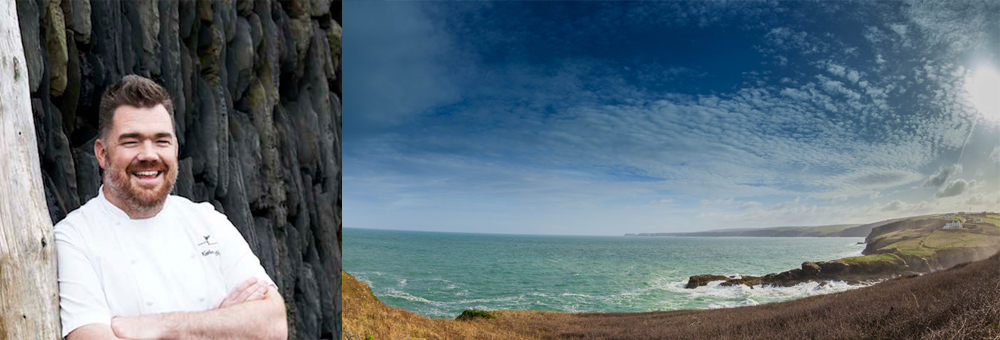
Nathan Outlaw

The restaurant awarded the top spot in The Good Food Guide 2018 is Restaurant Nathan Outlaw in Cornwall. It has also achieved a perfect score of ten for the second year running. The Port Isaac seafood restaurant has been crowned number one in the UK for being ‘the whole package’, with its relaxed dining room, a menu carefully crafted around the freshest Cornish seafood, along with perfect service which ‘just happens in the most discreet and attentive way’.  Outlaw takes the title of Britain’s best restaurant from L’Enclume in Cumbria after their four years at the summit. However, Simon Rogan’s L’Enclume still retains a perfect ten score for its ‘fiercely seasonal ingredients’ and ‘knockout dishes’.

Speaking about the newly crowned number one restaurant, Waitrose Good Food Guide Editor, Elizabeth Carter said, “Nathan Outlaw’s food is characterised by the absolute freshness of ingredients and a clear sense of purpose. He has done an enormous amount to educate and encourage the public appetite for fish, driven by his supply of impeccably fine ingredients, and a special talent for creating unique and thrilling fish dishes. Moreover, nobody seems to leave Nathan Outlaw’s staff – they just go and work in another one of his restaurants. They obviously think he’s a pretty good boss as well as a fine chef.”  

Outlaw says, “We’ve always been proud to have a place in the listings, but to hear that Restaurant Nathan Outlaw has made it to No 1 is phenomenal.  I’d say the award has come due to the hard work and dedication of our team who have now been working together for a decade. It just goes to show that if you stay true to yourself, get your head down, look after your customers and use the very best ingredients available to you, you’ll make it to the top.”

Dining discoveries

Alongside the finest dining establishments, the GFG also champions more unusual eateries that you may not find in more traditional restaurant guides.  In addition to anonymous inspections, the GFG’s research list is based on the huge volume of feedback received from readers and this helps uncover new foodie finds every year.

This year’s edition features four new entries housed under railway arches: Umezushi in Manchester; Hart’s Bakery in Bristol; and Bala Baya and El Pastor, both in London.  

Also new to the GFG this year is Vice and Virtue, a Leeds’ restaurant located in a former strip club.   With its Art Deco style interior, this venue is now poles apart from its previous life – it now serves up three tasting menus, with dishes including ‘perfect’ lobster ravioli and organic apple strudel.

And in Devon you’ll find Ode & Co in a posh holiday park above the sea on the Teign Estuary. Run by husband and wife team Tim and Clare Bouget, this eatery has a real focus on local ingredients, with their pizzas cooked in a recycled oven and made with organic Devon flour, topped with local cheese. The GFG has celebrated fine food in a holiday park before. The Marram Grass Cafe found on a caravan site in Anglesey, was featured two years ago.

Says Elizabeth Carter, Waitrose Good Food Guide Editor, “Once again the readers of the Guide have pointed our experts towards some brilliant eating in unexpected places. Whether it’s fine-dining in a former strip-club, sushi under a railway arch or a fish supper in a shipping container, we find and celebrate culinary flair in all its forms. With this year’s new entries including an ‘ecological canteen’ constructed from renewables in a holiday park, and a former town library playing host to one of Devon’s best new openings, The Good Food Guide continues in its mission to uncover great cooking whatever the venue, wherever the talent. We think that eating out should be fun – and that’s something these restaurants deliver in spades.”

Editors’ Awards

This is the fifth edition of the guide to be published by Waitrose, who has also announced their Editors’ Awards from The Good Food Guide 2018. These awards recognise restaurants and chefs for their talent and commitment to excellence. This year Chef of the Year has been awarded to Peter Sanchez-Iglesias from Casamia in Bristol, whose restaurant also climbs from no.27 (in the top 50) last year to no.10 this year. This coincides with Bristol also being host to the highest number of new entries of any city outside of London.

Casamia

Elizabeth Carter says of Peter Sanchez-Iglesias, “It seems fitting that such a vibrant foodie hotspot as Bristol should supply our latest Chef of the Year, though Peter Sanchez-Iglesias is no stranger to Good Food Guide awards. With his brother, Jonray, Peter picked up Best Up and Coming Chef(s) award in 2008 and they were joint Chef(s) of the Year in 2015, winning the award shortly before Jonray’s tragic death at the age of 32. Now solo in the kitchen, Peter has emerged as a serious reputation maker in his own right – and the new look Casamia has won all our hearts. There is nothing complacent about this ultra smooth-running operation; care and attention to detail are second to none, from the thrilling food to the staff who look genuinely pleased to see you.”

Chef to Watch has been award to Ben Crittenden, from Stark, located in Broadstairs, Kent. His tiny 12-seater restaurant only has a galley kitchen tucked in the corner but serves a well-prepared six-course tasting menu. The restaurant is so small it doesn’t yet have a loo, but a friendly landlady from the pub up the road welcomes Stark’s diners.

Elizabeth Carter says of Ben Crittenden and Stark, “I’m sure many locals would like to keep this place under the radar as Stark is far and away one of the more unusual openings this year. But the secret is out now and there’s something special about this plain 12-seater restaurant. Ben Crittenden has a penchant for simplicity and flavour and his keen eye for the seasons is extremely satisfying – some might call it dazzling. His success is all the more astonishing as, for the first eight months, the restaurant has been operating without a loo, without any dent in popularity – hopefully the situation will be resolved next month.”

Three Chimneys

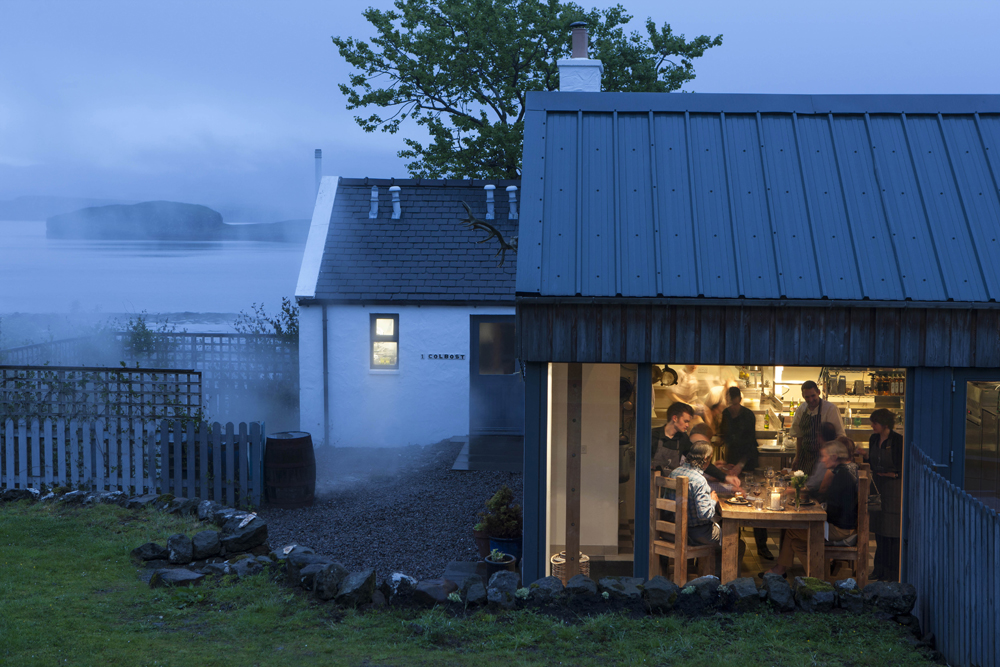
Restaurant of the Year: Three Chimneys Isle of Skye (Angus Bremner Photo)


Restaurant of the Year has been named as The Three Chimneys on the Isle of Skye, Scotland (above). Run by chef Scott Davies, his menus are strongly rooted in the immediate area, with most ingredients sourced from a 20-mile radius. The Three Chimneys has also gone into the top 50 restaurants for the first time, at no 25. Best New Restaurant Entry is crowd-funded Salt, in Stratford-upon-Avon. Best Front-of-House, which celebrates the best customer service in the UK, has been awarded to Restaurant Sat Bains in Nottinghamshire, while Best Pub Restaurant has been presented to The Crown, in Burchett’s Green, Berkshire.

A plea from the Editor

While some restaurant trends are a benefit to the customer, such as the offering of free tap water as standard, others can be off-putting. Editor Elizabeth Carter has made a plea for two trends to fade.  

Turn it down

“Restaurants are getting noisier – that’s what our readers, this year in unprecedented numbers, are telling us. Noise levels, already amplified by bare-bones design, are being raised by music played at Glastonbury force. Everyone loves a restaurant that has a buzzing, vibrant atmosphere, but it becomes exhausting and self-defeating when, as one old hand told us: ‘I have never heard such loudly amplified music in an eating place. It was so loud that I couldn’t hear a word the waitress was saying, and vice versa. We had to gesture and point.’ The reporter was not recommending inclusion in the guide.”

Small plates or sharing plates?

“As for that other trend that’s been warmly embraced by chefs and restaurateurs across the country – let’s be honest, small plates are frequently not designed to be shared. Why the reduction in size if more than one person is supposed to be eating it? If plates are for sharing, there ought to be more, not less, food – after all, a dish featuring a fried egg is best tackled by a solo diner. Moreover, these plates often come out in a random, inhospitable manner. As customers, we have let this weak formula go unchallenged for too long.”

Top 50 Restaurants

The Good Food Guide’s annual Top 50 restaurant ranking is highly regarded by chefs and restaurant-goers alike, with particular attention paid to those chefs and restaurants who make it into the Top 10. The Top 50 recognises the very best talent in the country; a place on the list represents a huge achievement, with each position earned by its score in The Good Food Guide, editor appraisal and strength of reader feedback.  Straight into the Top 50 at no.9 is Claude Bosi at Bibendum (London), while other new entries to the Top 50 are The Three Chimneys (Isle of Skye) at no. 25, Moor Hall (Lancashire) at no.26, The Ritz at no. 28 (London), The Sportsman at no. 42 (Kent) and The Man Behind the Curtain at no 50 (Leeds).

A top score of 10 means “Just perfect dishes, showing faultless technique at every service; extremely rare, and the highest accolade the Guide can give.

1 Restaurant Nathan Outlaw, Cornwall (10)
2 L’Enclume, Cumbria (10)
3 Pollen Street Social, London (9)
4 Restaurant Sat Bains, Nottinghamshire (9)
5 The Fat Duck, Berkshire (9)
6 Restaurant Gordon Ramsay, London (9)
7 Hedone, London (8)
8 Restaurant Andrew Fairlie, Tayside (8)
9 Claude Bosi at Bibendum, London (8) New
10 Casamia, Bristol (8)
11 Bohemia, Jersey (8)
12 Ynyshir, Powys (8)
13 Dinner by Heston Blumenthal, London (8)
14 Fraiche, Merseyside (8)
15 Marcus, London (8)
16 Le Champignon Sauvage, Glos (8)
17 Adam Reid at The French, Manchester (8)
18 The Ledbury, London (8)
19 André Garrett at Cliveden, Berkshire (8)
20 Midsummer House, Cambridgeshire (8)
21 Alain Ducasse at the Dorchester, London (8)
22 The Peat Inn, Fife (8)
23 The Kitchin, Edinburgh (7)
24 Sketch, Lecture Room & Library, London (7)
25 The Three Chimneys, Isle of Skye (7) New
26 Moor Hall, Lancashire (7) New
27 The Greenhouse, London (7)
28 The Ritz, London (7) New
29 Castle Terrace, Edinburgh (7)
30 Forest Side, Cumbria (7)
31 Orwells, Oxfordshire (7)
32 Paul Ainsworth at No. 6, Cornwall (7)
33 Restaurant Marianne, London (7)
34 The Waterside Inn, Berkshire (7)
35 Restaurant James Sommerin, Glamorgan (7)
36 Artichoke, Buckinghamshire (7)
37 The Raby Hunt, Durham (7)
38 Whatley Manor, The Dining Room, Wiltshire (7)
39 Restaurant Story, London (7)
40 Simpsons, Birmingham (7)
41 Restaurant Martin Wishart, Edinburgh (7)
42 The Sportsman, Kent (7) New
43 Adam’s, Birmingham (7)
44 Freemasons at Wiswell, Lancashire (7)
45 Gidleigh Park, Devon (7)
46 Le Gavroche, London (7)
47 Hambleton Hall, Rutland (7)
48 Murano, London (7)
49 The Whitebrook, Gwent (7)
50 The Man Behind the Curtain, Leeds (7) New


Gold Service Scholarship (2017): Part 2. Champagne Tour.

Posted on: July 12th, 2017 by Simon Carter

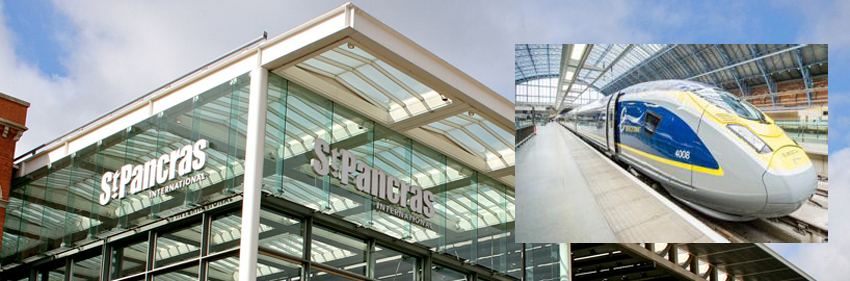
On Wednesday 28th June 2017 at 4.30am, an iPhone alarm was ringing somewhere near to the three counties roundabout in Camberley, in actual fact that familiar tune was unmissably right next to my ear.  I was kindly offered a lift to Reading railway station, where the 5.59am train to Paddington was waiting for me, my bag and my suit carrier. By 7.15am I had arrived at St Pancras International via a black taxi ride (must support the London Cabbie) who was in more belligerent mood than usual about the state of the world, in particular TfL and Uber.  I proceeded to get lost for half an hour as my bearings on Eurostar stretched as far back as Waterloo but not beyond, nevertheless I found Edward Griffiths and Silvano Giraldin outside Searcy’s Champagne Bar in good humour and in good time.

St Pancras

The clue to the meeting point was two fold, the word Champagne being the biggest but also that the Champagne Study Tour leader and Chairman of the Judges of The Gold Service Scholarship, Edward Griffiths is a board member of Searcy’s: Prior to being employed by Westbury Street Holdings (WSH), Edward spent 15 years from 2001 to 2016, as Deputy Master of the Royal Household, as such he was responsible for all internal operations, including all hospitality and entertaining delivery at home and for State Visits abroad. Silvano Girlaldin was to act as lead contact to our hosts – The Rapeneau family – in Champagne. Silvano is the man who launched a thousand careers in restaurant service and by 1990 Silvano had created the original blueprint for the Royal Academy of Culinary Arts for Front of House Service, he is also a driving force behind those Awards as well as a significant voice in the Gold Service Scholarship today. 

We were in good hands!

Next to arrive was Piers Zangana of Susa Comms . Piers runs the social media presence for the Gold Service Scholarship with the Instagram and Twitter accounts proving popular, informative and educational with up-to-the-minute stories of the key activities and personalities. Piers was equipped with an upscale SLR Camera plus an iPhone and also carried what I used to call a ‘meeting microphone.’  This latter apparatus, when attached to the filming technology, allowed the most effective sound input for short, sharp, social media info-bites. Piers must have taken over a thousand photos and short videos over the three days, was constantly and professionally thinking creatively while keeping all in good humour as he photo’d, videod and posted!  His contribution has undoubtedly raised the awareness through social media and assisted in the right way with the quality of the Gold Service Scholarship brand.

As Events and Administration Manager, Katie Peckham-Cooper had arranged; Stephenie Beresforde – the 2017 Scholar – and her partner Lukas Andr, Alexandra-Iulia Caciuc, Sophia Warland and Ashley Best all arrived in good time at Searcy’s for the one hour journey through the organised chaos that is known as queueing, checking-in and boarding a Eurostar. The two hour journey to Paris was smooth and uneventful, as was the walking transfer across a small part of Paris from Gare du Nord to Gare de L’Est.  A brief lunch at the station, memorable mainly for leaving my only pair of glasses at the table was followed by taking the TGV to Reims which took under an hour on an impressive nothing-like-it-in-Britain ‘double-decker’ train.

Immediately upon arrival in Reims, we were greeted by Corinne Couchou-Meillot, who was to be our constant companion and impeccable host for the duration of the Study Tour.

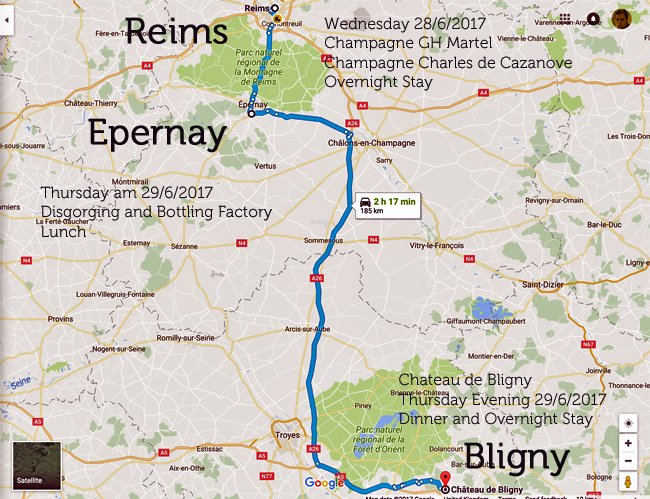
Over the next two and a half days we were to be fed, watered, educated and entertained faultlessly by the Rapeneau family and their representation.  The Study Tour was geographically spread across the Region, taking in Reims, Epernay and then a two hours drive to Bligny on the southern border of Champagne.

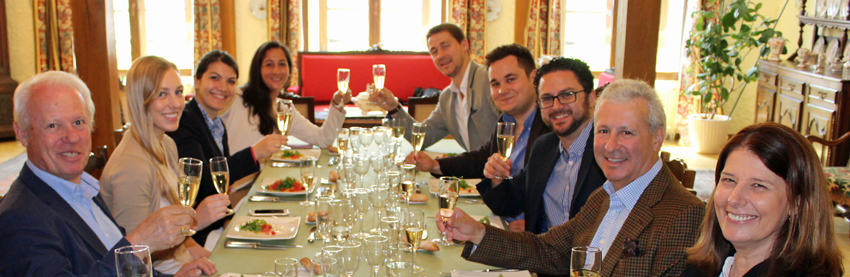
Champagne_Trip_Lunch

From front to back left: Silvano Giraldin, Stephanie Beresforde, Alexandra Caciuc, Sophia Warland. From front to back right: Corinne Couchou-Meillot, Edward Griffiths, Piers Zangana, Ashley Best, Lukas Andr.

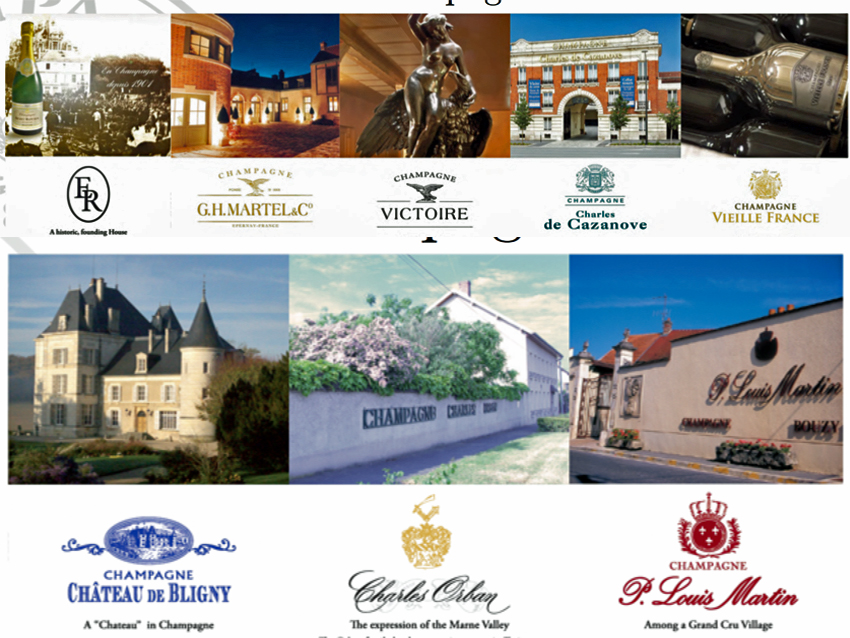
The sheer breadth and scope of the assets owned and managed by the Rapeneau family is most impressive. Below is a pictorial representation of the highlights of the familiy’s assets.  On the Wednesday afternoon, from a Reims base we sampled many of the Champagnes the family have developed – from the elegant, complex, stylish Champagnes – through the richer, brioche tones – to the crisper, mineral and lighter notes of Champagne.

RapeneauAssetsLead

The following morning the focus was on GH Martel in Epernay which was acquired by the Rapeneau family in 1979. From 4 July 2015, The GH Martel Cellars were classified by UNESCO as a Heritage Site, along with Veuve Clicquot, Heidseick & Taittinger.  (This award extends to the historical, well known and impressive “Crayeres,” or Chalk Cellars , under the Saint-Nicaise hill in Reims.)

The group were also kindly provided with the insight of a visit around a production factory.  This process takes bottles from the point where they enter the production centre (after second fermentation, riddling and aging but still on their lees) to leaving the factory disgorged, liqueur d’expédition added, Champagne cork applied, labelled and packaged.  A one minute summary video shows some of the process and ends with a 10 second clip of each Tour member giving their one word summary feeling of the experience. (Switch to browser mode from ‘reader’ to view on mobile device).


It is easy to see how hands-on the Rapeneau family continue to be in their Champagne business.  Christophe Rapeneau joined the family business as soon as he’d graduated in oenology from the University of Reims in 1983. He spent his first few years modernising the fermenting room and production system in order to guarantee the authenticity of his work.  Today, it is worth noting that around 51.8 % of the total production of Champagne is sold in France, 25,6 % of the total production of Champagne is sold in the rest of Europe, 22,6 % of the total production of Champagne is sold in the rest of the world.

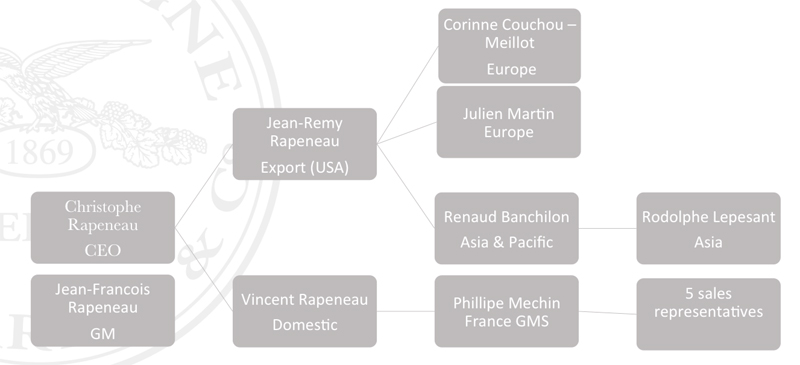
RapeneaufamilyOrganisation

While Jean-Francois Rapeneau is the General Manager, his son Vincent Rapeneau is responsible for sales to the domestic French market and has a management structure with a set of representatives to grow the business.  Christophe Rapeaneau has just been awarded by the IWC Sparkling Wine Maker of the Year 2017, Christophe is the CEO and his son Jean-Remy Rapeneau looks after Exports: USA is his personal responsibility, however he has managers looking after Europe and Asia Pacific.  Our host Corinne Couchou-Meillot, has been part of the Rapeneau family business since December 1998.  She has witnessed dramatic growth across all sectors of the business, and reports into Jean-Remy Rapeneau.

The original founder was Ernest Rapeneau, and today the business remains 100% in family ownership. Now with their 5th family generation in employment they have over 200 Hectares in direct ownership while sourcing and working with over 500 vine growers and families covering at least 700 Hectares. There are eight worksites (Grauves, Bouzy, Chamery, Troissy, Blesmes, Crugny , Broyes, Bligny) and they see annual production of over 8 million bottles.

On the Thursday afternoon the Group visited the resting place of Dom Pierre Perignon.

hautvillersdomperignon

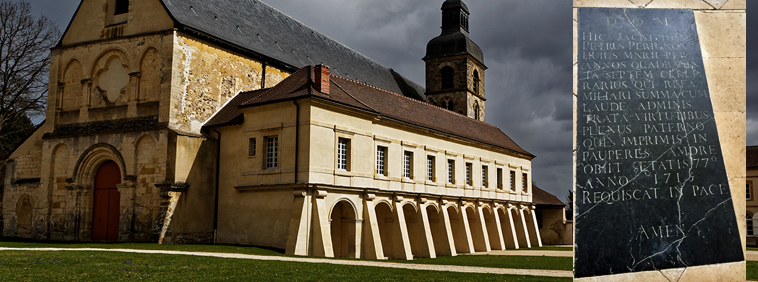
Dom Perignon was born in Sainte-Menehould, 1638.  In 1668, he was transferred to the Abbey of Hautvillers, where he was credited with the invention of sparkling champagne, at a time when the wines were predominantly non-sparkling red. He passed away in 1715 in Hautvillers, his resting place is in the local Abbey.  The buildings have recently been acquired and restored by Moet & Chandon who produce the prestigious cuvee Dom Perignon in his  honour.

Champagne_Study_Tour_2017Web

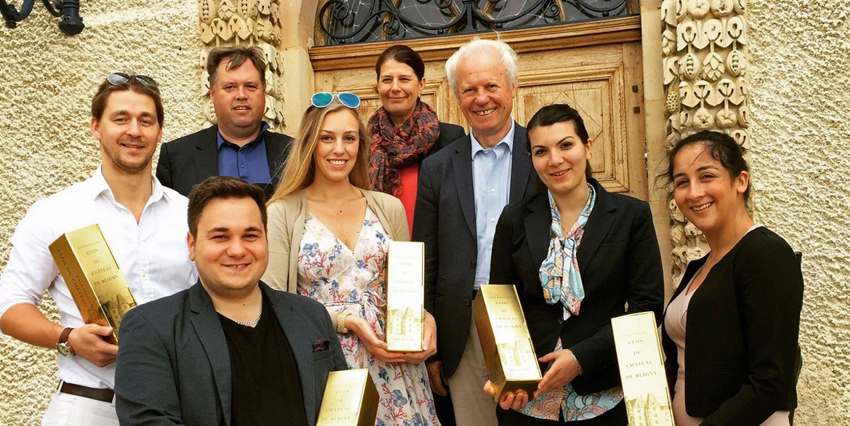
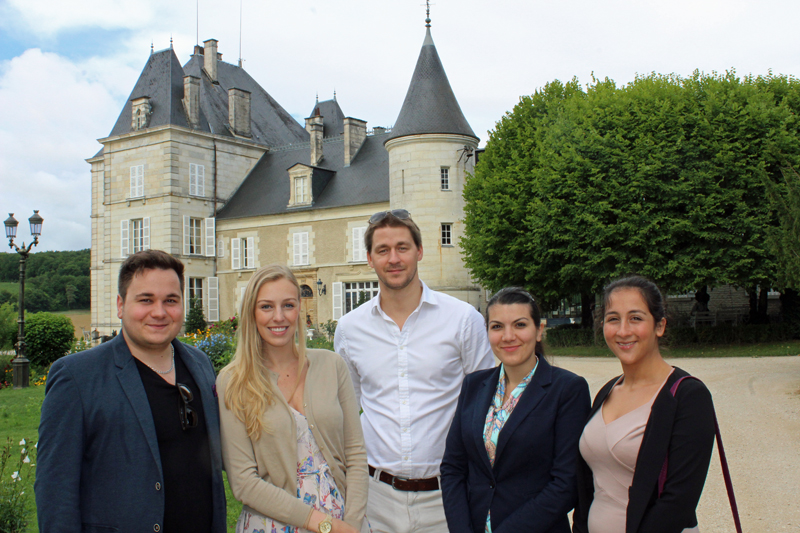
Thursday evening we arrived at Château de Bligny.  An extraordinary building, lovingly restored and dating back to various centuries.  Jean-Remy Rapeneau (and his father Christophe) proved a most charming and engaging host of a memorable dinner and stay in this remarkable property. The château and its land have a great historic, architectural and wine-making heritage.

Château de Bligny is a unique champagne property. It is the only Champagne to enjoy a “Château” appellation as this requires the property to be legally both a champagne harvester and producer.  Further; the next morning we were shown the “Clos” that produces the ‘Clos du Chateau de Bligny.’

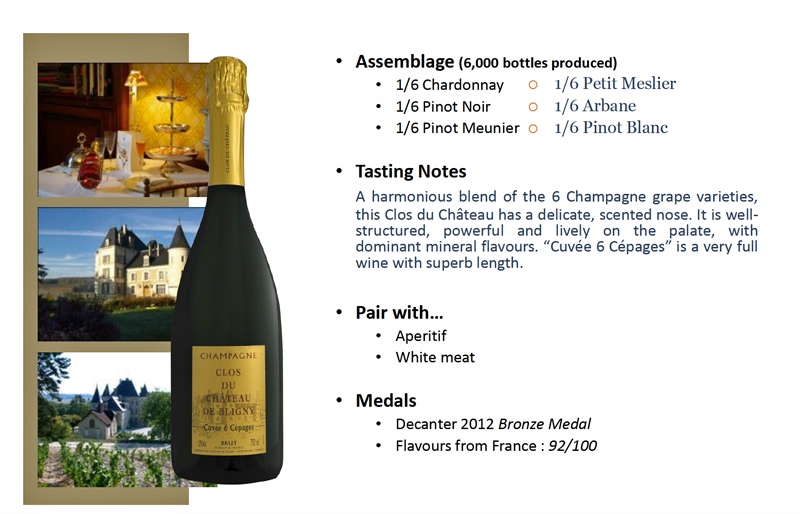
To understand a “Clos” better it is worth examining some background – there are the three traditional varietals in the making of Champagne: Chardonnay, Pinot Noir and Pinot Meunier; in fact there are a further older three that are recognised: Arbane, Petit Meslier, Pinot Blanc. A “Clos” has to be registered with the Institut national de l’origine et de la qualité (INAO). A parcel needs to be closed by a wall, hedge or fence.  Whereas most champagnes are made from multiple crus and years, a ‘Clos’ is more a “mono cru” – In context, the entire Champagne Region boasts only 31 registered ‘Clos’ covering 0.1% or 35 Ha of production.  Details of Champagne Clos du Château de Bligny – Cuvee 6 Cepages – is provided in the diagram below. The “Clos” at Château de Bligny is less than 1 Ha.

ClosDuChateaudeBligny

As a final general observation on the Scholarship finalists, one might imagine that a Sommelier in a top end restaurant is somewhere between a sales manager and a consultant of wine, with perhaps the emphasis on the sales?  I found that each of the finalists observed, who by definition are on the younger side of the profession (22-28), exhibited a depth of appreciation and knowledge of wine that I had not expected.  In the modern age, the enthusiasm of the high achievers clearly leads them to Wine and Spirit Education Trust (WSET) courses (of various levels) as well as professional tastings and educational visits. Much as a Sous Chef in a top end dining kitchen has exprience of all the Sections and can step in to assist or inform a particular Chef de Partie, then perhaps so too may the modern restaurant manager with their Sommelier?!

The journey home was comfortable and uneventful, no doubt a group of people completely satisfied with the knowledge gained or should I say knowledge imbibed!

For further information:

See: Traditional Method of Champagne Production is succinctly explained.

See: Gold Service Scholarship Part 1: An Overview

See: Gold Service Scholarship Competition Outline

See: Gold Service Scholarship Prizes 2018

See: Champagne G.H. Martel & Co

See: Champagne Chateau de Bligny

Gold Service Scholarship (2017): Part 1. An Overview

Posted on: July 12th, 2017 by Simon Carter

Before delving into the mechanisms of the Gold Service Scholarship and indeed further into the very successful Study Tour To Champagne, it is worth pausing to consider the weight of support that is offered to young people who may realise the scope of opportunity simply by taking a look at the roster of trustees.  The level of visibility to be gained, the reputation and accompanying quality assurance are further enhanced by the patronage of Her Majesty the Queen.  

GSS Trustee Board

Board of Trustees of The Gold Service Scholarship 2017


The board of trustees, (where a trustee is a term used instead of a company title, to legally describe those that are identified as responsible for making decisions that will affect the assets of a registered charity) comprises (from top left to right above) Alastair Storey, Willy Bauer and Edward Griffiths, then (middle row left to right) John Davey, Silvano Giraldin and Sara Jayne Stanes, and (bottom left to right) Thomas Kochs, Sergio Rebecchi and David Battersby.

Alastair Storey OBE formed WSH (Westbury Street Holdings) in 2000.  The company owns BaxterStorey, Portico, Caterlink, Holroyd Howe, Benugo and Searcy’s.  Mr Storey was awarded an OBE in the 2017 Birthday Honours for services to hospitality, he has been named most influencial man in British hospitality by Caterer & Hotelkeeper (2012) and is president of the Institute of Hospitality (2016).

Willy Bauer OBE is a hospitality legend of the hotel industry, during the 1970s and 1980s Mr Bauer was credited with turning around three of London’s great hotels; The THF flagship Hyde Park Hotel (Now the Madarin Oriental), The Grosvenor before ultimately being given the epithet ‘Savior of the Savoy’ by the Financial Times. Mr Bauer was a founding visionary for the Gold Service Scholarship.

Edward Griffiths CVO, from 2001 to 2016, was Deputy Master of the Royal Household, as such he was responsible for all internal operations, including all hospitality and entertaining delivery at home and for State Visits abroad, Mr Griffiths position is as Chairman of Judges of the Gold Service Scholarship.

John Davey started his career in the 1970s polishing cutlery and cleaning glasses in the basement at Hotel Baur au Lac in Zurich, a journey through Switzerland to The Lanesborough, The Square, Cecconi’s and Morton’s – The last time that I saw John working the floor, was at The Ledbury in Notting Hill.  Now with a flourishing consultancy business to go with his 35 plus years of experience, he is a judge for the Scholarship.

Silvano Giraldin joined Le Gavroche in the 1970s and invested a career of decades in delivering industry leading standards of restaurant front of house to countless top end dining customers.  He is the man who launched a thousand careers in restaurant service and in 1990, Silvano created the original blueprint for the Royal Academy of Culinary Arts for Front of House Service that was later adopted internationally.

Sara Jayne Stanes OBE is Chief Executive of the Royal Academy of Culinary Arts and plays a leading role in the associated charitable trust Adopt a School.  A chocolatier by trade, Ms Stanes has penned several best selling books on the subject and acts as a judge to the Scholarship.

Thomas Kochs is managing director of Hotel Café Royal having previously held general manager position at Claridges and Hotel Manager at The Connaught.  Mr Kochs has overseen numerous major projects including restorations, advancements in technology and the launching of Hélène Darroze Michelin two star restaurant at The Connaught.

Sergio Rebecchi (“Maestro del Lavoro”) came to London at the age of sixteen and was mentored by the great Lord Forte, before going on to manage The Grosvenor, and then later as Director of Chez Nico restaurants including the Michelin 3 Star eaterie. Mr Rebecchi is a founder member of The Gold Service Scholarship, Fellow of the Royal Academy of Culinary Arts, Chairman of the Annual Awards of Excellence, co-Chairman of Master of Culinary Arts for Front of House Service.

David Battersby OBE is secretary to the Trustees, he is also a Director of the Academy of Food and Wine Service, a Fellow of the Tourism Society, and a past Trustee of the Savoy Educational Trust. In 1999 he became a Fellow of the Royal Society of Arts.

The Gold Service Scholarship has produced a winning scholar since 2013. The Scholars thus far have been Rebecca Dibben (2013), James Fleming (2014), Daniele Quattromini (2015), Jennifer Santner (2016) and Stephanie Beresforde (2017). The Award is in relative infancy and will grow and develop over time to best serve the industry in the eyes of the Trustees. The process and prizes are changing and adapting, evolving in line with the success of the Award and the changing needs of the industry.

GSS2017Trip

From Left to Right: Ashley Best, Stephanie Beresforde, Lukas Andr, Alexandra-Iulia Caciuc, Sophia Warland


For the Gold Service Scholarship 2017 there were around one hundred applicants that were then whittled down to a quarter final, semi final and final of eight with one eventual scholar. Their journeys’, without exception, will have added value to them personally and professionally on the growth path to success.  Applications open in September 2017 for 2018 competition.

Stephanie Beresforde, as the 2017 Gold Service Scholar (one from left above), is the recipient of a number of prizes but beyond that there are two fold advantages: First, as an ambassador for the trade with the implicit support of the Trustees: Second, as a platform for a career path fast track in the industry. Stephanie is degree educated in English having graduated from a red brick university just a few years ago. Upon first meeting, Stephanie displayed a disarming humility and modesty which combined with a clear desire to progress in her chosen career. She is taking up a new role at The Connaught and is likely to experience a blossoming future and is already showing that the ambassadorial opportunity sits well within her compass.

Ashley Best received special commendation at the 2017 Scholarship final. Ashley invested four years from the age of sixteen in the kitchen at The Ritz, moving through the sections to latterly cover the fish section as a demi-chef de partie followed finally by the bakery. It was a bold decision of Ashley’s to switch career to front of house and also a commendable show of loyalty to his employer, one which they have been pleased to reciprocate. Two years later, at twenty-two, Ashley was at the youngest age level of entry to the Scholarship and now finds himself as Trainee Food and Beverage Manager at The Ritz. There is an all-encompassing passion about Ashley, which presents an image of a genuine eagerness to please the customers. Further, his years in the kitchen are made great use of in producing the most effective service for the customer that offers the most sympathetic efficiency to the kitchen. One might imagine that his respect and humility toward the top management is a quality that will work well for him, too.

Alexandra-Iulia Caciuc has just taken a role as a Restaurant Manager at the Spring restaurant in Somerset House. A 2017 finalist, Alex showed a driven nature that included a complete focus on achieving objectives, including setting out plans for improvement and showing the initiative and determination to be a completer finisher. It was clear how she had reached the final stages and indeed exhibited the potential to go further.

Two other finalists from previous years were on the trip: Lukas Andr who is currently assistant manager at Sexy Fish in Berkeley Square and my understanding is that Lukas is also participating in the Master of the Culinary Arts for Front of House Service examinations for 2017: Sophia Warland of RAF Odiham, Hampshire who has responsibility for managing food service contracts.

It was noted from viewing the roll call of previous finalists that the Scholarship also encourages repeat entries, especially from those that show significant potential, the 2017 winner (Stephanie Beresforde) being one such example.  This alone shows that advancement is possible through determination and willingness to put yourself on-the-line under such pressure on an annual basis.

So congratulations to all those who entered!  My personal experience of the Scholarship is that the entrants cover the breadth of background and character – what they share in common is a passion, a willingness to go the extra mile to please a guest and to make a difference in their daily lives.  In terms of the Scholarship as a whole, it is warm, welcoming and inclusive – just as is hospitality – far from the stuffy, snobby or elitist perception that may have pervaded in the dim and distant past.  With these guiding lights, things are done traditionally, but done in the modern way! 

Do apply.

Should you be of the qualifying age (22 to 28) and are serious about a career in service and hospitality then you would need to seek reference support / sponsorship from your manager to enter an application.   The outline of the process involved can be found here:-

Gold Service Scholarship Competition Outline

The current plan of the prizes for the Gold Service Scholarship 2018 have been announced in July 2017 and can be found here:-

Gold Service Scholarship Prizes 2018

Chef Interview: Adam Smith, Coworth Park (June 2017)

Posted on: June 29th, 2017 by Simon Carter

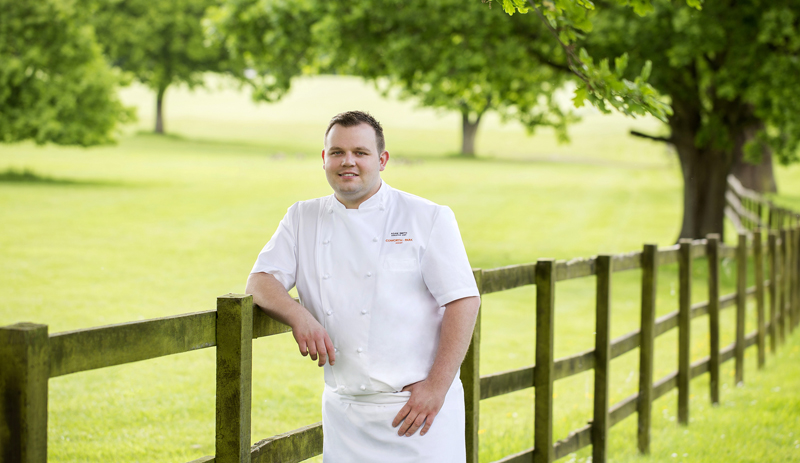
Adam Smith once held the vague notion of becoming a policeman, or at least following some such legal career path, however this aspiration soon changed after young Adam earned some extra holiday cash washing up in a local restaurant.  Adam had caught the bug of kitchen life.  After a stint at Catering college, a moment of serendipity saw Chef John Williams MBE (on his first day after his move from Claridges to The Ritz) meet Adam for interview.  A ten year working love affair with The Ritz Hotel began, one that saw Adam rise through the ranks from commis to second in command in that large, driven and progressive brigade.  Today, he is to be found, drawing on all his vital chef experience, delivering on quality and consistency at Coworth Park Hotel, Dorchester Collection. Adam found time to interview with Simon Carter of fine dining guide, a chat which took place at Restaurant Coworth Park on Friday 11th June 2017.

Adam smith Coworth Park Chef

Describe the build up to becoming a professional chef including moments of inspiration.

As a youngster growing up on the Leicestershire-Warwickshire border I wanted to do something relating to the law. At about the age of fourteen I decided I wanted some weekend spending money. I found this local restaurant that was starting up and fibbed my way (said I was 16) into a washing up job in the kitchens. I very quickly fell in love with the whole buzz and atmosphere of the kitchen environment and the guy I was working with there was very helpful and suggested that I go to Birmingham College to further my knowledge of the culinary world.

My parents were naturally concerned that this might be a whim and that other options might be better for a career. My father in particular, spent a couple of months persuading me that academic studies were the right way forward. Suddenly, both my parents started to suffer with ill heath and decided to retire, so they sold up and moved to a narrow boat. It was at this time that their whole attitude changed and their ethos became that you must do what makes you happy!

What might be considered the key milestones and influencers in your career thus far?

I went to Birmingham College for a year and one of the lecturers there knew Mr Williams who was in the process of moving from Claridges to The Ritz. I went for an interview on Chef’s first day and got a job, started two weeks later and went on to do ten years in that kitchen – progressing from Second Commis to Executive Sous – it was an amazing place to be, an amazing place to work, an amazing place to learn and an amazing man to work for.

I still have very romantic visions of my time at The Ritz, the experience could not have done more for me with all the elements that I was fortunate enough to take on board. From breakfast through to lunch, afternoon tea through to dinner, the constant expectation of impeccable standards required became second nature through Mr Williams’ teaching (to this day I still call him Chef).

Over the years there were occasions when I thought it was time to move on and try something else but each time a new opportunity arose that showed me how much more I had to learn and develop. Now I am so grateful to have had that opportunity, reaching second in a brigade of 65 at an institution like The Ritz!

In 2012 I won the Roux Scholarship; The Roux family have always been ground breaking and have inspired so many chefs and like Mr Williams, provided unwavering development assistance to those up and coming. Just being part of that roll call is a great privilege; I’ve attended a couple of the study tours to New York and San Francisco and it’s so rewarding chatting to the likes of Andrew Fairlie, Sat Bains, Simon Hulstone, Mark Birchall and Andre Garrett – just to hear what they’re doing, their latest innovations or ingredients or simply their general outlook on life as a chef.

In 2012 I did some time in Yannick Alleno’s kitchen at Le Meurice in Paris. By Christmas I’d decided that I was ready to move, I had experienced the large brigade, 5 star luxury hotel institution and all the benefits that that had brought and wanted to try something very different. The Devonshire Arms in North Yorkshire, offered a small, hands-on team and provided the opportunity to quickly learn leadership and management skills.

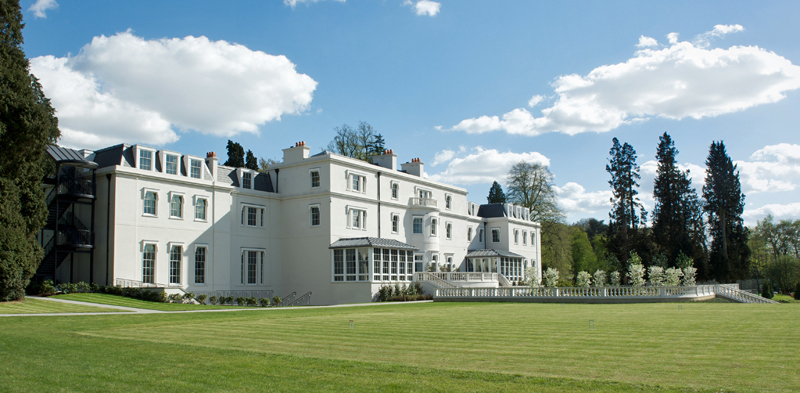
Then the opportunity arose to move to Coworth Park, Dorchester Collection’s country house hotel and spa. This property offers the perfect blend of country house hotel with five star luxury, alongside the natural structure and support of being a part of a wider collection of hotels. The level of infrastructure essentially frees me up to do what I do best, in a beautiful setting, in the context of a platform that provides the ideal balance from previous learned experiences.

Coworth Park Exterior

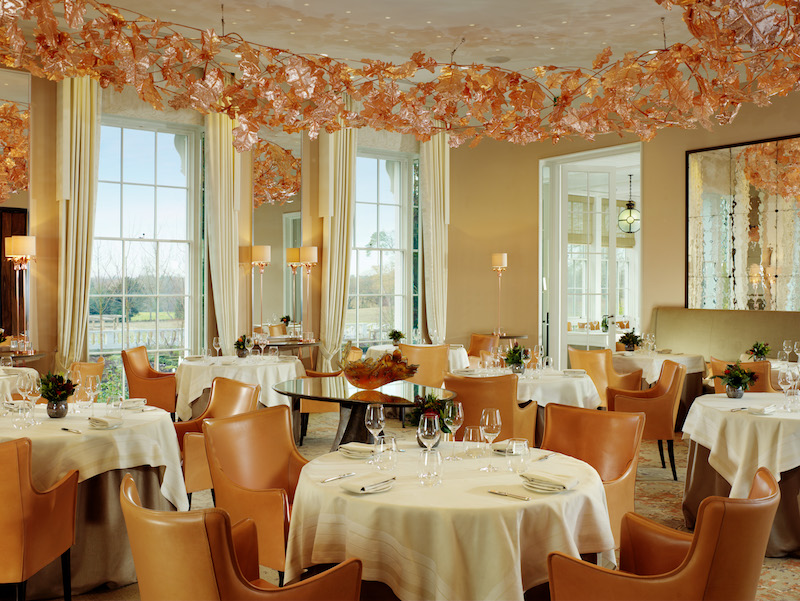
It is so important to feel proud of where you work, to come in every day and not just feel that sense of pride but also the associated drive to aspire to please customers of a beautiful property. I take inspiration from Chef Williams for that perspective and ethos: Around 14 years ago, when I was still a commis, after one lunch service Mr Williams took the whole brigade upstairs to the dining room, he said people come here, to probably one of the most beautiful restaurant dining rooms in the world and the food we serve has to be as beautiful and elegant as this room. I actually get an essence of that feeling here at Coworth Park.

Dining Room RCW DCMoments

How would you describe your cuisine style?

The cuisine evolves, within the context of restraint, to not overwork something, especially with a dish that already works perfectly – if I’ve cooked a particular dish a hundred times or more I shouldn’t become restless, as it will be a dish that has probably become a signature that people want to see on the menu.

I’ve had great meals in many places from Yannick Alleno in Paris to a bouchon in Lyon; my outlook is to evolve a modern interpretation of classical cuisine based on the best possible ingredients producing dishes created with the most harmonious combinations that are consistently cooked to the highest standard. It is as simple as that, the older you get the more you appreciate that less can be more and that the classics are the classics for a reason!

We also have an excellent pastry chef here called Lucy Jones. Lucy and I worked together at The Ritz for six or seven years. We have an excellent mutual understanding of what each other can achieve, how we both work, and the type of offerings we like to see on the plate. The malt and hazelnut chocolate dessert is becoming a signature as it represents the perfect blend of refinement, skilful chocolate work but also when close your eyes and try it, it has a taste and texture sensation that is phenomenal.

What is the set up at Coworth Park in terms of staff numbers, restaurants, menus and opening hours?

Across the whole property we have 45 chefs to cover all outlets and food services, including Restaurant Coworth Park and The Barn. Our leading Restaurant Coworth Park currently has myself and a sous chef plus eight other chefs.

Restaurant Coworth Park is open Wednesday through Saturday for dinner and Friday through Sunday for lunch. The aim here is for consistency of customer demand matched by the consistency of our food offering. To achieve this we need consistency in the quality of product as well as relaxed, fresh and motivated kitchen and front of house staff – our current opening times facilitate this and help boost morale, staff retention and encourage motivation and passion to succeed.

This beautiful property also has The Barn for relaxed rustic dining and a delicious brasserie style menu. I would stress that this offering enjoys the same ‘Best of British’ quality ingredients that we insist upon in Restaurant Coworth Park. The food is presented in a different way for customers who don’t always want a tasting menu style of experience over a multi-night stay.

You are active on social media, what do you think of the various platforms?

Good. In our industry it is more important than ever for restaurant and chefs to see and be seen on these platforms. I see social media as a tool that works both ways; I like to put out there what we are doing and the more you can get people talking about what you are doing can only be a good thing. I also like to see what others are doing and keep up to date. I may for example, see somewhere that I’d like to try that I had perhaps not considered before. Social media can also propagate good news via retweets, likes and shares and this can also help raise the profile of what you are consistently trying to achieve.

What are your plans and ambitions for the future?

To make Coworth Park more of a destination restaurant than it is now. I am really loving my time here, the team are strong and together we’re moving forward. I can’t wait to see what will happen in the future.

Chef Interview: Atul Kochhar (May 2017)

Posted on: May 30th, 2017 by Simon Carter

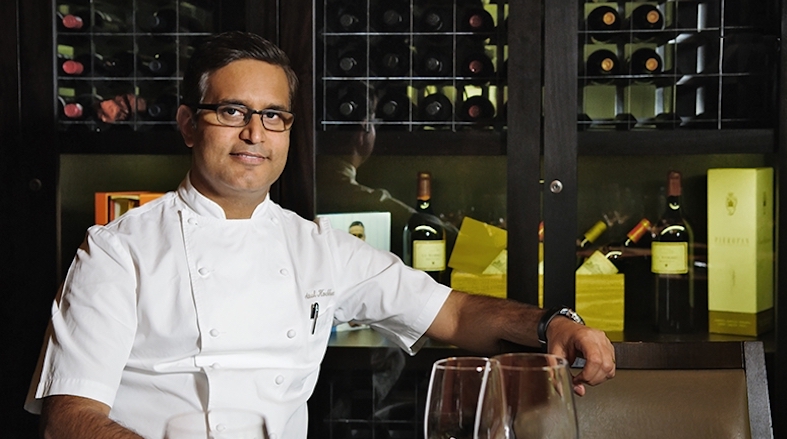
In 2001, Atul Kochhar was the head chef at Tamarind, when it became the first restaurant of its kind to be awarded a Michelin star, within a year he had moved to establish his own eaterie (the now iconic) Benares, which achieved the same accolade within a few years of opening. Chef Kochhar has progressively and carefully expanded his business interests, while maintaining a dedication to his family values alongside an astute understanding of the demands of an ever evolving customer base.  The interview took place in the bar at Benares restaurant in May 2017.

Atul Kochhar

Tell us some background as to how you originally became a chef.

My grandfather was a baker and my father had a small catering business so I grew up looking at- and experimenting with- food! At a time where my friends were aspiring to go to engineering or medical college, I instead wanted to go to a school of hotel management, and luckily, my father was very supportive of that ambition; my father thought I was very bright and could achieve a great deal in the industry but should get the qualifications behind me first. That proved to be great advice.

How did your time at Tamarind evolve?

As a young man, I was working in India at the world-renowned Oberoi Hotels. They have their own training school into which they take a maximum of 12 to 15 students each year. Considering the country might have hundreds of thousands of school graduates each year, competition is high and the entrance to that training scheme is something of a lottery. I had the privilege of being a part of that programme.

Whilst cooking at one of the Oberoi Hotels, the owners of Tamarind were regulars there, I was asked by Mr Oberoi himself if I would ‘meet with his friends as they would like to have a chat with me’; he was referring to the owners of Tamarind. Nothing more was said so I was worried that I was about to get a telling off but in actual fact there was a job offer! I was 24 years old at the time and excited about the idea of getting out and traveling so I said yes. It was something that I had wanted, either travelling to the US or Australia, to further my training and career so when Tamarind in the UK came up it felt right.

I joined as Head Chef and was Head Chef for the full nine years; in 2001 Tamarind was the first restaurant of its kind to be awarded a Michelin star.

Diagonally opposite was Marco Pierre White at Mirabelle and across the way, the old Curzon building housed Jean-Cristophe Novelli, while just down the road was the Roux’ dynasty at Le Gavroche; these chefs were like idols who I might have spoken to occasionally, it was completely surreal to suddenly have achieved a Michelin star with Tamarind. I loved every minute of it!

How did Benares come about and how did your wider business interests develop?

After achieving the Michelin Star in 2002, I admired people like Gordon Ramsay and Marcus Wearing in how they had developed business opportunities. The natural next step was to ask my employers if they were considering growing their restaurant portfolio and whether I could have some equity in that process. They explained that it was purely a family venture so I asked if they wouldn’t mind if I stepped away from Tamarind to start up something of my own.

I quickly found a couple of partners who helped me to set up Benares. I currently employ about 58 people at the restaurant. In the kitchen there are 14 chefs, two shy of where we want to be (getting the right chefs is really tough in the market at the moment). Front of house, we have about 28 staff, this is because the venue is quite spread out with 4 private dining rooms, including a chef’s table, a lounge and bar, the main restaurant and a reception area on the ground floor. We serve a very popular ‘street food’ menu in the bar, which is quite a nightspot in itself. The main dining room seats up to 80 covers and has its own menu structure (See review here).

Generally I have found that with growing a business, in particular starting any new project, you must sit down and understand the motivations of the people involved; everyone is different and so each venture has a separate spirit or ethos and I think it is important to get that right as early as possible in the planning process. What defines success for people? What does happiness mean? Investing money? Making money? Working longer hours? Working shorter hours? Accolades? Respect? Long term? Short term? And so on. We also look closely at the target audience of each venture and how we can bring them to our restaurants.

So with these ideas in mind, around ten years after starting Benares, I sat down with my wife’s brother-in-law to discuss what was to become Indian Essence restaurant. There was an initial disconnect with our expectations of what could be achieved sensibly, given the set of factors presented to us. What we needed was to devise an identity, one that represented the providing of good quality and great tasting food to a strong neighbourhood market. This market may be discerning enough to want the higher end of the middle market regarding quality of food provided at a certain benchmark price point. The end result has been very successful!

In 2010, P&O approached me with the possibility of collaborating with a restaurant aboard on of their ships that was in development. To conduct some key research, I went on a cruise to Norway with my young family. The main goal of this research was to understand whether or not the ship could deliver quality Indian food with the kitchen environment they had on board. Satisfied that we could, we then went into further detail and worked out how to induce the smoky flavour of the food from traditional charcoal Tandoor Ovens using electric ovens only. There was naturally an additional repertoire of food that I might suggest which leant itself to all the kitchen facilities available on ship. In 2010, the first Sindhu restaurant aboard P&O Cruises launched, there are now six and a seventh will launch in 2020.

Sindhu is a feminine Sanskrit name meaning river or ocean. We now have another beautiful Sindhu Restaurant located on the banks of the River Thames, at the Compleat Angler Hotel in Marlow which has been a great success.

One day, my business partner at Benares came to me with the idea of opening a restaurant in India, this was something I had dreamed of doing successfully for some time. It wasn’t necessarily a money making venture but more to give back to the society that had given me everything in life. There were many young chefs and hospitality individuals who wanted to work with our team but coming to the UK was not possible, so taking restaurants back to India was something very special to me.

There are now two restaurants in The Bandra Kurla Complex in Mumbai. One is called Lima and the other NRI: I love the multi-faceted nature of Peruvian food and wanted to bring a new cuisine to Mumbai and we were proud to be the first to introduce that to the country with the Lima restaurant: NRI is an acronym that offers a play on words, the Indian Government describes Indians that live abroad as Non Resident Indians whereas NRI restaurant actually stands for Not Really Indian food. What does this mean? Well it is the food that has exported from India and propagated around the world while (in part,) turning into a kind of fusion between Indian cuisine and the destination country. Examples of this are found in the Caribbean, Malaysia and UK where local dishes identified as Indian would be goat curry, murtabak bread or chicken tikka masala. At NRI restaurant in Mumbai, we replicate these dishes and the local Indian diners love them, however quirky or unusual they may be to their palate.

The group also features a Benares restaurant in Madrid and Rang Mahal Restaurant at the JW Marriott, Dubai.

An opportunity for a further UK restaurant venture occurred recently: having lived in Britain for 23 years, I thought why not deliver a British-led cuisine restaurant, this has come about through Hawkyns Restaurant in Amersham. Originally I was looking at a small Indian Restaurant space there in the town of Amersham, when I was approached by The Crown to look at their restaurant. It is such a quintessentially British sixteenth century coaching Inn where there was natural expectation for a ‘strong British cuisine’, so for the first six months we stuck to that concept. At the same time, we quickly introduced ‘an Indian night,’ which has always sold out with a waiting list to boot. Gradually through conversations and trialing with guests we’ve been introducing the idea that British cuisine cannot be fully defined so why not have it all (smiling): We have duck with oriental spices and noodles as well as the chicken tikka pie that I love cooking. These will sit alongside traditional dishes such as bangers and mash and a proper beef Wellington.

Tell us about your latest book?

I have a new book called 30 Minute Curries – there is general misconception that a curry takes a long time to cook, armed with the right cuts of meat or fish and the right vegetables including all preparation and cooking time, 30 minutes is more than achievable. I did a timed video test run of the recipes and it worked very well. Some of the clips from this will be appearing on social media, however, the filming was done at the time, purely to aid the recipe development of the book.

Tell us about your one night only chef collaborations for 2017?

I have many friends who are chefs that I don’t get to see and felt I really should. So on New Years Eve I sent a message to about thirty friends saying Happy New Year we must cook for one night at your restaurant or mine! All of them replied and fine dining guide covered the press release of the result: http://fine-dining-guide.com/atul-kochhar-chefs-season-2017-press-release

You make good use of the web and social media – what do you think of these platforms?

I think they’re fantastic and represent a strong way forward; people are connected instantly no matter where they are in the world. With anything that is so powerful it needs to be handled with care and attention.

What are your ambitions for the future?

I don’t plan massively – maybe three to six months or a year in advance but generally, while remaining a pro-active person, I will take opportunities that suit me as they arise. I make my schedule around my family, so they come first when I’m planning any opportunities. No matter how potentially lucrative a new venture may appear I will first think how it can fit around my family life – in a few years my children will be off living their own lives, it’s important for me to spend time with them right now.

What legacy would you like to leave for the aspiring chefs of tomorrow?

Over a long period of time many chefs have ‘grown up’ through my kitchen and I feel proud of them as professional protégés. I would hope that people remember me and perhaps think that I was a good chef who had the right priorities as a human being.

Interview: Peter Harden (May 2017)

Posted on: May 27th, 2017 by Simon Carter

Right from those early days, it was clear that a restaurant industry related career beckoned for Peter Harden: From being a discerning young foodie at Cambridge University through to his early experiences in Manhattan using the Zagat Guide, Peter (and his brother Richard) were destined not to spend a lifetime in city based banking.  The formation and evolution of Harden’s Guides tells of a fascinating journey, along with many razor-sharp insights into the restaurant industry landscape, Peter Harden here shares his career stories and observations with Simon Carter of fine dining guide in an interview which took place over a memorable lunch at The Waterside Inn, Bray in early May 2017.
Peter Harden

Tell us some background about yourself and also about the formation of the Harden’s Guide.

I’ve always loved food, in fact, I was a portly teenager. When I arrived at Cambridge University my nickname was ‘Hoover Harden,’ I went on to do a lot of rowing which helped me lose a significant amount of weight but did not diminish my love of food. I was food and drink secretary for my college May Ball and at that time saw myself as a more-discerning-than-most (of my peers) dining out person.

My father loved to travel, nowhere particularly exotic, but he would always enjoy finding a restaurant that he said had a bit of fun and a bit of life about it. For his 65th birthday, he came down to London to visit my brother and I and tasked us with finding a celebration restaurant that cost no more than £10 per head! We went to the Alounak (Persian), which was one of London’s first pop-ups in a Portakabin in a car park by Olympia station. We had to cheat a little and do BYO on the wine but it was great fun. People would not think anything of that type of informal pop-up nowadays, but it was both special and unusual at that time.

As to the formation of Harden’s Guide: I was working in New York as a Junk Bond Analyst and my brother was working in Germany as a banker. In Manhattan, the Zagat Guide was a handy pocket size guide and based on reader feedback, which had been around for about five years and was taking off in New York. There was also a similar, pocket size series of German restaurant guides based on reader feedback called Marcellino’s, which my brother Richard had used when dining out.

After 3 years in New York, I was looking to move back to London and met my brother in Chester (where we grew up) for one of our father’s birthdays. We discussed the absence of useful reader feedback restaurant guides for London produced in a similar way to those that we had found so useful on our travels. My brother Richard suggested we start our own guide and it took me about 30 seconds to say yes! We started Harden’s Guides on New Year’s Day 1991 and launched our first book on 10th November of the same year. My brother had continued working in banking for the initial period to help fund the setting up of databases and the necessary research processes, which included a lot of eating out!

What are the key moments in the evolution of Harden’s Guide.

Today the buzz around entrepreneurialism, the availability of information on the web, and the high profile of dining out would mean a couple of brothers starting a restaurant guide would be a quite natural thing to do, but back in the early 1990s, it seemed more unusual and adventurous. Essentially our first survey was made up of 110 friends’ restaurant experiences.

The fact that affordable desktop computer technology had just been invented facilitated the whole process of research management through to publication and we were at the forefront of using such technologies. In fact, once upon a time, we had a Psion 5 app, which was very bleeding edge (and prescient) by today’s ubiquitous technologies standards.

After our first year of publication we were briefly in competition with Fay Maschler’s Evening Standard Restaurant Guide, a situation which lasted for a couple of years, and the reality was that retail book publishing was not the most lucrative space to inhabit. A breakthrough happened through an introduction to a leading city figure whose company ordered leather bound customised editions as Christmas gifts to employees. This opened up the market to bulk sales to city and property companies. In addition, the kind of people that business leaders wanted to give away copies of the book to were likely to be discerning diners, this fact had the dual effect of creating an ideal reader audience plus an ideal potential market for restaurant surveys. As this market has always represented two to three times the volume of sales via retail stores then the quality of the guide benefited in a positive cycle.

The Harden’s Guide has been published for 27 years but only for the last dozen or so of those years has social media provided a vent for “real people” to share their opinions with those who really wanted to listen. By a kind of happenstance, from an early stage, the Guide marketed itself virally before viral marketing existed – The deal remains that if you submit five reviews of different restaurants you receive a free copy upon publication. Back in the 1990s, largely city workers, who were spending as much as six figures a year on dining out had the cathartic experience of sharing their dining experiences while naturally growing the circulation and credibility of the guide to experienced diners.

We had a big business opportunity with the 1997 General Election when the New Statesman magazine wanted to move with the times and align itself more with champagne socialism than the labour movement’s traditional diet of beer and sarnies, and as a result purchased 30,000 cut down copies of Harden’s Guide to put on their front cover. The Guardian picked this up and purchased 250,000 of our Cheap Eats Guide and then The Observer sponsored the first national survey, from which we completed six regional results packages, with the result that the paper circulated half a million copies of the National Harden’s Guide.
Harden's Guide 2017Later on we had a ten years sponsorship relationship with Remy Martin from which we developed a five year arrangement with the Sunday Times: Harden’s data was used to produce the Sunday Times top 100 restaurants list. This relationship came to a conclusion this year.

Our aim remains to be the most accessible Guide as it is focuses acclaim on restaurants giving real value at all price levels, rather than just lauding the most expensive establishments. Overall we remain proud that discerning diners are a key audience for the Harden’s Guide. The fact that it is so price sensitive is a reflection of a market where consumers quickly vote with their feet to find optimum value!

How would you describe the marking system of the Harden’s Guide?

Our survey asks for unprompted nominations of favourite restaurants visited in the last twelve months in different categories, together with marks and comments. The qualitative nature of the resulting data is far higher quality than saying “what do you think of such-and-such a restaurant”. As well as the customer survey of restaurants visited, Harden’s conduct telephone and web research to produce benchmark prices for the restaurants featured. These prices are then used to divide restaurants into five league tables.

So let’s say that there is a premier league of around 100 restaurants at over £90 per head and you are wanting to work out that given your (larger) budget, where can you eat that gives the best value for money for that spend? In each table, we average the raw marks achieved in the survey, directly awarded by our readers from 1 to 5 for each of the three attributes on our survey form: food, service and atmosphere. We then take those average marks and rank the restaurants for each of those three attributes. A given restaurant’s ratings depend on the positions that restaurant achieves in the premier league table. This process goes on for the further four league tables of decreasing benchmarked price to determine relative quality and value against food, service and atmosphere.

It may sound complicated but it is actually completely logical and provides valuable information from otherwise raw and unstructured data.

How has the rise of the web affected Harden’s Guide?

The web now offers us a significant opportunity, having presented as such only after initially appearing as only a threat. Actually, although the web was a threat to print media publishing it was not necessarily an existential one, but the smartphone was. I would say 2007 and the advent of the iPhone was a big milestone for consumer publishers and more significant than that of the web per se.

At the same time, there has been a cultural shift in dining out habits around the world – dining out is now something that touches far more people everywhere. In the UK in particular it is no longer viewed as elitist. Today, a journey to a restaurant of any cost probably starts with half an hour’s on-line research. Opinions are sought after and considered carefully. This is a big opportunity compared with 20 years ago when interest in dining reviews was seen as being very niche.

Probably the largest threat to Harden’s Guide pre-web and pre-cultural shift was that no-one would bother to buy a Guide of any kind and that publishers would see the occupied market as tiny, inaccessible and snobby. Not so anymore, everyone is eating out and so many also take advantage of the empowering social media platforms to be a reviewer. People are generally engaged in the whole process of seeking out feedback, dining out and providing their own feedback – this can only be good for Harden’s! The business case is more-and-more solid for a geo-located mobile app that includes subscription access to quality current data in line with the Harden’s model of restaurant assessment. We aim to publish the latest iteration in around October 2017.

What are your views on on-line reader-led websites such Trip Advisor, Google Reviews and Bookatable?

There exists a lot of accumulated unstructured data without much in the way of credible information. While all the eyes are on-line, the actual credibility lies elsewhere. My local pub The Andover Arms was rated number two out of 17,500 restaurants for much of last year on Trip Advisor – In fact it wasn’t the second best out of five pubs within half a mile of where I live. This shows the huge limitation of such measuring systems. While web reader on-line sites have gained reach they have yet to make headway to pick apart data and make valuable information. Overall big unstructured data equals confusion by comparison to more focussed approaches such as that followed by Harden’s.

What are your views on the rise of blogs, digital media sites and social media.

I’m full of admiration for the insights and entertainment value of bloggers, particularly specialist ones. But when it comes to creating a guide, the weaknesses of the blog or journalistic model is that the perspective is as strong as the amount of comparative data; an individual only has their own dining experiences to rely upon and no matter how discerning, grounded, knowledgeable and eloquent an individual may be this will always be the limiting factor. This is not to say that opinion formers, as individuals, don’t exist but even where they do, their opinion will be limited compared to a collective. The collective will always represent the tide even where the individual may witness the turning of that tide with a given view of a particular restaurant. The nature of the restaurant market is such that the inverse also holds, in that collective data will demonstrate a change in preferences that individuals (journalists/bloggers) have not seen or been unwilling to highlight due to pre-existing relationships or fear of promoting a view that sticks out too much from accepted wisdom.

Tell us your insights into the high-end dining marketplace in 2017?

Leaving Brexit to one side, the market will get bigger and probably better through the seemingy limitless interest of private equity in the restaurant world; social media offers a visibility instantly and the moment you get any traction there’s a queue of private equity or crowdfunding to back your idea. Pop-ups are a well-established route by which to test run a concept in search of backing. Previously, the time required to build a reputation and develop a concept and build a business was decades, now it can be measured in quarters.

Another area is the continued rise of provenance as the field to fork mentality is the best mechanism for producing an identity for a chef, the cuisine and the customers.

What are your thoughts for the future?

We have a 60,000 strong high-quality mailing list so we can explore various avenues – We are moving into events. We did Harden’s Invites to Le Gavroche and Harden’s Invites to Le Manoir, so expect more of those. I’m hoping to get a Harden’s Club off the ground but it’s too early to announce the details.

The Guide continues to move with the times regarding technology and will continue to do so in the print, post-print and mobile app world.

We now also offer restaurants an enhanced listing (such as images, biogs of the chef and other extended information) or sponsored listings in regional searches. While the restaurant cannot change the survey results, owners and marketeers do have the opportunity to affect their presentation. Overall I expect the continuation of a 27 years adventure in one of the most thrilling market spaces around – and you get to eat out in the process!


Michelin GB&I Star Restaurants Set Lunch Pricing (May 2017)

Posted on: May 8th, 2017 by Simon Carter

Infographic below reproduced with permission from Vouchercloud, the original image is found here – https://www.vouchercloud.com/restaurant-vouchers#the-michelin-star-lunch-guide

MIchelin Lunch Prices Infographic

Restaurant Review: Hélène Darroze at The Connaught (April 2017)

Posted on: April 7th, 2017 by Simon Carter

connaughtexterior

The Grande Dame of Mayfair hotels, The Connaught has seen changes of ownership and reinvention since opening in 1815 as the Prince Saxe Coburg Hotel. The adoption of the less Germanic “Connaught” in 1917 was one of these. Acquired in 1956 by the Savoy Group – now known as the Maybourne Hotel Group – it underwent a £70 million programme of restoration, refurbishment and redecoration in 2007 under lead designer Guy Oliver. Further investment in 2008 included the opening of the Connaught Bar, designed by David Collins, a new Espelette Restaurant with a covered terrace, and the Coburg Bar

Modernisation has also been reflected in changes in cooking style, from the staunchly classical French cuisine of Michel Bourdin to the more contemporary interpretations of Angela Hartnett and, since 2008, Hélène Darroze.

Yet, despite these changes, the traditional values of fine dining, refinement and generous hospitality have been preserved. These are epitomised in the lavishly decorated oak-panelled dining room designed by India Mahdavi, where the latest gastronomic creations are underpinned by luxurious furnishings, and professional yet engaging service.

theconnaughtinterior

In her eponymous restaurant, Hélène Darroze continues to dazzle with her exciting contemporary French cuisine. This is only to be expected from a chef with two Michelin stars who was also named the Veuve Clicquot World’s Best Female Chef (2015) and thrice decorated with France’s celebrated Order of Chevalier. Creativity, meticulous attention to detail and a pairing of classical skills with cutting edge techniques applied to impeccably sourced ingredients have produced show stopping dishes to satisfy the most discerning of palates.

HeleneDarroze

An innovative French approach to Sunday lunch, in what is a venerable British institution, may indeed defy defenders of traditional British dining, roast beef and all. Yet this is not the first time that Hélène Darroze has successfully challenged this sacred cow – no pun intended. In 2016, “Le Poulet du Dimanche” proved an unqualified success, so much so that March 2017 saw the launch of “Le Pot-au-feu du Dimanche.” The challenge was to transform a humble, one pot peasant dish into a sophisticated multi-course offering (through deconstruction) whilst retaining the essence of the original meat and vegetable stew.

The meal began with a trio of delicate canapes. A crisp cone encased succulent, well seasoned beef tartare topped with a Greek yogurt mousse. Smoked eel with crème fraiche on a puff cracker – a magical combination – simply dissolved in the mouth. A mushroom veloute was smooth and deeply flavoured.

Helene_Darroze_Canapes

Roasted bone marrow, presented au naturel, proved a wonderful mixture of textures and temperatures. The melting richness of the warm bone marrow was balanced by its parsley crust and enlivened with capers, pickled shallots and Meyer lemon. Gem lettuce and a salad of fine herbs added freshness and fragrance, although the addition of caviar was superfluous to the success of the dish.

Helene_Darroze_BoneMarrow

Next came leeks cooked in three contrasting ways: charred leeks, soft and gently smoky, stuffed with “saucisson Lyonnaise”; crisp deep fried leek shards; and a creamy leek veloute. Perigord black truffle added a heady earthy fragrance, elevating the dish to lofty heights. The marriage of the humble with the luxurious, given an element of theatre with the shaving of the truffle at the table, proved a harmonious combination.

Helene_Darroze_Leek

The main course showcased beautifully sourced meat and offal, all requiring different cooking times. Lake District beef fillet was scored highly for flavour and texture. Foie gras from Les Landes, poached in a cabbage leaf, retained the creamy richness and muted livery flavour unique to this delectable piece of offal. Unctuous confit pork belly was meltingly soft, and veal sausage well-seasoned. Root vegetables, green beans and cabbage added flavour, crunch and colour, whilst a light, clear broth delicately perfumed with ginger and lemon grass gave an unexpected yet agreeable Thai influence which lifted the other elements.

Helene_Darroze_Potaufeu2

Presented on a silver tray before being deftly plated at the table, this attractive dish took Pot-au-feu to a whole new level of sophistication whilst retaining the generosity of spirit inherent in the original.

Helene_Darroze_PotauFeu1

The meatfest continued with a refreshingly light gelee of beef consommé with a confit terrine of brisket, beef cheek and oxtail. Here the cheaper cuts requiring long, slow cooking were employed with telling effect, the dish being packed with bovine deliciousness.   Balanced by gently cooked young vegetables and salad which gave freshness and a quenelle of horseradish and grain mustard for added zing, this was another well composed dish.

Helene_Darroze_beef

Deconstructed lemon tart has become somewhat of a cliché, but this could hardly be said of Helene Darroze’s version. Firstly the use of Meyer lemon, the aristocrat of that species, in confit, candied and sorbet forms gave the citric qualities of the dessert greater intensity. Delicate round tuiles of Breton sable contrasted with the coriander and lime emulsion and soft meringue that decorated the plate. This proved as suitably light and refreshing dessert after the demands of the preceding courses.

Helene_Darroze_Lemon

Good coffee and petit fours completed this memorable meal, enhanced by the seamless service overseen by acting restaurant manager Damian.  Welcoming, courteous and knowledgeable, it was totally professional without being stiff or condescending. Clearly the front of house did full justice to the fertile imagination and sharply honed skills of the chef and her team.

Feature: Simon Rogan in Cartmel; L’Enclume and Beyond (March 2017)

Posted on: March 27th, 2017 by Simon Carter

lenclumerogan

The evening of Wednesday 22nd February 2017 was fraught. My own car was in for insurance claim repairs after a minor accident and I had just taken receipt of a substitute hire car: A Mercedes C Class 2.2 Diesel ‘66’ Registration. Even though I’m no Jeremy Clarkson, I do like a nice car and I may from time to time have been known to throw a paddy over hot food.

This aside, a brief review of the BBC Weather App on the iPhone showed the prospect of Storm Doris. Doris was due to lash across a band of Britain stretching between South of Birmingham to North of Liverpool, for eight hours solid during the forthcoming day.

So the journey from our home on the Surrey, Hampshire, Berkshire border to Cartmel in Cumbria involved a direct trip up the M40, M42 and M6. In parts a somewhat bumpy ride but nevertheless a straight run, which in spite of including a cautious 5.30am start and a three stop strategy, led to an arrival as promised by Mid-day.

Cartmel is beautifully described by its own village website (cartmelvillage.com) as steeped in history but not trapped in time: The history is partly medieval, dating from the 12th Century Priory Church, while many other architecturally intriguing and aesthetically pleasing buildings date from between the 16th to 18th Centuries: The not trapped in time refers to the shops, inns and eateries like Simon Rogan’s internationally recognized and trailblazing top end restaurant, L’Enclume.

L’Enclume, meaning Anvil, was formed in 2002 from the shell of buildings that had previously been an antique store.

SimonRoganCartmelMap

You might be forgiven for thinking that the L’Enclume of 2017 is in seven parts! Or at least the “Simon Rogan Cartmel Experience” as having seven parts: Starting with the warm and welcoming reception that provides a friendly and hospitable arrival for those staying over, there are also eight well appointed, comfortable rooms housed within this building: The second is next door where the diner will find Rogan & Co, a more informal restaurant that doubles up as a breakfast space for staying guests.
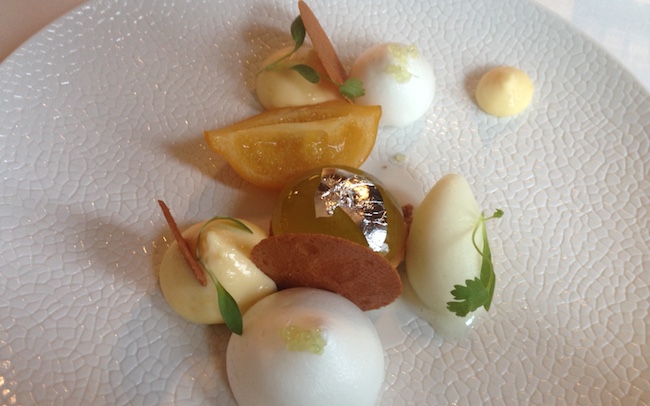
The third aspect is found walking into the cobbled Square from reception where our beautiful room (I would call it a junior suite) was located upstairs above a coffee shop.

lenclumeroom

Rogan has gradually expanded his ‘with rooms’ element of the offering over time: The next part is found as you walk towards the archway from the Square and find the soon to be opened L’Enclume shop where visitors will be afforded the opportunity to purchase anything associated with the L’Enclume experience, from pots and pans through kitchen technology to chef’s jackets and aprons.

As you make your way through the arch from the Square and into Cavendish Street you will find the elements of the star attractions of L’Enclume, the Michelin two star restaurant, which itself houses six further rooms, and next door to the restaurant, the development kitchen headquarters of Rogan’s empire, Aulis.

A short five minute drive away is the 12 acres ‘Our Farm’ site that provides much of the livestock, fruit, vegetables, herbs and flowers that appear on the assorted plates served in the restaurant. Simon believes in appreciating the quality of good provenance, let’s call it ‘field to fork,’ he was too modest to have a particular soundbite for ‘Our Farm’; but what he categorically does not do is pay a farmer to allow him to say that he owns a farm, he really does own a farm, and has staff of L’Enclume, including both new and experienced chefs doing the farming.  This is to ensure optimum respect for- and understanding of- the ingredients that go onto the plate at L’Enclume at any time.

LenclumeFarm

The top end of the restaurant industry, like any other, is a fluid market, adapting to trends and customers’ demands in ever shorter time cycles. Thirty years ago you would have found the remnants of Nouvelle Cuisine, represented by the long (later to be called) tasting menu of smaller plates, ten years later and the raison d’être of tasting menus had changed to allow customers to try smaller versions of a chef’s best selling larger plates. These larger dishes formed the absolute star of the show, typically with six, six and six choices of starter, main and dessert (or in many cases a much longer repertoire of choices of dishes) and these were the ones which formed the ‘signature’ of the chef, as described by guides like Michelin.

For a variety of reasons, around ten years ago, the starter, main and dessert concept started to fade and the tasting menu came to the fore. There are a variety of logical reasons for this: The tasting menu offers more variety of creative food to try for the customer balanced by certainty in the kitchen of what will be cooked, which means: less wastage, more efficiency and better consistency which in turn allows either keener pricing from better GP on a plate, or more labour intensity, or more luxurious ingredients or a combination of these factors.

As the clock has ticked on, this apparent win/win formula for restaurants and their customers, the market has continued to evolve. There is that precious commodity – time! People don’t have enough of it! Classically four hours plus, turning no tables, for a special and expensive meal out was fine. Nowadays the feeling in the industry is that two and a half to three hours is a sensible upper limit to aim for a sitting. Further, customers and importantly repeat customers, do like choice and there is a subtle move back to the three course format in the high-end market.
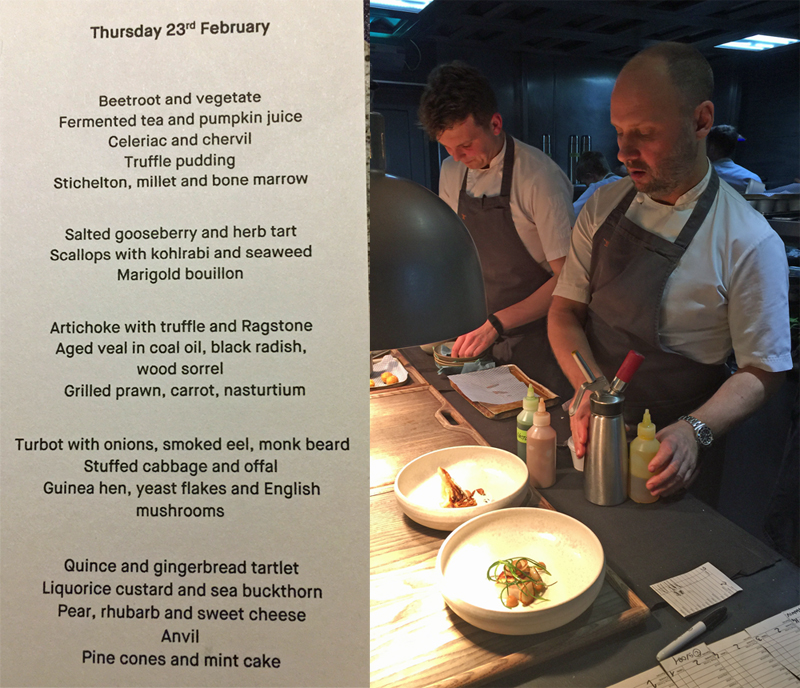
L’Enclume has been a tasting menu trailblazer and continues to deliver on a significant scale to this audience. Cleverly, Rogan has tapped into the latest development in customer need: The circa eighteen-course star attraction tasting menu arrives in what I would call ‘sections’ in that there may be collections of three small plates which offer harmonious tasting experiences. This has the impact of reducing dining time to around two and a half to three hours but also the complementary nature of the dishes ensures that, for example, the opportunity for piquancy in one dish to overwhelm a subtle and elegant flavour in another is avoided.

Lenclumefood1

Three further on going trends in the top end market for restaurants are accessibility (relaxed, friendly, welcoming and engaging social meeting places where you happen to have something to eat), simplicity (the re-emergence of the bistro/brasserie) and value-add. In short, these three elements encompass the front of house, the cooking style and the way in which some form of theatre is added to the dining experience.

In Thomas Mercier (See Interview) Rogan has made an astute hire – a past master at creating an atmosphere of warmth to go with what I would describe as ‘relaxed formality’ to previously more formal dining rooms like Coworth Park, Cliveden or The Vineyard. While L’Enclume naturally has a far more vibrant atmosphere than these more classical eateries, Thomas has experience of the value-added side; while managing the logistics of a similarly tricky listed building, he planned an eating ‘journey’ while general manager at Stovells where the cellar, ‘Gin room’ and larder become part of the value-added dining experience. L’Enclume also embraces this value-added theatre by chefs introducing certain dishes in just the right amounts to hit the customer satisfaction spot. Good to see harmony in vision and style between staff and restaurant, which can only bode well for the future.

The food at L’Enclume engages sight, taste, touch and smell. The presentation of dishes is beautiful; the tastes are clear, deep and strong; texture and temperature are cleverly employed; so too the rich aromas of certain dishes.

Lenclumefood2

While Rogan enjoys the technology of food, it is not for the sake of the technology that dishes appear. Simon admitted that for customers and guides alike there was a period some years ago where he became influenced by many different factors, including Southern Spain as well as latest technologies and the menu was changing every couple of weeks with experimental style dishes.

With maturity, this has long gone and while technology is important, Simon sees it more as a tool to achieving the right “simplicities of flavour” in food on a plate rather than to intellectually challenge the guest. At the same time, the axiomatic complexity of some creations is facilitated by an acute knowledge of ingredients, technologies and their evolving efficacy in a multi-Michelin starred restaurant environment.

Where Heston Blumenthal is taking an exceptionally strong technical base and leading his (The Fat Duck) restaurant on a particular ‘theatrical journey,’ Rogan you feel has all the technical knowhow but seeks to more than tap into a nerve, or touch particular points but instead to continously wrap his restaurant offering around the heartbeat of the high end restaurant industry.

It was interesting to note from twitter that The Michelin Guide had visited L’Enclume to keep a steady eye on progress. Indeed, take the upper quartile of the twenty plus GB&I Michelin two starred restaurants, award one a third Michelin Star and then view the Twitterati response: Within an hour there would probably be a positive consensus that Michelin’s judgment was just, true and fair. L’Enclume would be a prime example of a restaurant in that category for a variety of valid reasons.

MIchelin Twitter Lenclume

They say it is the artist and not the forger that gains the accolades and further that imitation is the sincerest form of flattery. In Simon Rogan’s case, when looking back on his contribution some time in the future, his legacy may best be defined by the protégé talents he has given wings to, achieving their own signatures in the industry, while at the same time reaching the heights of recognition himself.

Restaurant Review: The Fat Fox Inn, Watlington (March 2017)

Posted on: March 22nd, 2017 by Simon Carter

FatFox_front

The Fat Fox Inn is located in the centre of one of England’s smallest historic market towns, Watlington in Oxfordshire. A gastropub with nine recently refurbished en suite rooms, it is an ideal venue for discerning guests seeking a short break with good quality food and stylish accommodation. There is easy access from Junction 6 of the M40, with Oxford 13 and London 45 miles away. Ramblers also are attracted to the town, which lies close to the Ridgeway, a national trail which runs along the Chilterns. Not that locals who just wish to drink are absent from the clientele, given the warmth of welcome and the efficiency of service. Owner John Riddle is particularly keen to ensure that, unlike food led pubs elsewhere, The Fat Fox Inn does not turn primarily into a restaurant, with scant attention and limited space given to those who only request, say, a pint of Brakspear’s bitter or Oxford Gold. Indeed, the restaurant and bar occupy roughly half the space each.

The columned entrance porch of the two storeyed whitewashed Georgian building leads to the bar area on the right and restaurant on the left, with seating for 30 and 28 respectively. (The same menu is available in both.) Wooden flooring with oriental rugs are evident throughout. Whereas the bar has a classic rustic feel, with low beamed ceiling, Inglenook fireplace and bench seating, the restaurant has a more dated, dare I say 18th Century character, in line with the origins of the building. Bold crimson wallpaper, large gilt framed mirrors, well-spaced tables of various sizes, seating of varying comfort, and mood lighting characterise the eclectic but well-proportioned room.

fatfox_dining

Although the décor might not be to everyone’s taste, few would not be enamoured of the food. John Riddle, who after six years, sold his brasserie in Drury Lane to buy the Fat Fox Inn, is fully aware of the demands of a discerning, food conscious clientele. In Stewart Lennox he has found a head chef of distinction. Top quality produce is carefully sourced, much coming from trusted suppliers in south Oxfordshire. For instance, Toulouse sausage comes from the renowned Calnan brothers in Watlington itself. On the other hand, Skrei Cod, probably the finest of the species, is caught off the coast of Norway. A daily changing menu ensures maximum use is made of seasonal ingredients. The menu is sensibly short, bearing in mind that a team of up to four in the kitchen have to cater for large numbers at weekends. The choice comprises the chef’s interpretation of traditional British classics with other dishes reflecting continental influences. On the evening we visited, Toad in the Hole and battered haddock with crushed peas, tartare sauce and chips appeared alongside Toulouse sausage with cassoulet and Gnudi with braised rappini, Parmesan and broccoli as choices for the main course.

A balance of tastes and textures, with harmonious combinations of ingredients, are evident throughout. Main components are allowed to shine with accurate seasoning and precisely timed cooking. Techniques are classical with, thankfully, not a trace of faddishness. This is honest, unpretentious cooking of a high standard and is recognised by a listing in the Michelin UK and Ireland Guide.

Prices reflect the quality of ingredients and skill in cooking. Starters average £6-£7, mains £10-£20, sides £3, and desserts £6. A select range of English cheeses is charged £2.50 per piece or four for £10. The select wine list which avoids greedy mark ups is mainly Old World, most being available by the glass

We decided to sample small portions of four starters.

ff_starters

Haddock chowder was suitably thick and smooth being topped with Serrano ham which also acted as a seasoning. A blue cheese scone added a little spicy piquancy, texture and substance – perhaps unnecessary – but overall this was a comforting, hearty starter.

By contrast, Gorganzola on toast with radish, celery and fennel salad was lively and fresh, the saltiness of the soft cheese being balanced by the peppery qualities of the radish and the crispness of the celery. The addition of fennel gave a mild aniseed hit which lifted the whole combination.

The warm Fat Fox Scotch egg was properly executed with a runny yolk, moist, well-seasoned sausage meat filling, and a crisp coating The celeriac remoulade which accompanied it had a good balance of mustardy creaminess and slight acidity.

Best of all were the curried cauliflower samosas with their crisp, light pastry and delicately spiced filling. Served with spiced lentils and sweet and sour sauce, this dish combined an explosion of flavours and contrasting textures which proved most satisfying.

For mains, it was good to see the Bavette steak on the menu. Popular in France, but underrated in the UK, it is cheaper but superior in flavour to the more expensive cuts. Here the meat was accurately timed and well rested to a medium rare, maximising its deep beefy flavour and fine texture. Enlivened by the parsley, lemon and garlic in a dressing of gremolata, and served with crisp straight cut chips, watercress and heritage carrots, this was a simple, well executed dish needed nothing more – except some tomato ketchup – to complete it.

How pleasing to see Skrei cod, another ingredient not commonly used in UK restaurants. Again, precise cooking – seared in the pan and finished in the oven – did full justice to the clean, muscular flesh which its translucent flakes. Dressed simply with herbed new potatoes and sprouting broccoli, the dish was finished with an innovative wasabi and cucumber sauce which was clean, herbal and not overpowering.

ff_cod

Desserts were not quite as accomplished as the savoury courses but still a credit to the kitchen. In particular, the lemon roulade had a crisp crust accentuated with toasted hazelnuts, and soft meringue encasing a generous cream filling. The lemon curd had a well-judged balance of sweetness and acidity.

ff_roulade

Although a half pint mug containing layers of all the sweet options was, perhaps, ill conceived – too heavy and rich but a delight for those with the capacity – this was redressed by velvety smooth ice creams with unusual flavours such as brioche, cookie dough and lemon meringue.

Overall, this was an enjoyable three course meal, enhanced by the cheerful, helpful service of Henry who looked after us for the evening. Fine Dining Guide hopes to revisit in the summer to sample other dishes from the ever changing menu and perhaps stay overnight in one of the luxuriously appointed rooms.